
AI-assisted Agriculture
getty
Agriculture is a cornerstone of human civilization, a testament to our ability to harness nature for sustenance. Yet, this age-old industry faces many challenges that hamper productivity, impact livelihoods, and threaten global food security.
By 2050, we must produce 60 percent more food to feed a world population of 9.3 billion, reports the Food and Agriculture Organization. Given the current industry challenges, doing that with a farming-as-usual approach could be tricky. Moreover, this would extend the heavy toll we already place on our natural resources.
This is where Artificial Intelligence can come to our rescue. The AI in Agriculture Market is projected to grow from $1.7 billion in 2023 to $4.7 billion by 2028, highlighting the pivotal role of advanced technologies in this sector. This article explores three significant issues agriculture faces today and shows how AI is helping tackle them using real-world examples.
Three key challenges farmers face
Amongst the many issues hurting farmers, three stand out due to their global presence and financial impact:
1. Pests: Pests devour approximately 40% of global agricultural productivity annually, costing at least $70 billion. From locust swarms decimating fields in Africa to fruit flies affecting orchards, the impact is global, and financial repercussions are colossal.
2. Soil Quality and Irrigation: Soil degradation affects nearly 33% of the Earth’s soil, diminishing its ability to grow crops, leading to a loss of about $400 billion. Water scarcity and inefficient irrigation further dent agricultural output. Agriculture uses 70% of the world’s accessible freshwater, but 60% of it is wasted due to leaky irrigation systems.
3. Weeds: Despite advancements in agricultural practices, weeds cause significant declines in crop yield and quality. Around 1800 weed species reduce plant production by about 31.5%, leading to economic losses of about $32 billion annually.
How AI is transforming Agriculture
Artificial Intelligence is often used as a catchall phrase. Here, it refers to the systematic collection of data, pertinent use of analytics ranging from simple descriptive summaries to deep learning algorithms, and advanced technologies such as computer vision, the internet of things, and geospatial analytics. Let’s look at how AI helps address each of the above challenges:
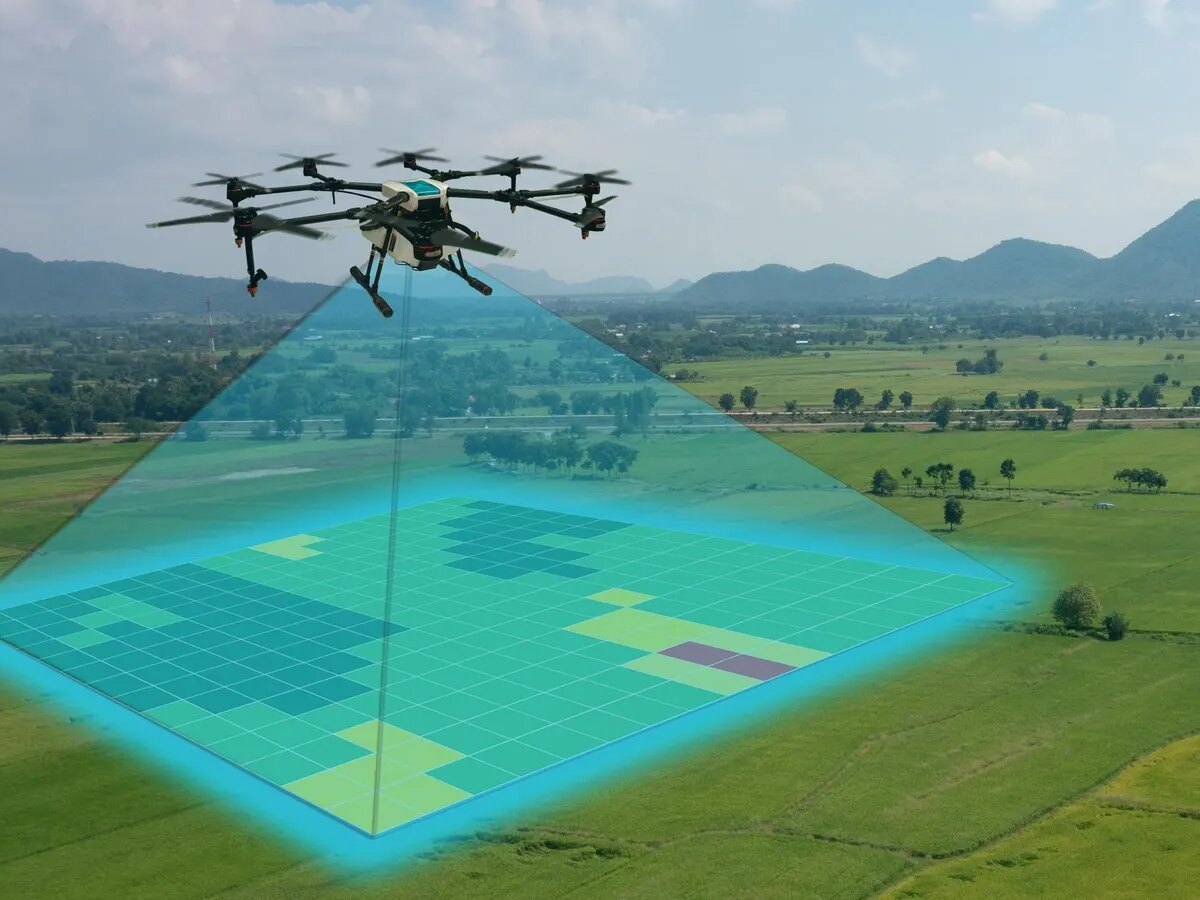
1. Pest identification and control: Accurate, early identification and control of pests is essential to minimize crop damage and reduce the reliance on chemical pesticides. Data such as weather reports, historical pest activity, and high-resolution images captured by drones or satellites are readily available today. Machine learning models and computer vision can help predict pest invasions and identify pests in the field.
For example, Trapview has built a device that traps pests and identifies them. It uses pheromones to attract pests, which are photographed by a camera in the device. By leveraging Trapview’s database, AI identifies over 60 pest species, such as the codling moth, which afflicts apples, and the cotton bollworm, which can damage lettuce and tomatoes.
Once identified, the system uses location and weather data to map out the likely impact of the insects and pushes the findings as an app notification to farmers. These AI-driven insights enable timely and targeted interventions, significantly reducing crop losses and chemical usage. Trapview reports that its customers have seen a 5% increase in yield and quality, and overall savings of 118 million euro in growers’ costs.
2. Soil health monitoring: Continuous monitoring and analysis of soil health are essential to ensuring optimal growing conditions and sustainable farming practices. Optimizing water use is crucial to ensuring crops receive precisely what they need, reducing waste and enhancing productivity.
Data from in-ground sensors, farm machinery, drones, and satellites are used to analyze soil conditions, including moisture content, nutrient levels, and the presence of pathogens. Such soil health analysis helps predict water needs and automate irrigation systems.
For example, CropX has built a platform specializing in soil health monitoring by leveraging real-time data to help users review and compare vital parameters alongside crop performance. Farmers gain insights into soil type and vegetation indices like NDVI – normalized difference vegetation index, SAVI – soil adjusted vegetation index, and soil moisture index to optimize crop management strategies. CropX reports that its solutions have led to a 57% reduction in water usage, a 15% reduction in fertilizer usage, and up to 70% yield increase.
3. Weed Detection and Management: Precise identification and elimination of weeds is critical to preventing them from competing for precious resources with crops and minimizing herbicide use. Thanks to computer vision, drones and robots can now identify weeds amongst crops with high precision. This allows for targeted weed control, either mechanically or through precise herbicide application.
For instance, the startup Carbon Robotics leverages deep learning algorithms in its computer vision solution. It identifies weeds by analyzing data from over 42 high-resolution cameras that scan the fields in real-time. Then, it employs robotics and lasers to deliver high-precision weed control.
The LaserWeeder claims to weed up to two acres per hour and eliminate up to 5,000 weeds per minute at 99% accuracy. Its growers report reducing weed control costs by up to 80% with a potential return on investment in one to three years.
Tackling the risks of automation
Opportunities and risks of AI in agriculture
getty
AI has numerous benefits for agriculture but isn’t without inherent risks, such as job displacement, ownership concentration, and ethical concerns. When AI automates tasks traditionally done by humans in large numbers, it could lead to job losses across both manual and cognitive roles. Moreover, it could exacerbate ownership concentration, benefiting large enterprises or wealthy individuals at the expense of smaller farms.
When farmland turns into a hotbed for data collection – underground, at the crop level, and from the sky, this could lead to data privacy issues. These challenges underscore the need for careful consideration and governance to balance AI’s advantages against its potential downsides. This is unique not just to the agricultural sector but to all industries where AI is being applied.
Ushering in a transformative future
Integrating AI in agriculture is not just reshaping current practices but also paving the way for a sustainable and resilient future. AI could become a master gardener, perpetually monitoring and fine-tuning every growth stage in the farm, from seed selection to harvest and beyond. It can help adjust farming practices in real time to climatic shifts, ensuring optimal crop health and yield.