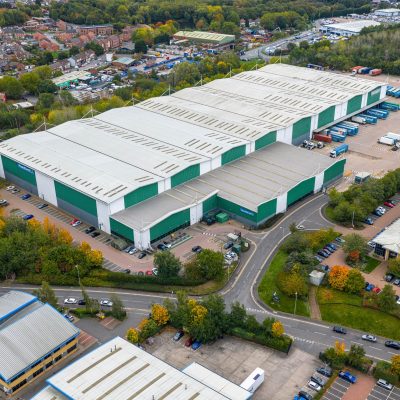

Southern California’s industrial market had the highest leasing levels in more than five years during the second quarter as declining asking lease rates flattened and vacancy plateaued, according to data from Cushman & Wakefield. Despite ongoing concerns with tariffs, oil prices and moderating port volumes, Southern California serves as one of the nation’s most important hubs for logistics and advanced manufacturing.
“Industrial leasing activity continues to build momentum, with year-to-date totals reaching their highest level since 2021. Vacancy rates are gradually declining, while the development pipeline remains disciplined, signaling a market that is steadily rebalancing,” said Brandon Gill, executive director at Cushman & Wakefield. “Although occupiers are taking a more measured approach to expansion than in recent years, demand for well-located Class A industrial facilities remains strong and continues to underpin the market’s long-term fundamentals.”
In Los Angeles County, manufacturers looking to scale operations signed the two largest leases. They include Valar Atomics, an El Segundo-based nuclear startup, which leased 512,000 square feet in Torrance, and additive manufacturer Divergent Technologies, which leased 415,000 square feet in Long Beach. In the Inland Empire, large transactions included a 1.5 million square foot renewal by Deckers Outdoor Corp. and two leases of approximately 1.3 million square feet each by logistics firms.
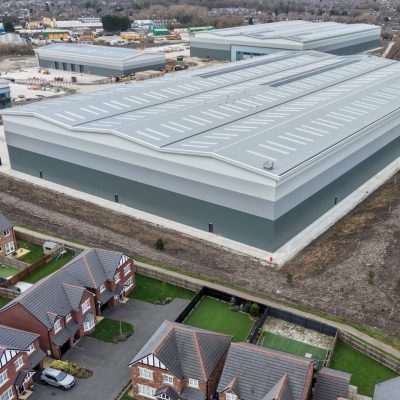
While many U.S. markets face elevated supply pressure, Southern California’s industrial construction pipeline remains well below historical averages. There is less than 10 million square feet of industrial space under construction in Southern California, which trails large markets such as Dallas and Houston as well as much smaller secondary markets such as Phoenix and Columbus, Ohio.
The office market as a whole continues to navigate structural challenges to the way that companies approach work. As a result, some older, vacant office buildings have been converted or repositioned, especially in urban markets. U.S. office inventory has declined by 33 million square feet, or 0.6%, over the past five quarters, according to Cushman & Wakefield research. In Los Angeles, investors have repriced older assets, particularly in Downtown Los Angeles where recent transactions include the Los Angeles Department of Water & Power’s acquisition of the Banc of California building from Manulife for $93 million, or $123 per square foot.
“The Los Angeles office market remains in a period of transition, but we’re beginning to see a clearer picture of where demand is headed,” said Luke Raimondo, vice chair at Cushman & Wakefield. “Companies continue to prioritize high-quality buildings and locations that help attract and retain talent. We’re not seeing recovery across most segments of the wider market yet, but leasing demand for the best spaces and locations remains active, and the ongoing price discovery process should help lay the foundation for a healthier market over time.”
LOS ANGELES COUNTY
The Los Angeles office market vacancy rate increased to 23.4% as occupancy losses brought the year-to-date total to negative 786,000 square feet. Sublease availability remained stable, which has weighed heavily on submarkets where second-generation availability remains an option, especially for startups and companies that may not be able to predict long-term needs. Construction of The Habitat in Culver City added 253,000 square feet of new office inventory to the West Los Angeles submarket, where pricing greater than $5 per square foot/month far exceeds the market average of $3.68. In Downtown Los Angeles, high-rise office continues to trade, albeit at much lower values than pre-pandemic peaks. Recent activity includes LADWP’s $93-million acquisition of 865 S. Figueroa St, and the sale of the stalled Oceanwide Plaza could bring a boost to the area.
On the industrial side, ongoing uncertainty hampered growth, but strong leasing activity projects balanced market fundamentals in the latter half of the year. The average asking rate of $1.32 per square foot/month remained steady after declining for 10 consecutive quarters – stabilization may signal that the market is approaching an inflection point.
LA County Office Market


LA County Industrial Market


ORANGE COUNTY
The overall office market vacancy of 14.4% is close to a four-year low in the Orange County market as tenants prefer higher-quality space. Year-to-date net absorption of 959,715 square feet has been concentrated in the Greater Airport Area and its professional service tenants. Asking rates softened slightly to $2.86 per square foot per month. Limited development activity will continue to constrain new supply, but moderate employment growth projects gradual recovery.
Orange County recorded more than $285 million in office sales across five transactions, which was down from the prior quarter. The largest was Hoag’s $207-million purchase of the 1 million-square-foot Ziggurat building from the federal government, sitting on a prime 89 acres. At the close of the sale, the former federal building touted projected savings of more than $340 million in long-term repair and upgrade costs.
The industrial vacancy rate increased for the 14th consecutive quarter, rising by 20 basis points quarter-over-quarter to 5.2%. Despite rising vacancy, the overall average asking rent rose 3% quarterly to $1.52 per square foot per month. Vacancies were driven largely by tenant relocations and speculative construction.
OC Office Market


OC Industrial Market


INLAND EMPIRE
The overall vacancy rate increased to 8.8% despite new leasing activity that reached its highest level in more than five years. The Inland Empire West submarket accounted for 54% of total leasing activity. The Inland Empire East had significant demand from large tenants, but it has a more uneven recovery with less demand compared to the West submarket. Asking rates in the East submarket are nearly 20% below the areas that are closer to the ports. While port operations remain efficient, uncertainty continues to weigh on the outlook. A sharp increase in activity is expected to lead to occupancy gains in the latter half of the year, which could support an increase in asking rates. There is little pressure from new construction, with 1.4 million square feet completed and 4.8 million square feet underway across 20 projects.
The office vacancy rate in the Inland Empire held steady from the prior quarter at 9.1%, although activity was mixed in the various submarkets. The southern part of the market, which includes Corona and Temecula, had positive absorption during the first half of the year while eastern areas had the largest declines.
IE Office Market


IE Industrial Market


SAN DIEGO
San Diego’s overall vacancy rate decreased on a quarterly basis to 15%, but it has been on an upward trajectory as tenants seeking smaller spaces (less than 10,000 square feet) are among the most active. This demand favors owners with flexible floor plates and move-in-ready space. Among larger tenants, renewals were favored as high costs of construction can be cost prohibitive to a move. Notably, the three largest leases of the quarter in San Diego were renewals. San Diego employment increased by 13,400 jobs, or 0.9% year-over-year between May 2025 and May 2026, led by the health care sector. Professional and business services had modest employment gains, although government, construction and manufacturing had job losses. Office demand remains cautious.
San Diego’s overall industrial vacancy rate held steady at 7.2% and the average asking rate declined slightly as vacancy remains elevated above recent historical lows. Leasing activity totaled 1.8 million square feet, rising 37% quarter-over-quarter, well above the five-year quarterly average of 1.3 million square feet. During the first half of 2026, manufacturing led all sectors, accounting for 30% of leasing volume, followed by transportation, warehousing, utilities (21%) and retail (17%).
SD Office Market


SD Industrial Market


Data provided by Cushman and Wakefield, a global commercial real estate services firm. The company tracks commercial real estate market activity including supply, demand and pricing trends.