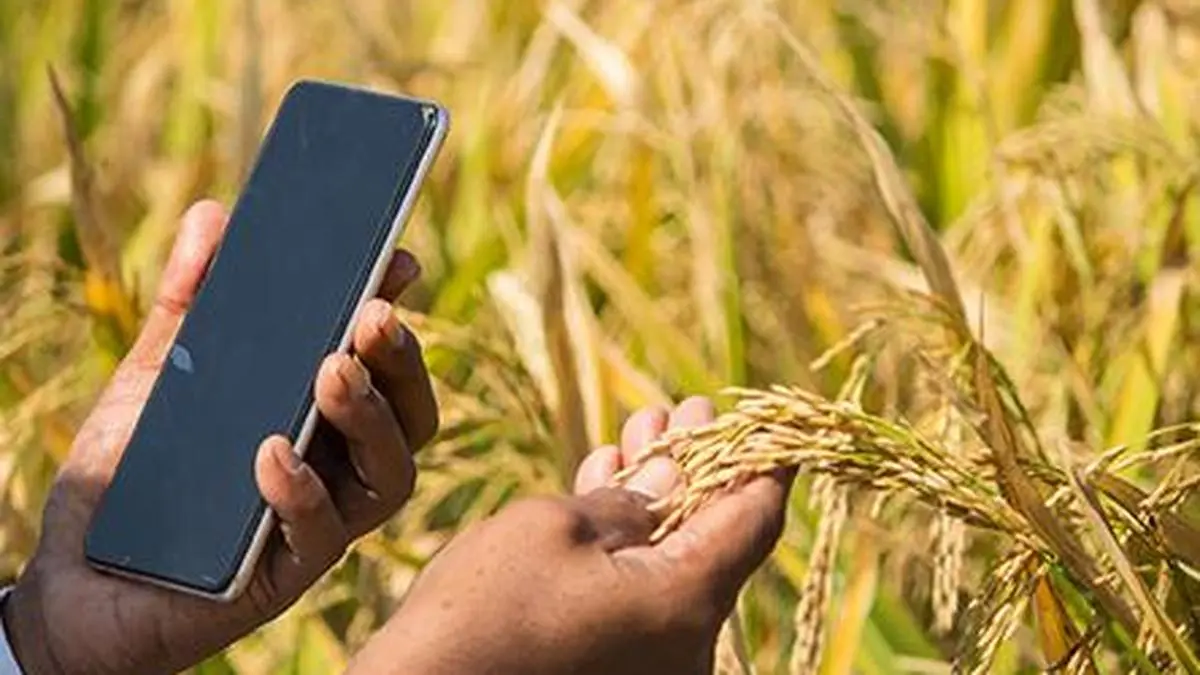
AI is moving from laboratories and boardrooms to India’s fields, with the potential to change how farmers decide what to grow, when to sow and how to manage their crops. For rural agriculture facing rising costs, climate uncertainty and pressure on productivity, technology is increasingly becoming not just an innovation, but a practical tool for making better and more informed decisions.
A recent assessment notes that fewer than 20 per cent of Indian farmers use digital technologies, highlighting the significant gap between technological potential and adoption on the ground. Bridging this gap could be critical to making Indian agriculture more productive, efficient and resilient. Various AI-based technologies are being used by farmers across the world, and Indian rural farmers can also benefit from these technologies.
Soil testing and soil-health analysis can make this decision-making more scientific. Soil contains critical information about nutrients, moisture, pH and other characteristics that influence crop performance. Combining laboratory testing with sensors, satellite observations, field images and AI-based analysis can help identify deficiencies and guide more precise application of fertilisers and other inputs.
Another area of significance
Weather is another area where technology can make a significant difference. Indian agriculture, particularly rain-fed farming, remains highly sensitive to rainfall and extreme weather. AI-based forecasting can analyse large volumes of weather and historical climate data to provide more localised information about rainfall and monsoon patterns. Weather alerts can help farmers prepare for heatwaves, heavy rainfall or other extreme conditions.
AI can also transform pest and disease management. Instead of waiting until crop damage becomes widespread, farmers can use images and digital tools to identify potential pest or disease problems at an earlier stage. AI can analyse crop images, detect early signs of infestation and help farmers determine the appropriate intervention. This can reduce unnecessary pesticide use, minimise crop losses and support more efficient farm management.
The combination of drones, satellites, sensors and precision agriculture can take this further. A drone can survey a field and identify variations in crop growth, while satellite imagery can provide a broader view of crop conditions. Sensorscan monitor soil moisture and other field parameters. AI can then bring these different sources of information together to identify where intervention may be required.
Doesn’t end at farm gate
Technology’s role does not end at the farm gate. AI can also support irrigation planning, yield estimation, crop monitoring, harvesting, grading, storage, insurance and market access. Digital systems can help connect production information with market demand, while satellite and crop data can improve estimates of expected output. AI-enabled tools are also being explored for crop insurance, scheme delivery and agricultural advisories.
AI can deliver value only when farmers can access and understand it. Therefore, farmer education must go hand in hand with technology. Governments, agricultural institutions, technology companies, universities, non profit organizations and farmer organisations can support this transition through digital literacy, village-level demonstrations, soil-testing drives and practical training.
The future of Indian agriculture need not be a choice between tradition and technology. It can be a partnership between the farmer’s experience and the power of AI-creating smarter farms, more resilient rural communities and a more prosperous agricultural future for India. The real opportunity lies in making these technologies accessible, affordable and easy to use for farmers across rural India. With the right ecosystem of education, infrastructure and institutional support, AI can move from being a promising innovation to a practical tool in the hands of millions of farmers. Empowering farmers with better information and smarter decisions can ultimately strengthen both agricultural productivity and rural livelihoods.
The author is CEO & Founder of Aahwahan Foundation
Published on October 3, 2026