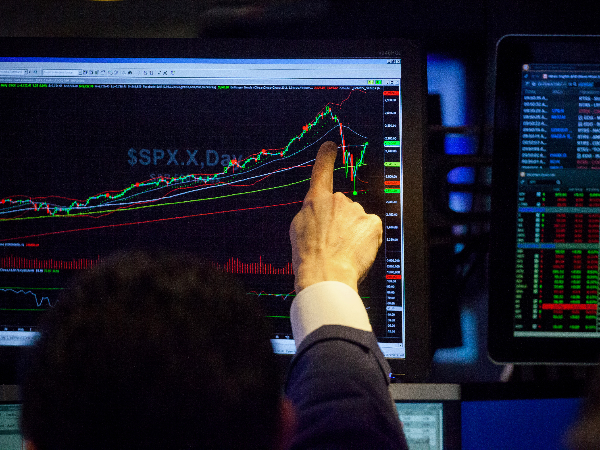
A swing trader is concerned with trying to capture the price movements between these major lows and highs. In an uptrend, a trader would be looking to buy, or ‘go long’, from these lows and close the trade at the swing highs. In a downtrend, traders would be looking to sell, or ‘go short’, from the highs to the lows.
It is impossible to consistently pinpoint the exact high and low of every swing move, but the idea is to capture as much of the price movement as possible. In fact, it’s common to miss the exact highs and lows, as it can take time to confirm that a new swing is underway.
Swing trading vs day trading: what’s the difference?
The difference between day trading and swing trading is the amount of time you hold the position. The day trading style, as it says on the tin, means closing positions before the end of each trading day. Day traders will buy and sell multiple assets within the trading day to take advantage of small market movements.
But swing traders don’t necessarily have this restriction as the duration of a swing trade is relative to the timeframe of the trend, which can vary significantly. So, while the trade duration could be as short as 30 minutes, or even less, it could also last for longer than a day.
Two popular swing trading strategies
We’ve summarised two popular swing trading strategies that are used to create a methodology for entering and exiting a market. These are: