In Germany, Envision is set to build battery energy storage systems that will support a more resilient and flexible grid. In Brazil, Envision still plans to develop a net-zero industrial park (first announced in May 2025) that is powered by wind energy to produce sustainable aviation fuel, hydrogen, and ammonia. In Australia, the company has already installed 17 turbines and launched a physical AI system to optimize their energy flow and supply.
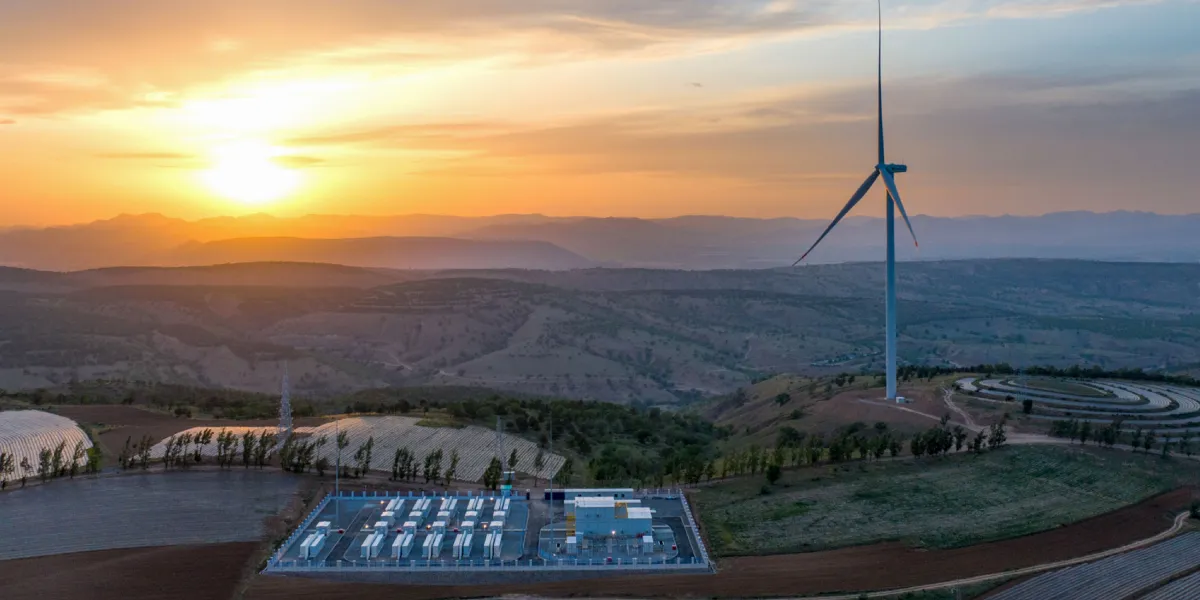
For its latest push, Envision is integrating renewable energy into data centers, using wind turbines to generate power and batteries to store it on-site. Recently, it became the first company to directly power a data center entirely with renewable energy, at a facility that opened in Chifeng, China. An AI-powered system optimizes the power output so the data center can receive a steady supply of renewable energy, regardless of whether the wind is blowing.
Key indicators
- Industry: Wind turbines
- Founded: 2007
- Headquarters: Shanghai, China
- Notable fact: The smart turbines Envision plans to build for Narrogin Wind Farm in Australia will help power nearly 100,000 homes.
Potential for impact
Envision’s expansion could bring reliable clean energy to more parts of the world at a time when demand for electricity is increasing globally by 3.5% to 4% per year.
Today, wind power is already mitigating 1.1 billion metric tons of carbon dioxide per year according to the International Energy Agency. That’s equivalent to the annual carbon emissions of France, Germany, and Italy combined. If fully built out around the world, including in hard-to-reach areas, wind has the capacity to supply one-third of the world’s electricity by 2050 and could in theory avoid the emissions of around 6.3 billion metric tons of carbon.
Meanwhile, data centers are placing serious pressure on existing grids. The huge facilities may consume up to 950 terawatt-hours of electricity per year worldwide by 2030—that’s about as much as Japan’s total annual electricity demand. Most data centers today are powered by electricity that comes from fossil fuels, and switching to renewable sources could lower emissions dramatically.
Caveats
Technology is only one part of the equation when it comes to successful wind projects. A wind turbine manufacturer also needs to work with local project teams, navigate permitting and environmental requirements, and engage the local community. Envision aims to build integrated energy systems in each international market, and that will bring additional challenges, from building local ecosystems to developing capabilities in partnerships and operations.
For AI data centers, the challenge lies in coordinating renewable power, because AI facilities require a stable supply of electricity while solar and wind output fluctuate continuously. Envision says its large-scale predictive models can help balance generation, storage, and demand in real time. But these facilities still need lots of redundancy to ensure a steady transmission of power.
Next steps
Envision is looking to continue its global expansion in regions across Europe, Asia-Pacific, Latin America, and Africa. Offshore wind will be an important growth area. In Vietnam, the company is scheduled to begin delivery of a 200-megawatt wind project in the first half of 2027, which will be its largest nearshore project overseas.
On the computing side, in June 2026 Envision announced Mission Gobi, which aims to develop five gigawatts of power capacity generated solely by renewable energy to support new data centers in deserts and other arid regions worldwide by 2030. (Instead of water, Envision says these data centers will be cooled with a combination of alternative coolants and dry coolers, which are systems that use air or a liquid to transfer heat away from server racks.) The first project under this initiative is Envision’s Galaxy Campus in Ulanqab, Inner Mongolia. Commissioned in August, the facility is directly powered by wind energy and will reach two gigawatts when it’s fully built.
If Mission Gobi succeeds, it could offer a potential pathway for building large-scale AI infrastructure that balances computing needs, energy demand, and climate goals.