Geopolitical disruptions and surging electricity demand from artificial intelligence (AI) are putting global metals supplies under growing pressure as mining investment struggles to keep pace, according to Wood Mackenzie.
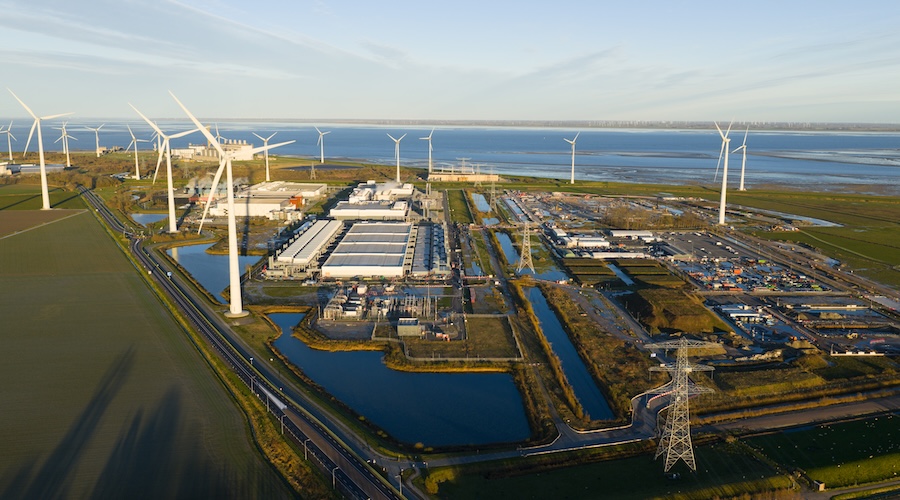
The energy consultancy is tracking more than 250 GW of data centre projects worldwide, more than triple the pipeline a year ago. Against that backdrop, Wood Mackenzie forecasts AI-related electricity consumption will increase fivefold between 2025 and 2030 and exceed 1,000 TWh by 2035. Transmission lines, substations and dedicated power generation could require three to four times more metal than the data centres they support.
“Data centres represent an economy-wide power infrastructure challenge, but the bigger story is the collision between accelerating demand and increasingly complex supply delivery,” Lindsay Grant, vice-president of metals and mining research at Wood Mackenzie, said in the report. “High prices should trigger investment, yet project sanctioning remains below expectations.”
The findings highlight a widening gap between governments’ ambitions to secure critical minerals and the industry’s ability to develop new mines. Lengthy permitting, geopolitical uncertainty and increasingly complex projects threaten to delay production even as elevated commodity prices improve potential returns.
Copper’s high pressure
Copper faces some of the sharpest pressures. Prices have reached a record $14,759 per tonne as US stockpiling and trade policies distort global inventories. Domestic stocks provide more than 170 days of cover, compared with just 48 days elsewhere, leaving markets outside the US facing a refined copper deficit of about 450,000 tonnes.
Chilean mine production is forecast to fall 5.2% in 2026, although global output should expand by more than 5% in 2027 after three years of stagnant growth.
Longer-term prospects remain uncertain. Wood Mackenzie estimates miners must bring about 850,000 tonnes of new greenfield copper production online annually over the next decade, a demanding target given development timelines and rising project costs.
Aluminum markets face a different supply shock after attacks damaged two major Middle Eastern smelters, removing almost 2% of global primary production and contributing to a projected 1-million-tonne deficit in 2026.
Higher prices have encouraged producers to restart idle capacity, particularly in China, where operating rates have reached 99%. Indonesian production is also expanding, reaching 1.3 million tonnes this year and approaching 3 million tonnes by 2030.
Wood Mackenzie expects aluminium to return to surplus in 2027, although underlying market conditions remain supportive. Faster Indonesian expansion and weaker economic growth pose the principal downside risks.
Nickel is moving towards balance after years of oversupply, with global refined production forecast to contract 2% in 2026, its first annual decline since 2015.
However, the outlook differs sharply by product. Indonesian mining quotas, declining ore grades and drought-related disruptions are tightening Class II nickel supplies, with deficits expected from 2027. Chinese stainless steel producers are responding by increasing scrap and Class I cathode use.
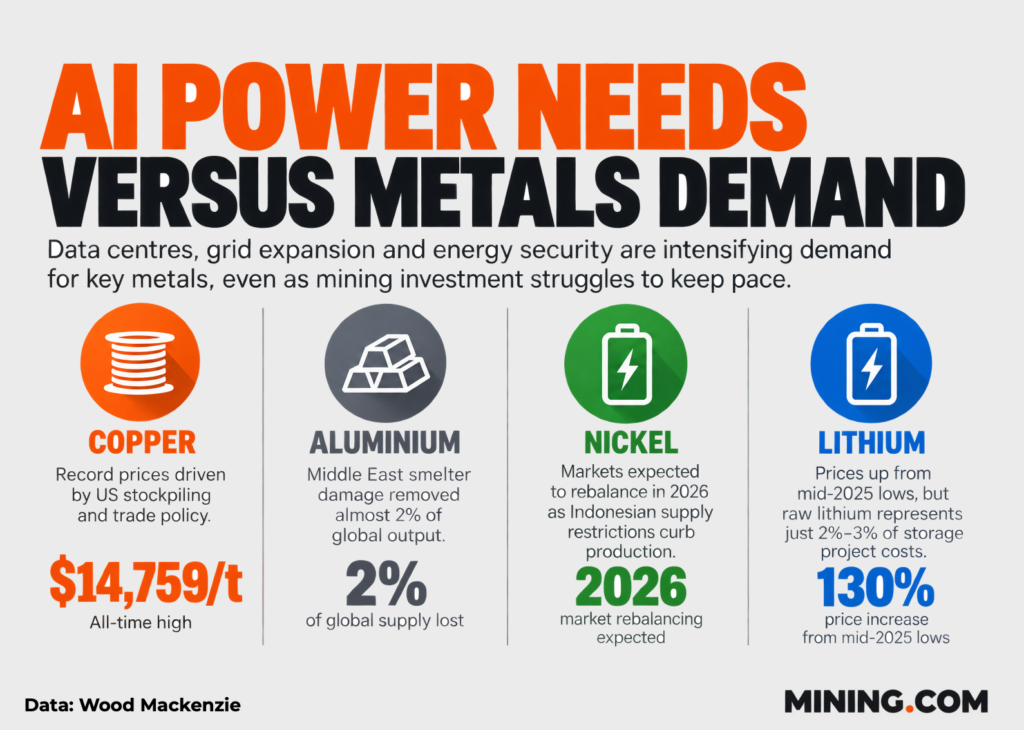
Class I nickel and chemical markets, meanwhile, continue to face surpluses as Indonesian high-pressure acid leach projects and Chinese refining capacity expand. Wood Mackenzie forecasts nickel prices recovering towards $19,000 per tonne by 2030, although Indonesian policies and sulphur availability remain significant uncertainties.
Battery investment
Battery technology is adding another dimension to metals demand as lithium iron phosphate (LFP) chemistry strengthens its position in electric vehicles and energy storage.
Wood Mackenzie expects LFP to dominate mass-market batteries through 2030, supported by Chinese manufacturing expansion and faster charging technology. CATL’s third-generation Shenxing battery targets charging from 10% to 80% in less than four minutes.
Alternative chemistries are also advancing. CATL secured a three-year, 60 GWh sodium-ion supply agreement with HiTHIUM Energy Storage in April, while Wood Mackenzie expects sodium-ion battery modules to reach cost parity with LFP by 2035. Solid-state battery mass production could begin around 2030.
Lithium carbonate prices have rebounded about 130% from their mid-2025 lows, but raw lithium accounts for only 2% to 3% of the cost of a typical 100 MW, four-hour turnkey storage project. An 83% increase in lithium prices during the first quarter of 2026 translated into an approximately 10% increase in complete storage system costs.
Financing remains a larger challenge. The lithium industry attracted $60 billion over the past decade, helping increase refined chemical supply tenfold. Wood Mackenzie estimates another $150 billion to $250 billion will be needed through the 2050s.
Chinese developers can build production capacity more efficiently than Western competitors, complicating efforts by governments outside China to establish independent battery supply chains.
Electricity availability presents an additional obstacle. In Japan, data centres can be completed in less than five years, while grid upgrades can take more than a decade. Developers are increasingly considering microgrids and off-grid generation despite costs two to three times higher than grid-connected electricity.
“Markets are adapting to a world where security of supply, energy availability and geopolitical considerations increasingly sit alongside cost competitiveness in shaping investment outcomes,” Grant said.