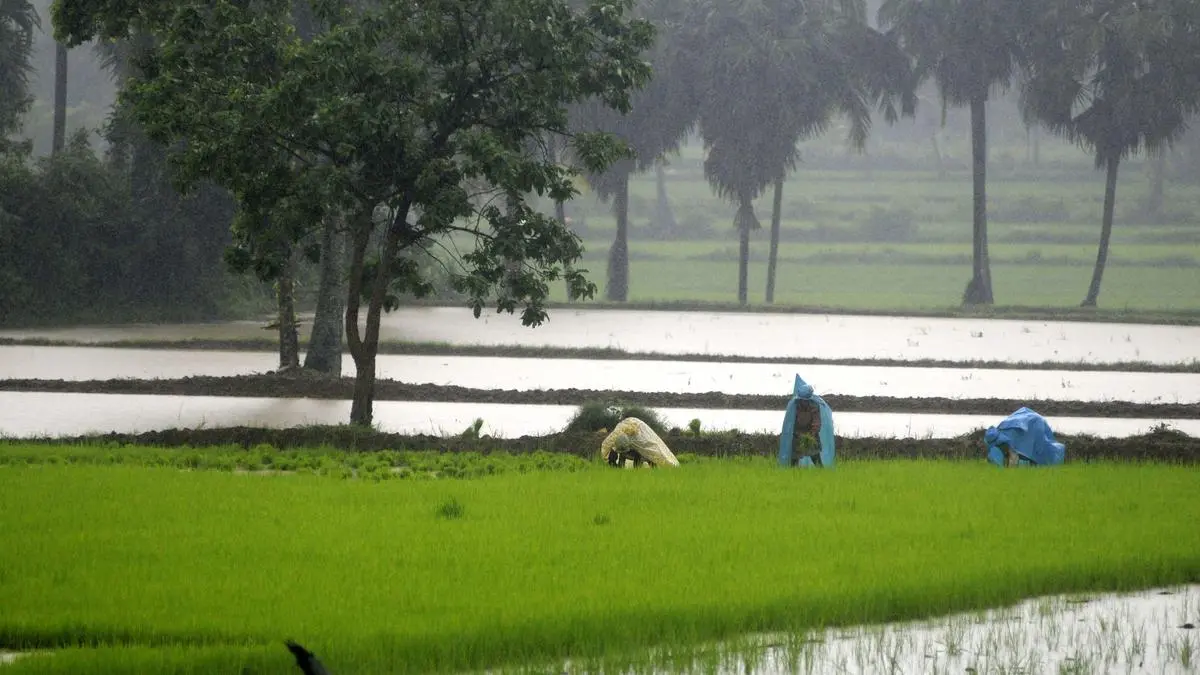
The clock is ticking for Indian agriculture. Climate change is no longer a distant concern for millions of farmers; it has become a daily reality. Unpredictable monsoons, rising temperatures, recurring droughts and the growing impact of El Niño are making farming more difficult and uncertain. Years of intensive cultivation have degraded soil health and put increasing pressure on water resources as well. As a sector that supports more than half of India’s population, agriculture needs urgent action to become more resilient and secure for the future.
The warning signs are becoming hard to ignore. FAIFA’s latest report Inspired by Nature: El Niño-Ready Farming for Climate Resilience and Our Future found that India experienced extreme weather events on 331 of 334 days between January and November 2025, impacting more than 17 million hectares of farmland. The report also highlights worsening soil health, with most tested samples showing deficiencies in key nutrients and organic carbon.
A growing concern for Indian agriculture is the increasing influence of El Niño. With the IMD forecasting El Niño conditions this monsoon, bringing rainfall levels to the lowest India has seen in the last 11 years, farmers may face one of the driest seasons in over a decade. This makes proactive planning, adaptation and risk management more important than ever.
Building infrastructure of resilience
The good news is that India is not starting from scratch, and the Government of India has already laid the groundwork for climate-resilient agriculture. Initiatives such as the Digital Agriculture Mission, AgriStack and Bharat-VISTAAR are helping farmers access better information, services and market linkages through technology. Programmes such as PM-KUSUM are encouraging the adoption of clean energy solutions in agriculture, while the Pradhan Mantri Fasal Bima Yojana (PMFBY) continues to strengthen risk management by providing farmers with greater protection against weather-related losses.
India is also witnessing a strong shift towards organic and natural farming. As of January 2025, India ranks second globally in organic agricultural land and first in the number of organic producers. Reflecting growing consumer demand for sustainable food, the country’s organic food market, valued at nearly $1.9 billion in 2024, is projected to grow to over $10 billion by 2033.
Together, these interventions reflect a forward-looking policy approach that recognises climate resilience, sustainability and technology adoption as central pillars of agricultural transformation. They provide a strong platform upon which future efforts can be built.
An organising principle
The scale of the challenge requires us to move faster. Climate resilience must become the organising principle of agricultural development. This requires a dual transition – ecological and technological. We must restore soil health, improve water-use efficiency, promote crop diversification and encourage nature-inspired traditional farming systems.
Similarly, technology must play a larger role in helping farmers adapt to climate uncertainty. Artificial intelligence, satellite monitoring, precision irrigation, remote sensing and weather-based advisory systems can significantly improve farm-level decision-making and reduce climate-related risks. The effective integration of these technologies with local knowledge and farmer-centric extension services will be critical to building a more resilient agricultural ecosystem.
A 4,200 year-old lesson
There is an important lesson from Khirsara, Gujarat where farmers faced a severe arid spell nearly 4,200 years ago. Rather than continuing with a barley monoculture, they diversified into drought-resilient crops such as millets, sorghum and rice, helping their communities survive and thrive. That lesson remains relevant today: resilience comes from adaptation. India is uniquely placed to build a climate-resilient agricultural future by combining traditional farming wisdom with modern science, digital innovation and supportive policies. As climate risks grow and events like El Nino are redefining the risks, the need to farm smarter, diversify and strengthen resilience has never been greater.
The author is President of FAIFA
Published on July 11, 2026