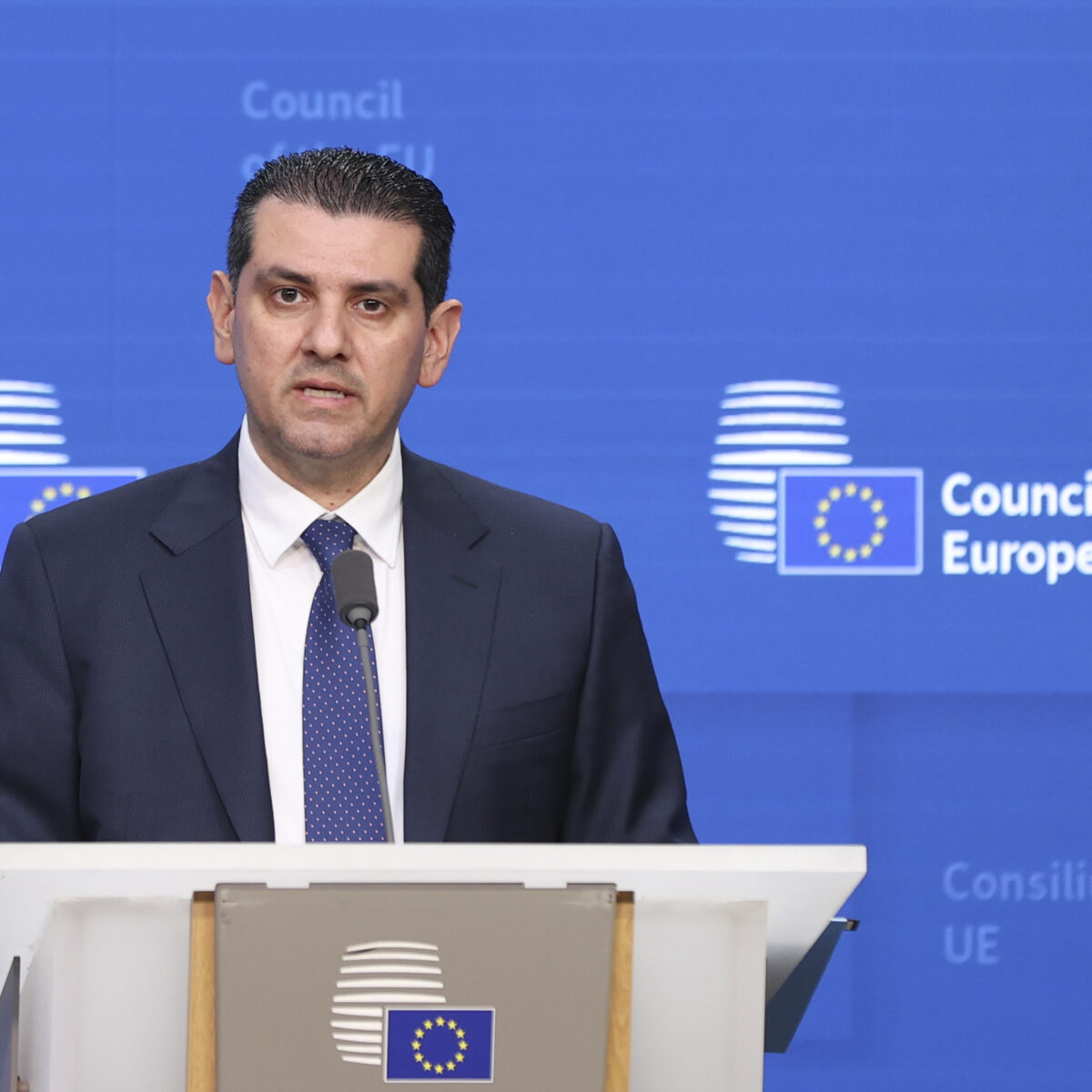
Energy Minister Michael Damianos on Tuesday said that he had called on the European Union to offer more support to “address the impact of the energy crisis” during a two-day informal meeting of the bloc’s 27 member states’ energy ministers in Dublin.
“I called on the European Union to offer more support and appropriate funding to address the impact of the energy crisis and to reduce energy costs for people and businesses,” he said.
He added that the two days’ discussions had “focused on energy affordability, consumer empowerment, electrification, and energy efficiency, as well as energy security, interconnections and the protection of critical infrastructure”.
European Energy Commissioner Dan Jorgensen was also present at the meeting, and said afterwards that “months after the start of the conflict in Iran, it is clear that we are still facing an energy price crisis in Europe”.
“We see little progress around the Strait of Hormuz. Global geopolitics remain extremely turbulent, and as a consequence, prices remain highly volatile,” he said.
He said that since the conflict broke out in the spring, the EU has “already paid more than €100 billion extra for fossil fuel imports without a single extra molecule of energy received”, saying that this provides “a stark example of how dangerous and expensive it is to be dependent on imported fossil fuels”.
On this matter, he stressed that the EU foresees “no immediate risk when it comes to energy supplies in Europe” over the winter, and that “we have done and are doing a lot of work to ensure that by working closely with our member states in this sector”.
“Still, when you have plenty of European citizens struggling with their bills and workers driving to work every day who pay such high prices at the [petrol] station, then to me, it is pretty clear that we are not in a good position,” he said.
As such, he added, “that is why we need to act all together as a union”, because “this level of crisis must not become the new normal”.
Jorgensen calls for ‘temporary, well-targeted’ measures to ease costs
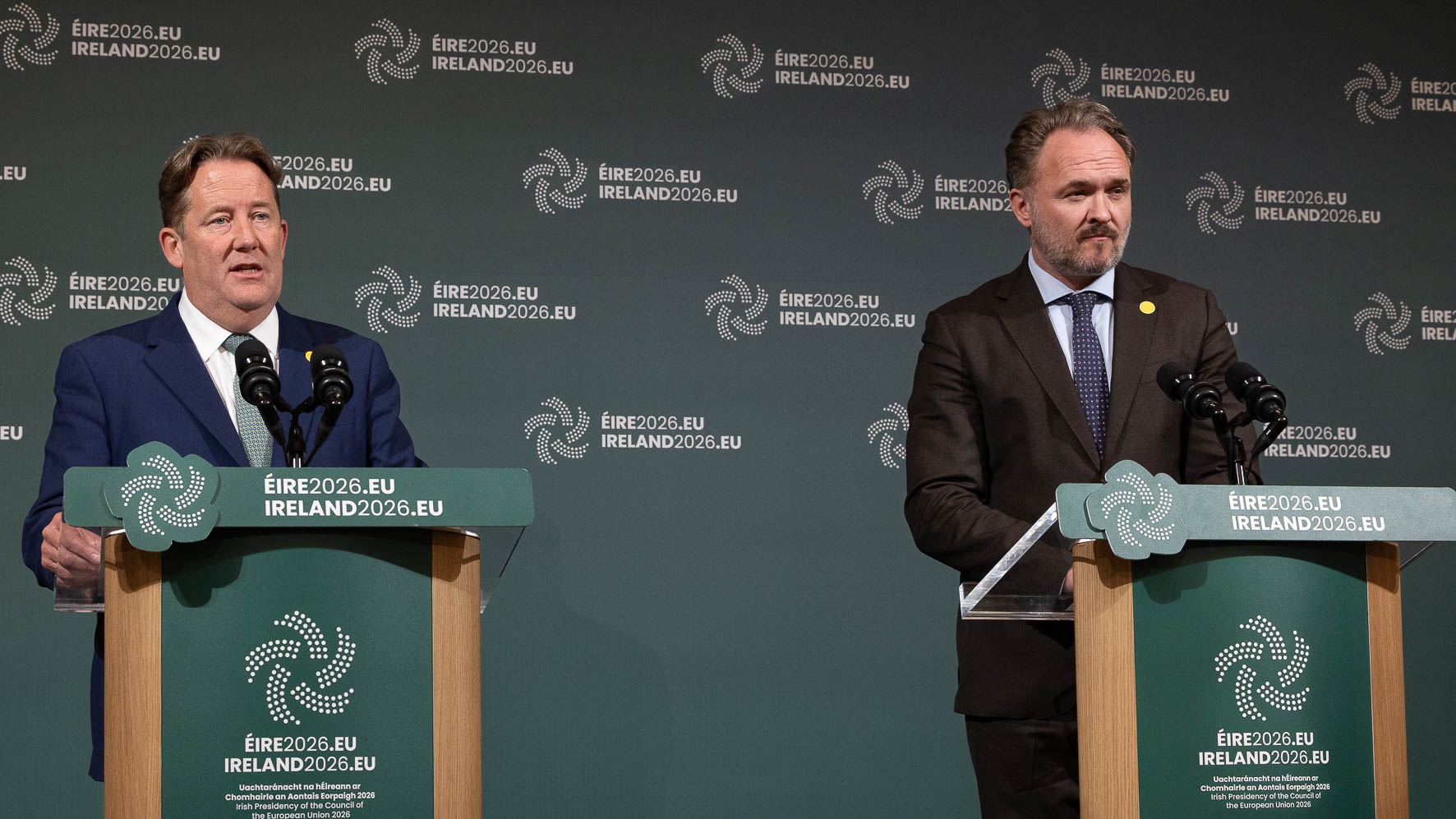
“Addressing energy prices is a top priority for the member states, for me, and for the commission, and we are committed to addressing this situation with an open mind, pragmatism, and flexibility,” he said.
On this front, he said that “Europe’s strategy must be twofold”.
“First, doubling down on the clean transition and implementing structural changes. Then, the other leg of the work is to be flexible, pragmatic in this very difficult transition period. We must help member states, companies, citizens to handle this crisis,” he said.
Regarding the measures member states’ governments could take to combat rising prices, he said that “it is important to stick to temporary and well-targeted measures”.
“Fiscal resources are limited and we should not waste public money on measures that are counterproductive in a fossil energy crisis, and I urge governments to use the fiscal flexibility with which we have provided them for clean energy investments,” he said.
With these comments, he appeared to be warning against desire expressed in some parts of the continent for more radical measures to be taken to combat rising fuel prices, with German Economy Minister Katherine Reiche having said earlier this month that it would be “sensible” for value added tax on fuel to be temporarily reduced.
At present, as a European Commission spokesman has previously told the Cyprus Mail, cuts to VAT on fuel would not be compliant with European Union law, but with prices continuing to rise, more drastic measures are being sought.
In Italy, state-controlled energy company Eni having announced that at all its petrol stations across the country, it would sell diesel for no more than €2.19 per litre and petrol for no more than €1.99 per litre.
At the same time, Azerbaijani state oil company Socar, which owns Italiana Petroli, announced that Italiana Petroli petrol stations would also have their prices capped, but did not state what its own cap would be.
Price of diesel reaches €2 per litre in Cyprus
Cypriot Finance Minister Makis Keravnos was asked about the possibility of introducing a similar price cap in Cyprus, and replied by saying that “we have been taking measures for two years which are much more improved than any measures taken by any other European government”.
Jorgensen’s reference to “targeted” measures echoes sentiments expressed by international financial organisations, with the International Monetary Fund’s mission chief for Cyprus Alex Pienkowski having in 2024 called on the Cypriot authorities to “resist” any expansion of “non-targeted reductions in excise taxes”.
Fears of price increases have come with the price of diesel reaching €2 per litre this week, and the price of petrol hovering at around €1.68 per litre in Cyprus, following an expansion of Yemen’s Iran-backed Shia militant Houthi movement’s control and actions in the country.
The Houthis now control almost the entire western coast of Yemen, including the eastern half of the Bab al-Mandab strait, a crucial chokepoint between the Gulf of Aden and the Red Sea, and have also attacked Saudi Arabia’s east-west oil pipeline.
Around five per cent of global oil supplies passed through the Bab al-Mandab strait in February, typically passing northwards towards the Suez Canal and the Mediterranean beyond.
These issues have caused the price of oil to rise, adding pressure to the economy and onto people’s household expenses.