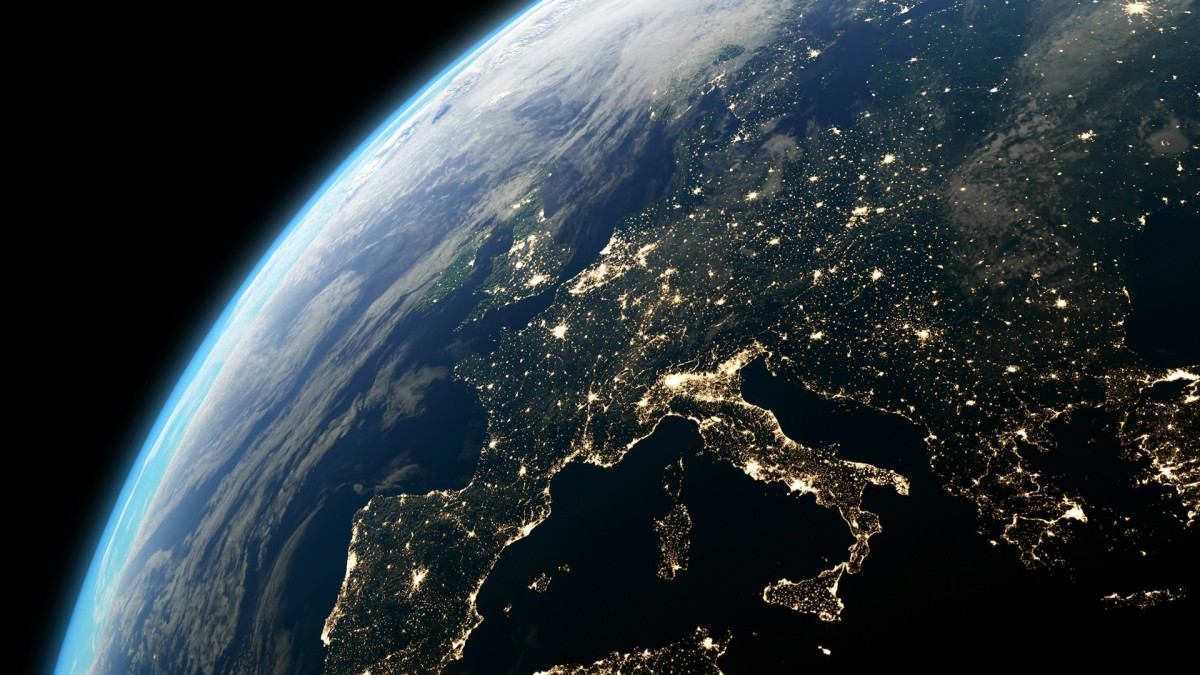
Europe desperately needs an energy storage revolution. As the region gets rocked by the third energy crisis in four years, the continent’s insufficient indigenous energy systems, and backups to those systems, has become abundantly and painfully clear. “We swore we’d learn. We promised things would change but here we are,” a ‘highly frustrated European diplomat’ was recently (anonymously) quoted by the BBC in March.
As a result, the continent is now in an incredibly precarious position that could leave the bloc highly vulnerable to widespread energy shortages, grid failures, and even matters of national security as energy becomes Europe’s adversaries’ most potent weapon. Getting through the next year will be a major stress test for the European Union, as the region endures historic energy- and life-threatening heat waves while also scrambling to prepare for what is sure to be a ‘long, cold winter.’ Europe’s natural gas reserves are perilously low at just barely more than 50 percent capacity, and imports have stemmed to a mere trickle driven by the closure of the Strait of Hormuz, with no relief in sight.
Avoiding the next energy crisis will require Europe to ease its reliance on energy imports, thereby sheltering European markets from external conflict and market shocks. As a result, European leaders are fast-tracking the development of indigenous energy supplies, most notably solar and wind energy. But as intermittent renewable energies like solar and wind take up more and more of Europe’s energy mix, new energy security concerns arise. As wind and solar are dependent on the weather, the time of day, and the season, energy demand and supply are becoming increasingly mismatched, resulting in extreme market volatility and grid vulnerabilities.
In response to this compounding crisis, European leaders are finally treating energy storage as a matter of priority for the continent’s energy security and geopolitical stability. In June, energy ministers signed a historic agreement to triple the European Union’s energy storage capacity, starting by adding approximately 30-35 gigawatt-hours (GW) of new capacity by 2028. Currently, the EU has just 55 GW of installed storage capacity, a starkly scant amount compared to the estimated 200 GW of storage capacity that the bloc will need by 2030.
“For the first time, the EU has established a clear political direction, turning storage from enabling technology to a delivery priority”, Walburga Hemetsberger, CEO of SolarPowerEurope, was recently quoted by Euronews.
Currently, lithium-ion batteries dominate the energy storage sector on a global scale. But these batteries have some key drawbacks, including the problematic reality that they can only hold onto energy for a maximum of about four hours. Balancing energy supply and demand will require long-term energy storage solutions, which are still in developmental stages. But European leaders are taking a leap of faith and better big on one of these nascent technologies.
Ore Energy, a Netherlands-based company just landed a huge deal to deploy 1 gigawatt-hour (GWh) of energy storage through the use of an iron-air battery which, in theory, is capable of storing energy for up to four days rather than four hours. “The project is notable not only for its size but also because it’s the first iron-air storage agreement with a European energy supplier,” Electreck wrote in a report published earlier this week. The technology uses iron, water, and air, and is configured out of modular 40-foot containers which can be interconnected to boost capacity as needed.
“European grids are already curtailing clean power at scale, wasting electricity that costs billions to generate, while we stay dependent on fossil fuels to cover the gaps,” said Ore Energy cofounder and chief executive officer Aytaç Yilmaz. “Short-duration batteries alone can’t fix this. They shift solar by a few hours, but wind-heavy European grids need storage that works across days, not hours.”
If successfully scaled, this technology could be a major gamechanger for European markets, which have struggled to keep up with the rest of the world when it comes to installed energy storage capacity. It will also provide much-needed resilience and autonomy to the European energy sector. “Without optimised storage, the EU remains dependent on imported fossil gas to fill gaps when the sun sets or winds fade,” Euronews recently reported. “Despite renewables supplying 44 per cent of EU electricity, the bloc still imports around 55 per cent of its total energy, including oil and gas.”
By Haley Zaremba for Oilprice.com