In February 2026, the Government of Maharashtra disbursed over ₹14,000 crore in disaster relief for Kharif crop losses to 89 lakh farmers in just five days.
The following month, in March 2026, the Chhattisgarh government successfully transacted MSP-based paddy procurement, covering over 32 lakh farmers in a single season.
A few years ago, the sheer scale and velocity of such exercises would have been unthinkable in a sector traditionally defined by fragmentation – whether of land records, beneficiary data, or administrative workflows.
Today, these milestones represent a powerful proof point for the effectiveness of the robust Digital Public Infrastructure (DPI) rewriting the playbook for 21st-century Indian agriculture -AgriStack.
Blueprint of UPI
This transformation follows the exact blueprint of the Unified Payments Interface (UPI) revolution. Just as UPI decoupled banking from physical branches by building an open, public protocol, AgriStack is transforming India’s disconnected agri-economic landscape into an integrated digital ecosystem. The system connects three open, foundational registries onto one digital platform:
· The Farmers’ Registry: A single, verified digital identity for every farmer. It is connected to their verified farmland plot records.
· The Crop Sown Registry: A dynamic registry that accurately captures and maps exactly what crops are being grown and harvested each season.
· Geo-Referenced Village Maps: A comprehensive database providing spatial data and precise boundary mapping for agricultural land, linking geographic realities directly to land ownership.
Just like UPI made financial transactions instant and effortless, AgriStack is making it easier for farmers to get the support they need, right when they need it. Consequently, the impact of the platform will be significant in all aspects of a farmers’ business – from sowing crops to accessing financial aid to market linkages.
Real-time, tamper proof data
Bridging the gap in agricultural credit through transparency: Historically, small and marginal farmers have faced a significant credit gap from Indian banking and financial institutions because securing a formal loan was plagued by administrative delay, collateral verification costs, and paperwork. The advent of AgriStack bridges the trust gap by linking the farmer registry to RBI’s Unified Lending Interface (ULI), thus providing a secure conduit for lenders to access a farmer’s consolidated data instantly. The real-time data clarity has not only collapsed transaction timelines from weeks to hours but also provided RBI the confidence to facilitate better financial assistance to farmers. For instance, the credit limit of collateral-free credit has been increased to ₹2 lakh per borrower under the Kisan Credit Card scheme.
Verifying farmer claims in real time through traceability: Before the advent of Agristack, farmer credit was disbursed based on self-reported data, leading to misallocated funds or multiple loans taken out on the same piece of land. To address the issue, the Crop Sown Registry, powered by automated Digital Crop Surveys (DCS), gives lenders real-time, tamper-proof data at different stages of cultivation. The registry maintains a historical, plot-level record of key details, such as when, where, and what crops are planted in each cropping season. Banks can match loan amounts to exact crop acreage, lowering risks and preventing loan stacking, thus drastically lowering their risks. The government targets to cover all 30 crore farm plots in 604 districts in the country by the Kharif season 2026.
Enabling trust through a single source of truth: For decades, rural data i.e. crop and land records were filled out by guesswork away from the field. By mapping paper records onto precise GPS coordinates of geo-referenced village maps, AgriStack establishes a geo-tagged digital fence around every farm plot. A surveyor cannot log a crop or upload a photo unless their live location physically matches the plot’s coordinates. By doing so, the platform has eliminated the scope for proxy reporting and data fabrication. To date, 5.4 lakh villages out of the country’s 6.75 lakh have been fully geo-referenced.
Facilitating last mile connectivity
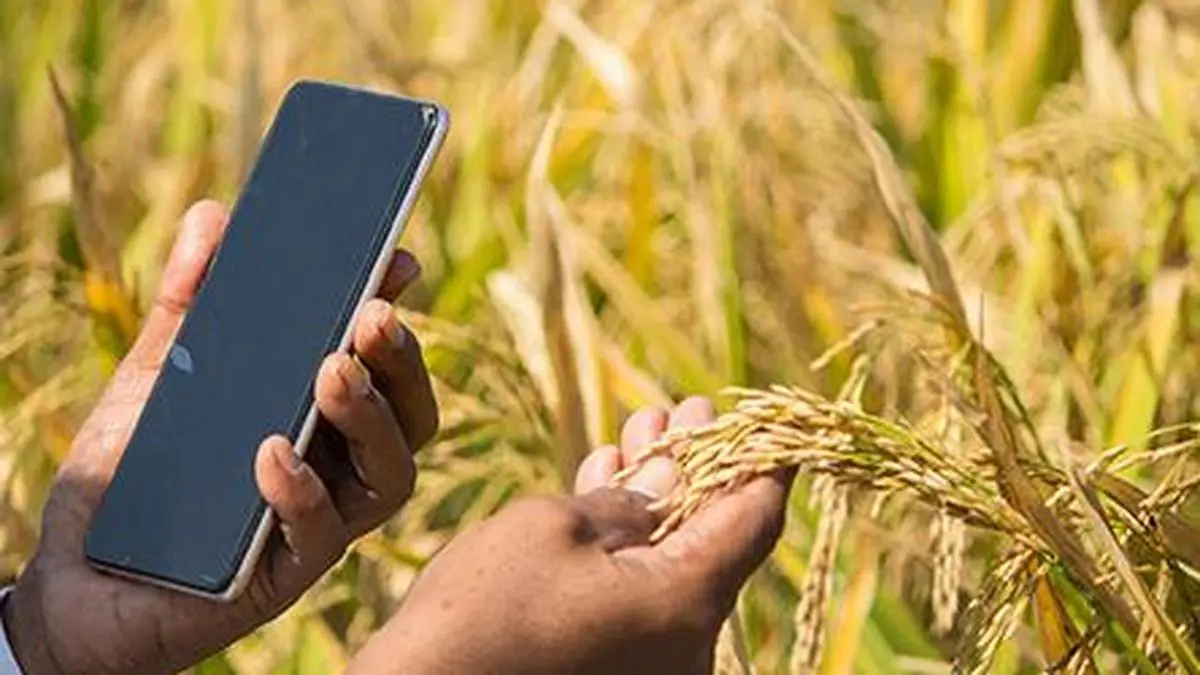
Crucially, AgriStack is built to ensure no farmer is left behind. To bridge the digital divide in remote regions, the platform doesn’t require every farmer to own a smartphone or always have access to high-speed internet. Instead, it relies on on-the-ground support networks. Local Common Service Centres (CSCs), farmer cooperatives, and village-level Krishi Sakhis (community workers) ensure that even the most remote cultivators have equal access to the platform.
By turning raw agricultural field data into an inclusive public utility, AgriStack is reshaping agriculture from a high-risk gamble into a trusted, data-powered engine of rural prosperity.
(The author is Co-founder and CEO of StarAgri and Chair, Agriculture & Allied Sector, Maharashtra State Council, ASSOCHAM. Views are personal.)
Published on June 28, 2026