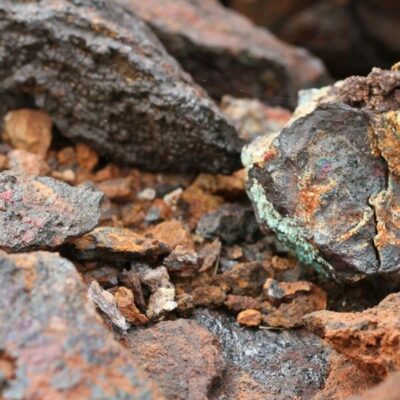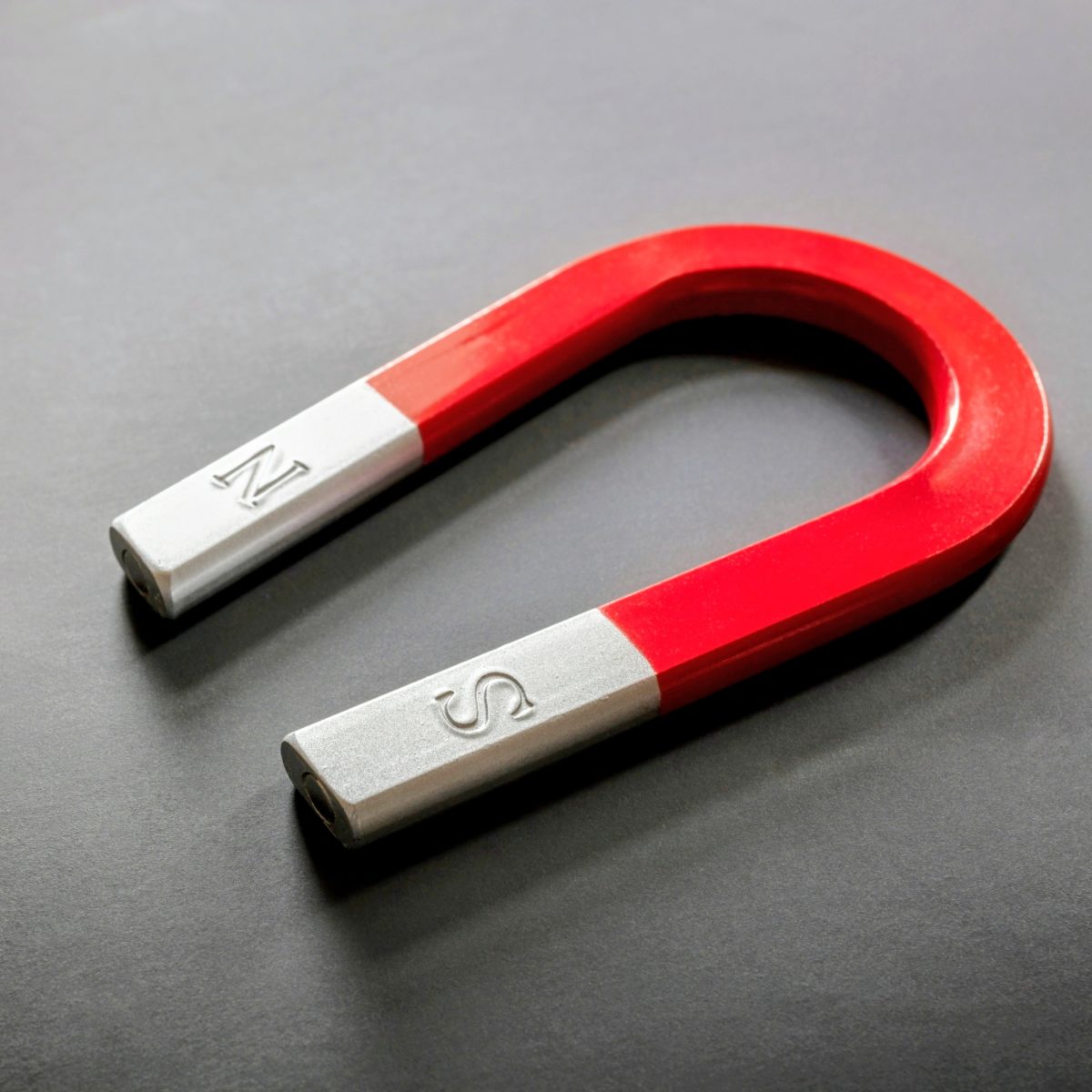
Common solid magnets made from iron-based alloys can help concentrate rare earth elements in underwater environments, where they may accumulate and form crystals.
This research provides a groundbreaking and cleaner way to recover materials for modern technology efforts.

Inside a liquid cell beside a magnet, rare earth ions gather into concentrated bands, rather than remaining evenly mixed.
Watching those bands take shape at the Pacific Northwest National Laboratory (PNNL), Giovanna Ricchiuti showed that magnetic gradients alone could be what drives this separation.
The effect did more than nudge the ions closer to the magnet, because it created distinct zones where the metals became far more concentrated than the surrounding liquid.
That early sorting step is crucial regarding the challenge of separating nearly identical metals.
Uncommon earths drive modern tech
Rare earth elements keep phones, turbines, batteries, and defense hardware working because their unusual properties enable compact, high-performance parts.
“There is an urgent demand for rare earth elements due to recent technological advancements and supply chain disruptions,” said Ricchiuti.
Separating many lanthanides, a closely related family of rare earth metals, is hard because they behave almost like chemical twins when placed in solution.
That near-twin composition has left valuable material trapped in waste streams that still resist easy, low-cost recovery.
Coal ash, mine tailings, and produced water, salty wastewater from oil and gas wells, can all carry trace rare earths.
Current plants usually rely on liquid solvents or specialty resins, repeated chemical steps, in order to tease similar metals apart.
“Traditional separation methods use large amounts of organic solvents,” said Ivani Jayalath, a doctoral student at the University of Mississippi.
Each extra step raised cost, burned energy, and left more liquid waste before the metal ever reached a factory.
A useful, narrow edge
The new approach worked by exploiting magnetic susceptibility, a measure of how strongly a substance responds to a magnetic field.
Heavy ions such as dysprosium, a rare earth metal used in high-performance magnets, felt a stronger pull than lighter ones such as lanthanum in the same liquid.
A field that changed across space could nudge one group toward the magnet while another lagged or drifted away.
That small magnetic contrast gave engineers a new sorting handle. Before, relying upon chemistry alone offered very little separation power.
Waves reveal hidden movement
At PNNL, the team used Mach-Zehnder interferometry, a laser method for tracking tiny density changes in liquid.
As ions moved, the instrument recorded enrichment zones near the magnet and depletion zones where the liquid lost those ions.
Ricchiuti explained that the magnetic field drives shifting waves of ion concentration, creating regions where ions cluster.
Others are pushed away through a balance of magnetic motion, diffusion, and electric forces generated within the liquid.
The wave-like patterns showed that the magnet was not merely holding ions in place but constantly redistributing them over time.
Feedback shapes the flow
Magnetic pull was only part of the story, because the rearranged ions also built electrochemical potentials, local voltage-like differences inside the liquid.
When charge became uneven, self-generated electric fields pushed back on diffusion and helped organize the migrating ions.
The paper’s model explained how a weak permanent magnet could still create long-range movement without outside power.
Electrical feedback turned a simple magnet into an active separation tool rather than an inert object beside the beaker.
Crystals mark the shift
When a common chemical called oxalate was added, the concentrated metal ions began forming a solid compound right at the magnet’s surface, making them easier to collect.
Crystallization helped because a solid can be separated more easily than the same metal dissolved across a large liquid volume.
Near the magnet, concentrations rose to three to four times the bulk solution, enough to push the system toward that solid state.
The result showed that magnets could help move the metal from a dissolved state into a solid form that can be collected.
Lower energy, fewer chemicals
“Using magnets offers a simple and potentially more sustainable way to assist separation processes,” said Jayalath.
Because permanent magnets need no continuous electrical input, the method pointed toward lower operating energy than voltage-driven systems.
Early technoeconomic estimates suggest that that this would result in lower chemical costs. compared to today’s standard methods for magnet-responsive rare earths.
Those provisional savings still explained why a lab result could already attract serious industrial interest.
Scaling signals greater complexity
This was an initial study, and the team used simplified solutions rather than abstract chemistry found in industrial waste.
Real waste streams can contain competing ions, suspended particles, and changing acidity, each of which could complicate the magnetic effect.
Large systems will also need careful design so magnets, flow paths, and crystal collection steps keep working at industrial volumes.
Those limits align the future agenda for scaling-up instead of undercutting passive magnetic gradients that can drive useful transport.
Toward cleaner sourcing
A cheap magnet, in the right geometry, can move scarce metals, reshape the liquid around them, and start converting them into recoverable solids.
If future tests handle real waste streams, the approach could build domestic supply chains while wasting far fewer chemicals.
The study is published in Separation and Purification Technology.
—–
Like what you read? Subscribe to our newsletter for engaging articles, exclusive content, and the latest updates.
Check us out on EarthSnap, a free app brought to you by Eric Ralls and Earth.com.
—–