Metals prices fell Wednesday as Middle East tensions and concerns over higher-for-longer U.S. interest rates weighed on sentiment, though softer-than-expected inflation data later helped limit losses.
Base metals including copper, aluminum and zinc declined in London trading after U.S. forces launched another attack on Iran. Prices later recovered some ground after data showed U.S. core consumer inflation rose less than expected in May, even as headline inflation accelerated to 4.2%. That inflation rate had the fastest pace in more than three years.
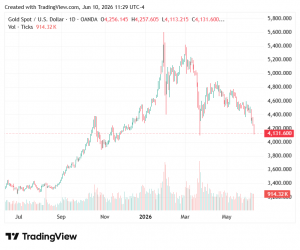
Meanwhile, precious metals continued to show weakness, with gold falling as much as 2.6% as the prospects of a U.S. interest rate hike this year weighed on the non-yielding metal. Silver, despite being more volatile, dipped just 1%.
Since the start of the war in the Middle East, bullion has lost nearly 20%, wiping out all of its gains in 2026.
Metals markets are set on tighter liquidity after strong employment data in the U.S. last week, playing a bearish role for assets including precious metals and industrial materials, Li Xuezhi, research head at Chaos Ternary Futures Co., told Bloomberg.
The latest volatility highlights the competing forces shaping metals markets this year. Investors are weighing the impact of elevated interest rates and geopolitical uncertainty against expectations for stronger long-term demand from data centres, electrification and other technology-driven industries.
Long-term positive
Nevertheless, the long-term outlook for metals remains positive. For gold, analysts point to factors like strong central bank buying and bullion’s elevated role as a reserve asset, with many still predicting prices to approach the $5,000 per oz. level this year.
“Despite recent price consolidation, inflation, central bank buying and currency debasement concerns continue to support gold,” Paul Wong, a market strategist at Sprott Asset Management, said in a note this week.
Industrial metals are also facing strong tailwinds in the coming years, driven largely by increased spending on technology. China, the top consumer market, said it is preparing to spend around 2 trillion yuan ($295 billion) over the next five years on building data centres, which would require more copper.
Analysts at Fitch Solutions unit BMI are expecting metals to experience what it calls “a multi-decade structural shift” powered by advanced technological integration, supply chain diversification and shifting consumption patterns.
Over the coming decades through to 2050, the ability to adapt to the changing dynamics of the industry will determine long-term company survival, BMI said in a note published on Wednesday.