Scientists have discovered a new type of bacteria in the Talnakh deposit of copper-nickel ores located in the Krasnoyarsk Territory. The microorganism lives in extreme conditions and oxidizes sulfur, thereby participating in bio—leaching, the natural process of extracting copper, nickel, cobalt and gold from sulfur-containing ores. The new species can be used as part of microbial communities for environmentally friendly processing of raw materials during mining in the most difficult conditions. For example, at high acidity, temperature, and the presence of metals that normally inhibit or kill other microorganisms. Read more about the new approach in the Izvestia article.
New microorganisms in mineral deposits
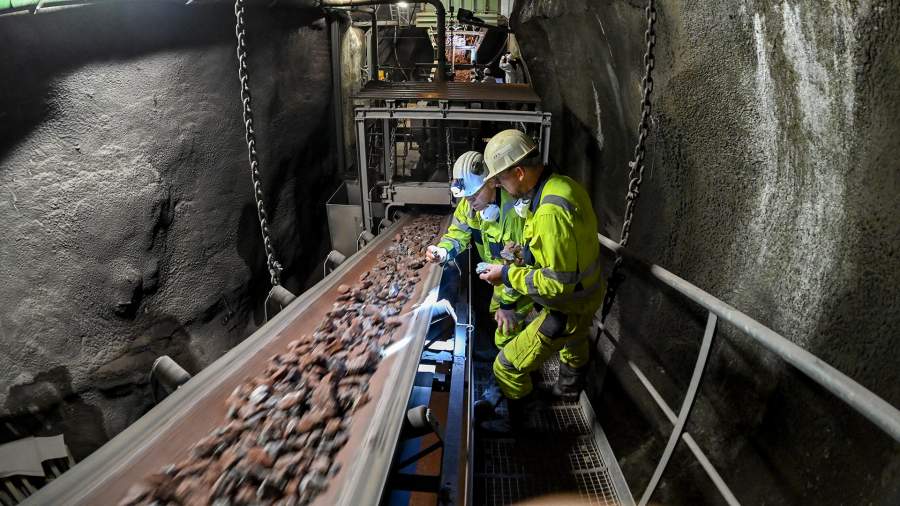
Bacteria live in deposits of copper, nickel, iron and other ores, which help to obtain valuable metals originally associated with sulfur in their pure form. This natural process of mineral dissolution, called bio-leaching, occurs due to the fact that microorganisms oxidize sulfur and thereby “remove” it from compounds with metals. One of the most common genera of sulfur—oxidizing bacteria is Acidithiobacillus. However, most of the known microorganisms are sensitive to extreme acidity, high concentrations of salts and heavy metals, which limits their use in difficult conditions of some deposits. Therefore, scientists are looking for new microorganisms, oxidizing agents.
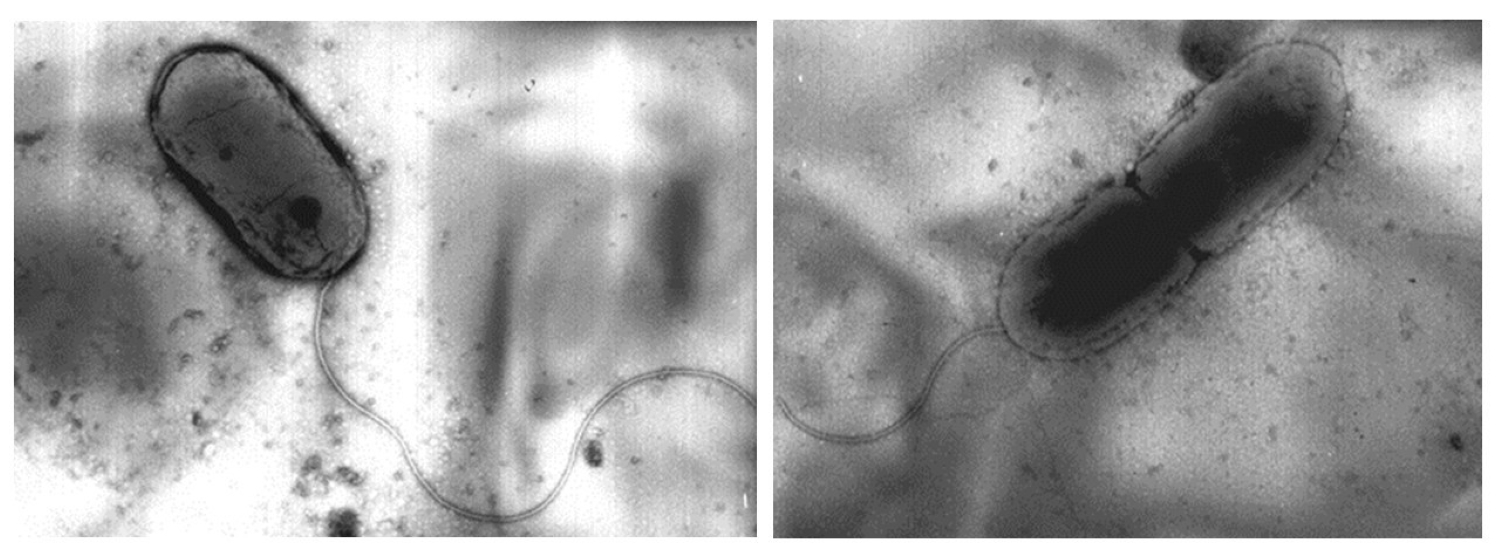
Photo: Panyushkina et al. / Systematic and Applied Microbiology, 2026.
Electron micrographs of Acidithiobacillus sibiricus cells
Researchers from the Federal Research Center “Fundamentals of Biotechnology” of the Russian Academy of Sciences have discovered a new species of bacteria from the genus acidithiobacillus in the Talnakhskoye deposit in the Krasnoyarsk Territory. The authors grew the microorganisms they found in the laboratory and obtained a pure culture. It turned out that the bacterium is able to grow at extreme acidity and at temperatures up to 43 degrees.
Scientists analyzed the genome of the discovered species and found in it genes responsible for sulfur oxidation processes, as well as encoding important protective mechanisms — thanks to them, the microorganism can grow in aggressive environments. Thus, the described bacterium has genes that ensure its resistance to heavy metals — copper, zinc, nickel and cobalt — and neutralize reactive oxygen species that oxidize membranes and proteins and lead to cell death.
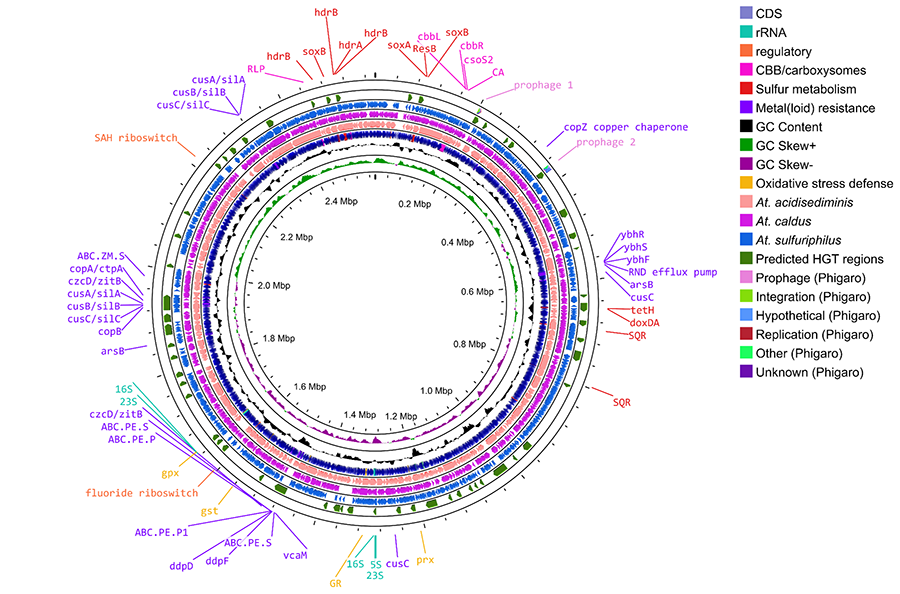
Photo: Panyushkina et al. / Systematic and Applied Microbiology, 2026
Comparative analysis of the circular map of the chromosome
— The individual properties of these bacteria turned out to be extremely interesting.: they form large accumulations of cells on the surface of sulfur particles, which in the future can increase the efficiency of ore processing. Combined with its resistance to extreme conditions, this makes the microorganism an ideal object for metal leaching, even in deposits with complex ores,” said Anna Panyushkina, Candidate of Biological Sciences, researcher at the Laboratory of Chemolithotrophic Microorganisms at the Fundamental Principles of Biotechnology Research Center of the Russian Academy of Sciences.

Photo: Anna Panyushkina’s personal archive
The first author and head of the study is Anna Panyushkina
Based on these features and the genetic differences of the bacterium from other previously described microorganisms, the authors isolated it into a separate species, named after the region where it was found, Acidithiobacillus sibiricus.

Photo: Maxim Muravyov’s personal archive
Maxim Muravyov, Head of the project supported by the Russian Science Foundation grant
— In the future, we plan to study the characteristics of this bacterium in relation to the extraction of valuable metals from specific natural minerals, find the maximum concentrations of heavy metals at which the microorganism can “work”, and also investigate the mechanisms of its resistance to these metals. This will make it possible to understand in which processes and for which types of ores the use of the described bacterium is most promising,” said Maxim Muravyov, project manager, PhD, researcher at the Laboratory of Chemolithotrophic Microorganisms at the Fundamental Principles of Biotechnology Research Center of the Russian Academy of Sciences.
Mining with the help of bacteria
The found microorganism can be used as a biochemical assistant in ore processing. The bacterium oxidizes sulfur, destroys the bonds between metals and sulfur-containing compounds, and thereby facilitates the extraction of copper, nickel, cobalt and other valuable elements, Dmitry Vysokogorsky, NTI expert on promising and new energy sources, told Izvestia. In the future, this may make mining more environmentally friendly, because some of the processes where more stringent chemical methods now have to be used can be transferred to biotechnological rails.
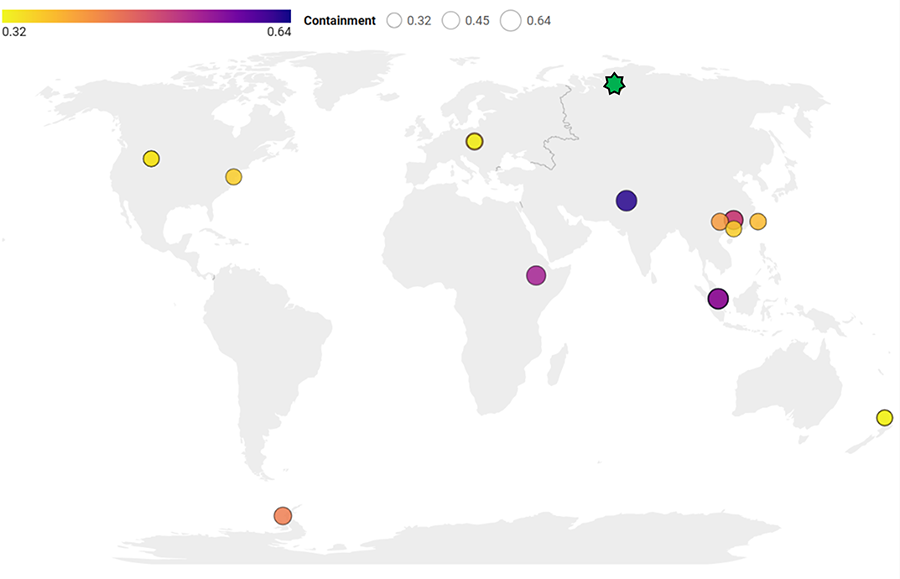
Photo: Panyushkina et al. / Systematic and Applied Microbiology, 2026
Geographical distribution of 19 metagenomes with defined coordinates
— The special value of this particular bacterium is that it is adapted to very harsh conditions, such as high acidity, temperature and the presence of metals, which usually inhibit or even kill other microorganisms. This means that it can be considered not as a laboratory sample for a collection, but as a real candidate for industrial bio—communities that work directly in complex ores,” the expert said.
Hypothetically, this could lead to mining becoming more targeted, the expert noted.
In the future, a new bacterium can be launched directly into the layers of deposits or into the vats of bioreactors in order to process poor ores that are unprofitable to melt using traditional methods. This will reduce energy consumption and sulfur dioxide emissions, said Arina Kholkina, a molecular biologist.
— The direction of biogidrometallurgy itself is developing rapidly. Already today, about 15-20% of the world’s copper is mined with the participation of bacteria. But in the future, microorganisms will be able not only to extract metals, but also selectively “collect” rare earth elements from electronic waste, clean industrial wastewater, and even work on asteroids in closed—loop installations, she said.
Bacteria are becoming a full—fledged tool of “green” metallurgy – without muffle furnaces and toxic reagents, Arina Kholkina emphasized.
The results of a comprehensive study supported by a grant from the Russian Science Foundation have been published in the journal Systematic and Applied Microbiology.