
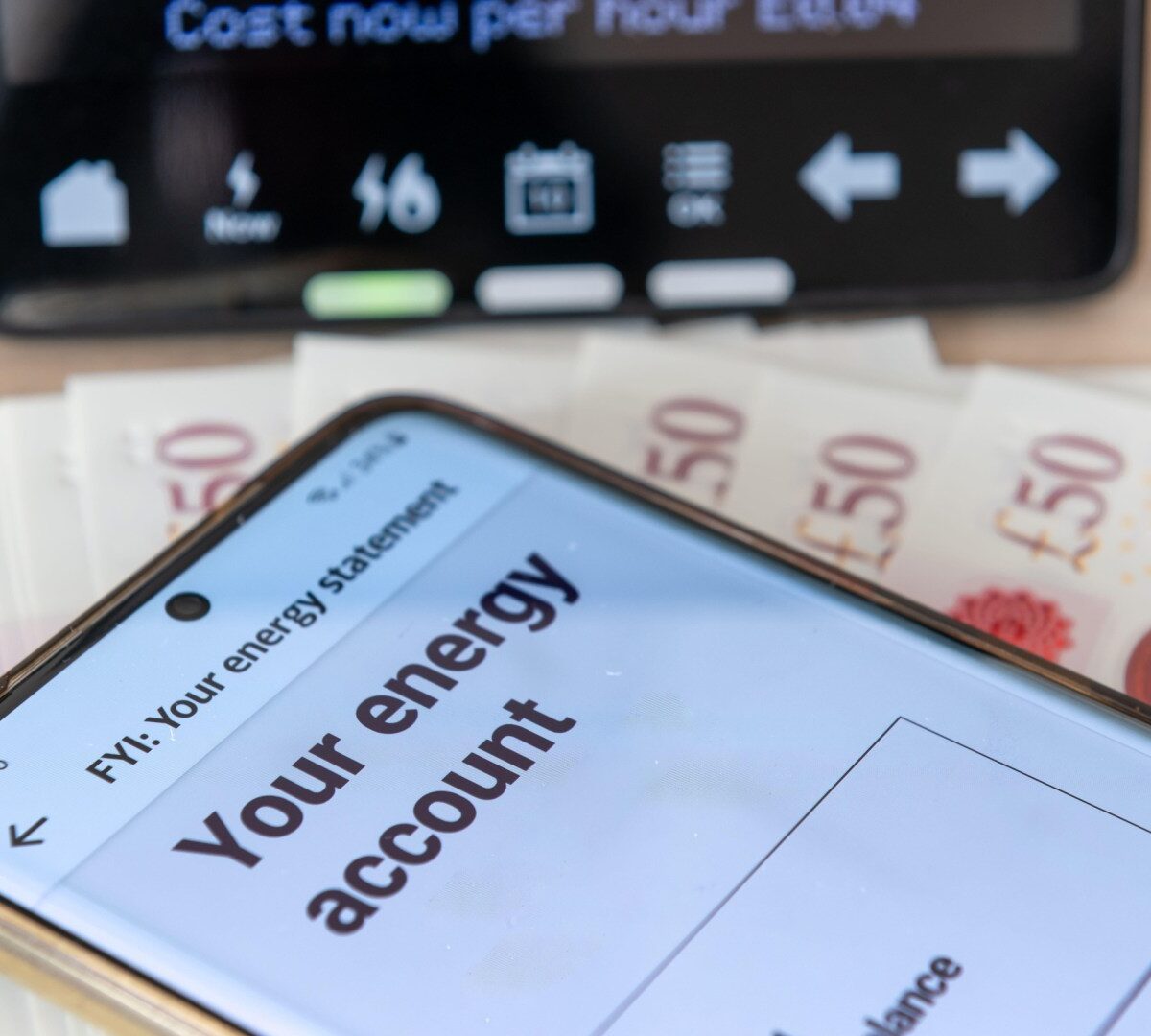
HOUSEHOLDS could have their financial information shared with energy companies to decide who pays higher bills, in a move blasted as “outrageous”.
A new Government bill could bring in new powers to offer more targeted energy support schemes to the poorest households.


But it could leave some wealthier families paying even higher energy bills – just as households are seeing astronomical price rises.
Ministers want to introduce new laws so that HMRC income data can be shared with energy suppliers.
This would help firms decide which households receive cheaper bills and which should be paying more.
The plans are part of the Energy Independence Bill, which was introduced to Parliament last week and has not yet been passed.
Read more on energy bills


Using income data means support could reach poorer households who usually slip through the net because they’re not on benefits.
More than 40% of households in fuel poverty don’t claim benefits, according to the Department for Energy Security and Net Zero (DESNZ).
Around half of the poorest households are expected to miss out on the Warm Home Discount this winter, which takes £150 off the bills of around six million households on benefits.
But the cost of any extra support provided by the new bill could be shouldered by taxpayers.
Impact assessments published by the Government say that if it is added to bills, it would fall “principally on those most able to pay”.
Households on higher incomes that don’t need the help “are expected to face higher bills”, the documents say.
They add that better income data could identify “households in need and potentially households most able to fund the scheme”.
Energy prices have already soared since the Iran war, with experts predicting the energy price cap could rise by around 29% in January.
That could add a massive £429 a year to the average dual-fuel bill.
Shadow energy secretary Andrew Bowie said the new plans are an “outrageous abuse of government power“.
“Labour’s answer to almost every problem is more state control, more snooping and another bill,” he said.
“They have no business rummaging through people’s private financial and family records to bankroll their latest energy gimmick.”
Consumer rights expert Martyn James said targeting support at struggling households “seems sensible rather than mass payments where the wealthy are treated the same as those struggling”.
But he said: “HMRC is not the means to do this, as anyone who has spent and hour or two on the phone trying to sort a tax bill out will know.
“Outdated systems, complicated records and countless errors mean HMRC is far from the right organisation to identify people struggling.”
The data that could be shared includes HMRC income and Child Benefit records.
It also includes benefits and pensions records, property records and energy efficiency ratings for homes.
The number of occupants in households and disability needs could also be shared.
At the moment, the law only allows the Government to share this kind of data with energy suppliers to help households in fuel poverty.
The law change means the data could also be used to help people outside that group, including those facing high bills, hard-to-heat homes or extra energy needs because of a health condition.
No new energy support scheme has been announced yet and Government documents suggest it wouldn’t be in place until at least winter 2028-29.
Government departments would not be forced to hand data over and nothing will be shared until a specific scheme has been set up.
The Sun understands that any data sharing will be within existing privacy laws.
A DESNZ spokesperson said: “The measure in the Energy Independence Bill is supported by industry and will help us target future support to households who need it the most – they do not impact or change individuals’ privacy or data protection rights.
“This is one of the steps we’re taking to make bills fairer for households.”