In recent years, California has grown increasingly progressive in its energy policy, shifting away from fossil fuels toward renewable alternatives. The state has invested heavily in developing its renewable energy capacity over the last decade, in a bid to decrease reliance on oil, coal, and gas. This has helped it reduce emissions as many other U.S. states struggle to decarbonise. While the move is seen as positive by millions of Californians, President Trump is not so sure.
The Trump administration has doubled down on its support for fossil fuels over the past year, following the president’s declaration of an “energy emergency” upon taking office in January 2025. The introduction of a wide range of executive orders and federal policies that encourage oil and gas expansion and restrict renewable energy production has led to the stagnation of the green transition in several states. However, California’s Democratic government, led by Governor Gavin Newsom, has not taken this lying down.
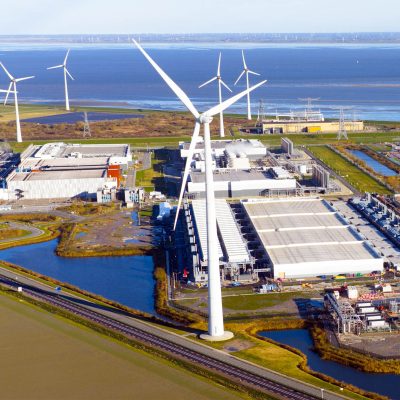
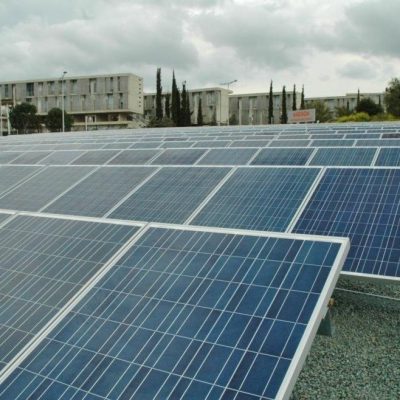
California has established a wide range of renewable energy and decarbonisation targets in recent years, including developing an emission-free grid by 2045 and investing heavily in solar, wind, and battery storage. Between 2019 and 2026, California added 30.8 GW of clean energy and battery storage. Despite still relying heavily on natural gas, which remains the state’s top energy source, gas use has fallen in recent years.
California’s Governor Newsom explained, “We’re running the fourth-largest economy in the world [on] 67 per cent, two-thirds, clean energy on nine out of 10 days in 2025… Outside of China, there’s only one other jurisdiction in the world – California – that has as much battery storage implemented.” The sharp rise in renewable energy output and decrease in gas production and use demonstrate California’s commitment to a green transition, even as the federal government pushes for fossil fuel development.
However, President Trump has regularly criticised California for its commitment to renewable energy and suggested that it should instead continue pumping oil and gas. In May, the Secretary of the U.S. Department of Commerce, Howard Lutnick, published a letter calling for an evaluation of the commission, accusing California of “environmental terrorism,” and alleging that the state had obstructed spaceport development. Then, in June, the Trump administration announced plans to assess the California Coastal Commission’s performance.
This followed the California Coastal Commission’s August refusal of a U.S. Space Force request to increase the number of rockets that could launch from a base on California’s central coast, operated by Elon Musk’s aerospace company, SpaceX. The commission was later sued by SpaceX, which accused it of political bias; the lawsuit was settled in April.
The Trump administration has also criticised California’s refusal to approve new oil and gas production. In the wake of the closure of the Strait of Hormuz and subsequent increase in global oil and gas prices, the Trump administration invoked emergency powers to reactivate a California oil operation. The aim is to bring a pipeline that has been shuttered for more than a decade back online, despite concerns stemming from previous leaks in the line.
There is also an ongoing legal dispute between California and the Trump administration over a cancelled offshore wind project. The wind project was expected to support the state’s goal to develop 25 GW of offshore wind by 2025.
California’s attorney general, Rob Bonta, aims to block the Trump administration’s plan to restrict wind development and fast-track oil projects. In May, Bonta stated, “Let’s be clear: this illegal attempt from the Trump administration lets Sable profit at the expense of our environment and public health.” He also accused the federal government of interfering with the state’s “sovereign authority”. In June, Bonta sent the Trump administration a notice of intent to sue.
The California Energy Commission said that the “unlawful agreement between the U.S. Department of the Interior and Golden State Wind LLC… puts at risk California’s clean energy gains, thousands of high-quality jobs, and more than $100 million in public investments in the offshore wind industry, including voter-approved climate funds.” The deal outlines the reallocation of $120 million in taxpayer money: abandoning offshore wind plans in federal waters to invest an equal amount in out-of-state fossil-fuel projects.
California Energy Commission Chair David Hochschild stated, “California strongly condemns yet another reckless Trump Administration misuse of taxpayer dollars that undermines clean energy growth and U.S. energy security… California will continue to lead the way toward a cleaner, more reliable grid powered by domestic resources.”
Every time California tries to move forward with plans to expand its renewable energy capacity and shift away from fossil fuels in favour of a green transition, the Trump administration seems to push back. So far, the California government has been successful in pursuing an agenda focused on clean energy and decarbonisation. Still, each federal push to quash these moves makes it harder to achieve the agenda.
By Felicity Bradstock for Oilprice.com