
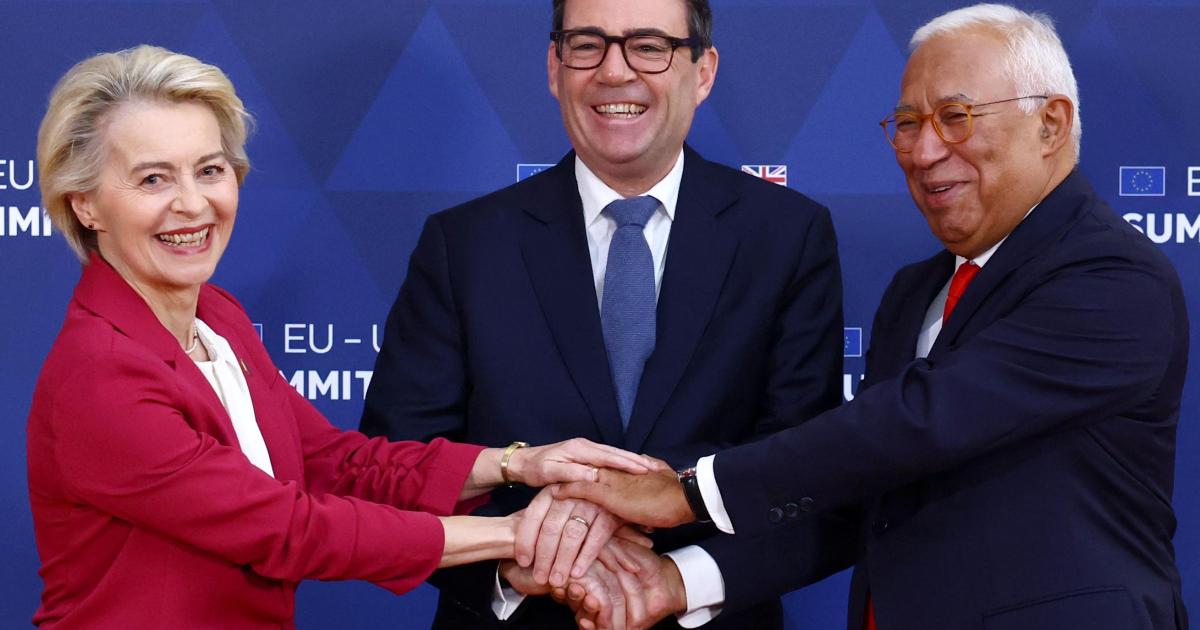
Prime Minister Andy Burnham travelled to Brussels to sign agreements covering food and agriculture exports, emissions trading and youth mobility, in a move the UK Government claims could deliver significant economic benefits for British businesses.
At the heart of the agreement is a new Sanitary and Phytosanitary (SPS) arrangement, which will see the UK align with EU food safety and plant health regulations by March 2028.
The agreement is expected to remove routine border checks and certification requirements for food and drink products moving between the UK and EU, potentially easing trade for farmers, growers, processors and exporters.
The government estimates the food and agriculture agreement could add £5.1 billion a year to the economy, with businesses also benefiting from reduced administrative and inspection costs.
Official documents published alongside the agreement suggest businesses could save between £25 and £200 on individual certificates, alongside at least £127.60 per load in inspection fees.
For British agriculture, the agreement could also reopen important export opportunities, with fresh sausages, burgers, shellfish from domestic waters and seed potatoes among the products expected to benefit.

Potato industry welcomes clarity
GB Potatoes has welcomed the announcement, particularly the confirmation that seed potato trade with the EU will resume.
Before trade stopped, the sector was worth approximately £11 million annually, and the organisation hopes exports can recover quickly and return to at least that level.
GB Potatoes chief executive Scott Walker said the announcement provided much-needed clarity for an industry which had been concerned about transitional arrangements, particularly for potatoes already lifted and in store.
He said: “The details announced today on the new UK-EU Sanitary and Phytosanitary (SPS) Agreement are welcome.
“We knew an agreement was coming, but there was real concern across the industry about the transitional arrangements, particularly what they would mean for potatoes already lifted and in store, and for potato products moving through the supply chain. Today’s announcement gives us some much-needed clarity and a clearer path towards implementation on March 1, 2028, although there is still a lot to do.”
However, Walker stressed that questions remain over the implications for plant protection products, with further guidance needed before the industry can fully understand the changes.
He added: “There was also considerable concern about what the agreement would mean for plant protection products. The clarity on the transitional arrangements is welcome, but there is a lot of detail still to come. Further guidance is due to be published later today, and we will need time to work through it and understand the implications for the industry.
“With implementation still some way off, strong communication across the supply chain will be essential, so that growers, packers, processors and traders are informed, prepared and able to plan with confidence. GB Potatoes will work with government and industry partners to make sure that information is clear, timely and accessible.”
Scottish red meat sector sees export opportunities
Scotland’s red meat sector has also welcomed the agreement, while stressing that its success will depend on the detail of its implementation.
QMS chair Kate Rowell said the new sanitary and phytosanitary arrangements had the potential to deliver significant benefits for producers and processors.
“The EU is a vital market for Scottish red meat,” she said.
QMS’s latest annual export survey recorded a record £190 million in sales between August 2025 and July 2026, with EU markets accounting for almost 99% of export revenue.

Ms Rowell said reducing certification requirements, costs and delays could make a significant difference to existing exporters, while helping smaller businesses enter European markets.
However, she warned that the implications would not be limited to companies trading directly with the EU, as closer regulatory alignment would also affect domestic producers and processors.
She said: “Ultimately, the success of the agreement will depend on how it is implemented and whether it delivers meaningful benefits across Scotland’s red meat supply chain, while minimising additional costs and complexity for businesses.”

NFU highlights importance of safeguards
Ahead of the conclusion of negotiations, the NFU had called on the government to ensure any agreement protected British food production while delivering smoother trade with the UK’s largest trading partner.
NFU president Tom Bradshaw said alignment could help remove barriers to trade but warned that some areas would need careful consideration to avoid unnecessary disruption to farming businesses.
He said: “Ultimately, this deal should enable smoother trade with our largest trading partner. Alignment in many areas will help remove friction and unlock trade. But there are some areas which need to be treated carefully to minimise disruption to Britain’s farming sector and some which need to be excluded completely.

“We have given clear direction to the government’s negotiating team on what we believe is needed to benefit British food production and farm businesses. At the centre of this are appropriate transition periods specific to individual policy areas and some necessary exemptions to help safeguard areas of progression and innovation.
“It’s important we get this right, so British farmers aren’t unduly bound by rules which restrict our ambitions for food production. Alongside securing necessary exemptions, it’s vital that the UK has a meaningful role in the rule-shaping process in the future and that the voices of British farmers and growers are represented in future discussions.”
The March 2028 implementation date gives businesses time to prepare, but the transition will be an important period for the industry as growers and supply chain businesses assess how the new arrangements will affect their operations.

Wider agreement includes youth mobility
Alongside the agricultural arrangements, the UK and EU have concluded negotiations on a youth experience scheme which could allow 100,000 young people from each side to live, work, study, volunteer or travel in the other territory for up to three years.
European Commission president Ursula von der Leyen said: “We have concluded negotiations on a youth experience scheme.
“It will allow 100,000 young people from each side to spend up to three years in each other’s countries to work, to study, to volunteer, to simply travel.
“These opportunities open horizons, and they create friendships that will last a lifetime.”

The aim is for young people to begin taking up places under the scheme by January 2030, according to a joint UK-EU statement.
The wider agreement also includes arrangements on emissions trading, cooperation on border security and a multi-use pet passport for British owners travelling to the EU.
Mr Burnham said the agreement would help businesses facing the cost of doing business and make exporting easier, while potentially reducing the cost of the weekly shop.
For British agriculture, the immediate focus will be on the detail of the SPS agreement, the safeguards available to domestic producers and the practical steps needed ahead of implementation.