
Benguerir – The University Mohammed VI Polytechnic (UM6P) launched the Center for Applied Systems Analysis (CASA) during its 6th Science Week, aiming to break down disciplinary silos in agricultural research across its Benguerir and Rabat campuses.
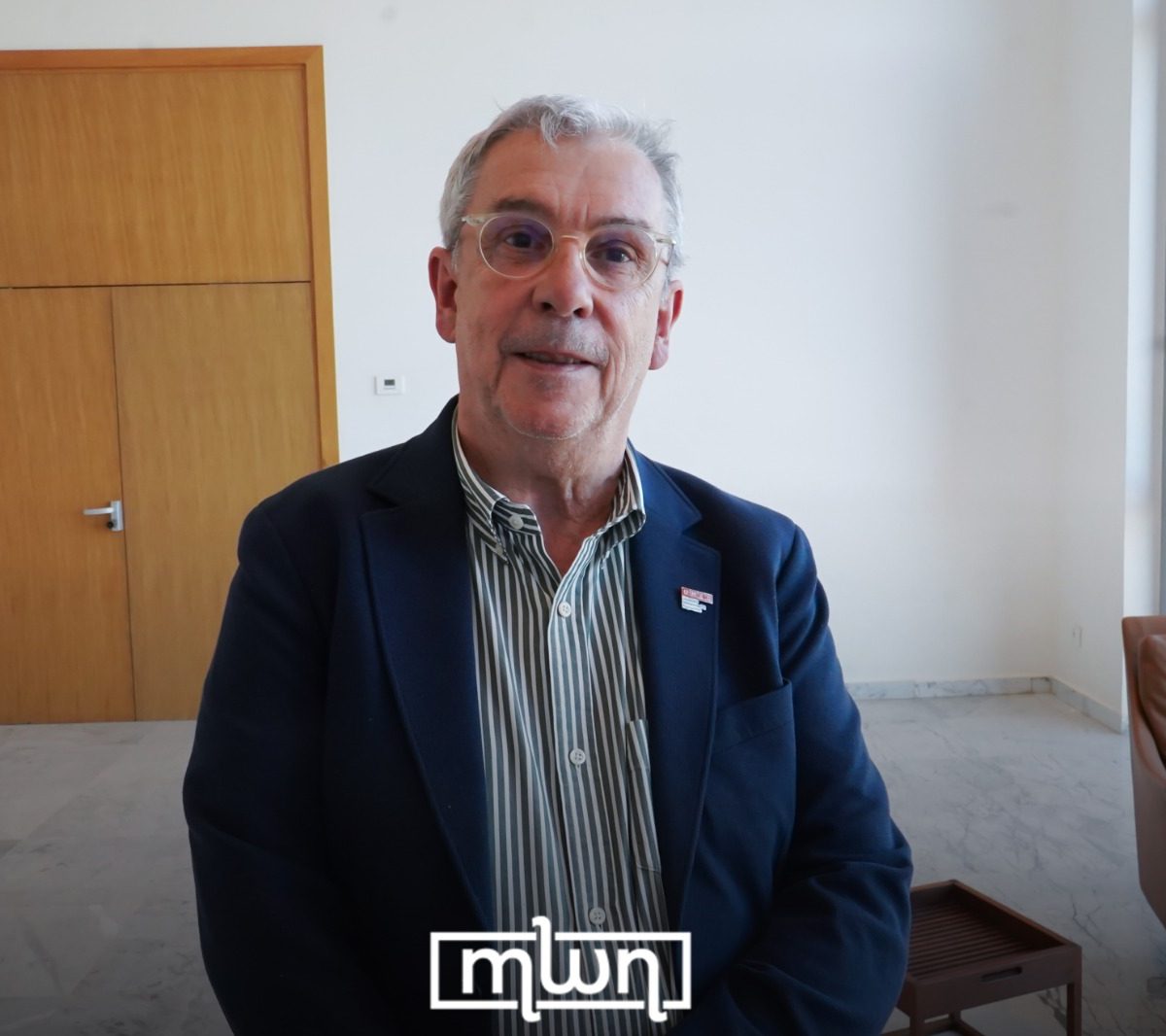
Speaking to Morocco World News (MWN), Bruno Gérard, Dean of the College of Agriculture and Environmental Sciences (CAES), said the center will function as a catalyst for cross-disciplinary collaboration rather than a standalone recruitment hub.
“We need to look at social science, anthropology, economy, markets, and the policy level as well,” he told MWN. “Too often, research teams at UM6P don’t work together. If we want to solve complicated, wicked problems in agriculture, we cannot just look at the biophysical science.”
View this post on Instagram
Gérard, who holds over 30 years of experience in agriculture and environmental sciences, previously served as Director of the Sustainable Intensification Program at CIMMYT before joining UM6P. He holds a PhD in Agronomy from Universität Hohenheim and a Master’s in Irrigation Engineering from Utah State University.
He stressed that agriculture cannot be treated as an isolated sector. “It is connected to the energy sector, to employment, to the environment, to the water sector,” he indicated. “If you want to solve problems without unintended consequences, you need a global or systemic vision of problems and solutions.”
On the role of artificial intelligence, Gérard acknowledged its potential in precision and digital agriculture, including Internet of Things (IoT) sensor networks and automation. But he cautioned that such tools are not always appropriate for smallholder African farmers.
He pointed instead to the data revolution as the most consequential development, stressing that advances in data science now offer far greater capacity for evidence-based decision-making than was available even a few years ago.
Indeed, the convergence Gérard described is already rewriting the rules of global agriculture. AI now functions as the connective layer linking agricultural technologies across the entire production cycle, from autonomous drones scanning fields with hyperspectral cameras to decision-support systems that deliver real-time, field-specific recommendations on irrigation, nutrients, and pest control.
Yield gains of up to 25% and emission reductions of up to 30% are being reported where these tools converge. Yet a digital divide persists: smallholders, the backbone of African farming, often cannot access the very technologies designed to transform their livelihoods – a gap CASA was built to close.
His remarks echoed those of Mustapha El Bouhssini, CAES Associate Dean for Research, who affirmed during last year’s Science Week that digital agriculture enables farmers to optimize resource use through precise soil analysis and targeted application of inputs, though cost remains a barrier for smaller operations.
Read also: Former French Education Minister: Africa Must Impose Its Own Narrative on the World Stage
Asked whether Africa can develop its own agricultural solutions rather than importing models from Europe or North America, Gérard offered a measured answer. “Africa is a continent, so I cannot just say yes or no. Context matters very much,” he said. “You can always borrow technologies – you buy the bricks wherever they are cheaper. But you need to assemble your bricks to find solutions in the local context.”
The 6th Science Week, running from March 30 through April 5, has gathered more than 100 international scientists and experts under the theme “Convergence(s).” Over the past five editions, the event has moved through frontiers of knowledge, complexity, transitions, and future-shaping, with convergence framed as the logical next step.
The launch of CASA extends a track record that already stretches from the laboratory to the field and fits into a broader institutional push. UM6P’s research model is built around living labs, experimental farms, and data-intensive research platforms, particularly in sustainable agriculture, water management, and AI.
In 2023, the university partnered with CGIAR, the world’s largest publicly funded agricultural research organization, to launch an African Scholarship Program and a Capacity Development Hub focused on food security, climate adaptation, and sustainable intensification.
Since 2018, the Al Moutmir initiative – led by UM6P and the OCP Foundation in partnership with the Ministry of Agriculture – has directly supported over 40,000 farmers and indirectly reached more than 540,000 through digital tools and training sessions, deploying seven mobile laboratories across Morocco to conduct free soil analyses covering over 560,000 hectares.