
Octopus also previously partnered with the Chinese wind turbine manufacturer Ming Yang, arguing that it could provide cheaper equipment and lower energy prices.
However, Ming Yang was later blocked from supplying UK wind farms after the US government raised national security concerns with British officials.
Executives at Octopus criticised the decision, warning it threatened to cost the UK “decades of cheaper electricity”.
Octopus claims the battery-swapping system would make running an electric lorry cheaper than a diesel one.
“The beauty of battery swapping is we’ll have a massive stack of batteries at these stations that we can fill with the cheapest electricity at the cheapest times,” Mr Jackson said.
Electric models accounted for only 2.7pc of the heavy-truck market for vehicles weighing 12 tonnes or more at the end of last year, according to the International Council on Clean Transportation. In China, the figure is more than 30pc and growing, according to Mr Jackson.
There, CATL already operates more than 300 battery-swapping stations, each capable of serving thousands of lorries per day.
The practice is seen as a better solution than parking and recharging for hauliers, because time spent charging can disrupt delivery schedules.
In China, electric truck operators effectively pay to lease batteries rather than own them outright. When they arrive at a swap station, it is switched out for a fully charged one, and they can continue their journey immediately.
Oscar Luo, the executive president of CATL, said the technology would also put haulage company concerns about battery health and degradation at ease, as they would always be using the most modern technology.
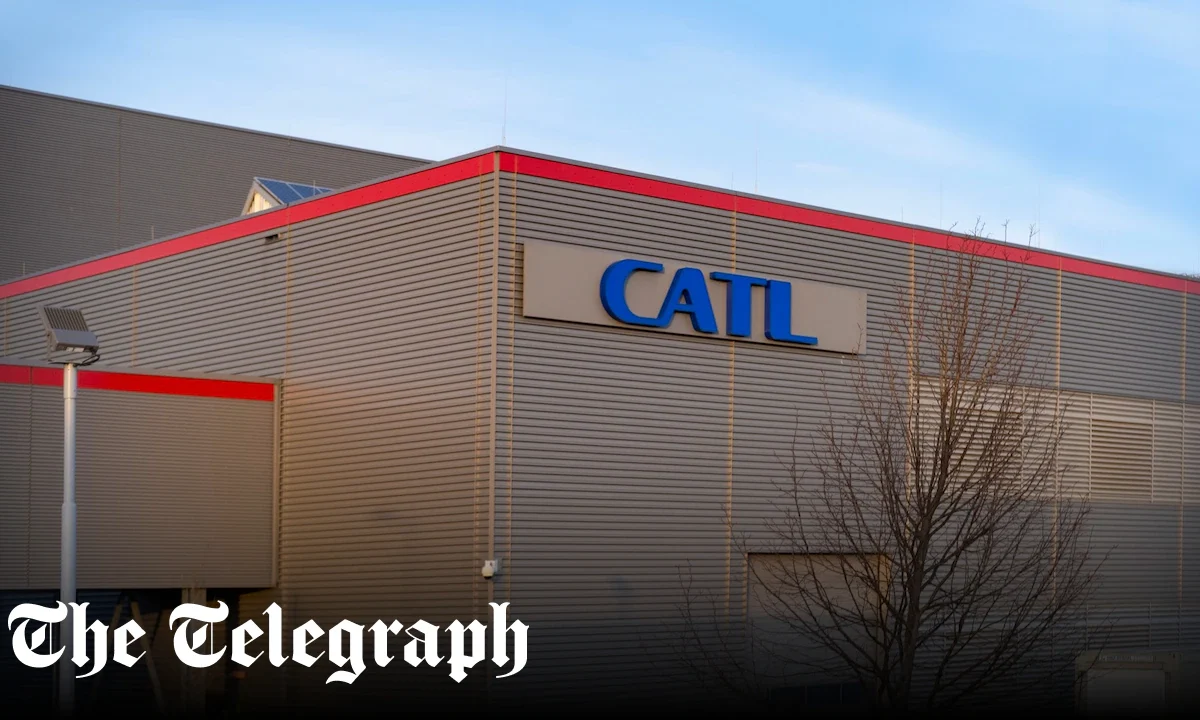
CATL, the world’s biggest battery maker, was labelled last year a “military-civil fusion contributor to the Chinese defence industrial base” by the US department of defence, meaning its technological breakthroughs were allegedly being shared with the military to aid modernisation.
The blacklisting prevents the company from securing any US government contracts and signals to other businesses that it is considered a security threat.
It could also pave the way for harsher sanctions later, with the Pentagon saying it “reserves the right to take additional actions on these entities”.
CATL has previously insisted it has “never engaged in any military-related business or activities” and has filed an appeal against its blacklisting.
A CATL spokesman said: “We have never engaged in any military-related business or activities, and the designation is a mistake.
“It has no legal bearing on CATL’s commercial operations in Europe, including today’s partnership with Octopus Energy, which is a commercial joint venture focused on UK freight decarbonisation and clean energy infrastructure.
“We continue to engage with the [US government] to address the false designation.”
An Octopus Energy spokesman said: “Of course the US military should decide who supplies its equipment. But civilian energy and investment are a different matter.
“At a time when energy security and growth matter most, decisions should be based on evidence and delivery, not speculation.
“CATL are building factories in the US and Spain, supplying batteries to companies like BMW and Rolls-Royce – Octopus isn’t breaking new ground here.”