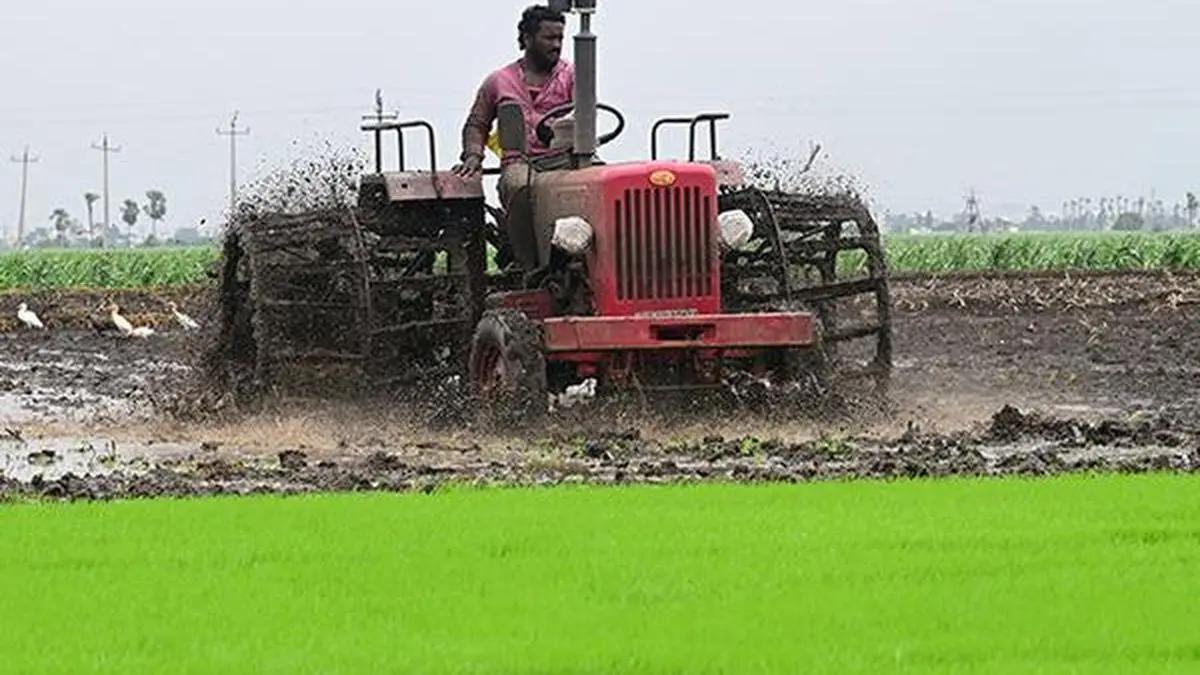
The Indian farmer has always lived in dialogue with the sky. For centuries, sowing patterns followed the rhythm of monsoons, and rivers dictated village life. Today, that dialogue has turned uncertain: rain arrives late or all at once, summers stretch longer, and groundwater tables sink silently beneath fields. The climate crisis is no longer a distant debate; it is a lived rural reality.
Across India’s villages, farmers face a difficult paradox. Agriculture consumes nearly 80 per cent of the country’s freshwater, yet water itself is growing scarce, even as agriculture remains the backbone of rural livelihoods. The challenge is not merely to produce more food, but to produce it differently – with resilience, intelligence, and respect for natural resources. This is where Climate-Smart Agriculture (CSA) becomes a survival framework for rural communities.
According to the Food and Agriculture Organization, climate-smart agriculture aims to increase productivity, build resilience to climate change, and reduce environmental impact – goals closely tied to water efficiency for India’s millions of rainfall-dependent small farmers.
Shift to drip irrigation
The rural landscape already offers lessons. In drought-prone districts, farmers are shifting from flood irrigation to drip and sprinkler systems, cutting water use while improving yields. Micro-irrigation is becoming an instrument of water justice: every drop saved means a longer season, lower costs, and greater resilience.
Equally transformative is the revival of traditional wisdom. Communities are restoring ponds, johads, check dams, and water harvesting systems lost to urbanisation and neglect. These structures recharge groundwater and strengthen collective ownership of natural resources. Programmes like the Jal Shakti Abhiyan and MGNREGS water conservation reflect growing recognition that adaptation must begin at the community level.
Climate-smart agriculture also means changing what we grow and how. Farmers are adopting drought-resistant varieties, mulching, crop diversification, agroforestry, and integrated farming, improving soil moisture retention and reducing chemical inputs. Many are now experimenting with millets, pulses, and indigenous varieties suited to changing conditions.
The science is clear. ICAR studies under the NICRA initiative show climate-resilient interventions can significantly reduce vulnerability to extreme weather, while other research indicates climate change could reduce yields and intensify water stress. Food security depends on making agriculture adaptive rather than extractive.
Tech reshaping sector
Technology is also reshaping rural agriculture. Sensor-based irrigation, weather apps, AI-enabled crop monitoring, and precision tools help farmers make informed decisions about water use. But technology alone cannot solve the crisis; it must be paired with local capacity building, so resilience reaches the smallest farmer.
There is also an important social dimension. Women, a substantial part of the rural agricultural workforce, are increasingly custodians of sustainable farming and water conservation – managing self-help groups in watershed development and leading kitchen gardens and seed banks.
At its heart, climate-smart agriculture is about reimagining the relationship between human survival and ecological balance. Rural communities do not seek charity; they seek fair, sustainable, future-ready systems. Farmers are not passive victims of climate change – they are innovators, adapters, and protectors of the land.
India stands at a crucial moment in its development journey. The vision of a developed nation cannot rest on depleted aquifers, distressed farmers, and collapsing ecosystems. Water security and agricultural resilience must become central to rural policy, corporate sustainability, and community action alike.
The village of the future will not be defined by concrete roads alone, but by living soil, replenished water bodies, resilient crops, informed farmers, and communities able to withstand climatic shocks with dignity. Climate-smart agriculture is therefore not just an agricultural transition – it is a civilisational necessity.
The author is Founder of AROH Foundation
Published on July 18, 2026