Day two of the Options Industry Conference in Palm Beach Gardens, Florida saw a range of topics covered, including the rise of retail trading, volatility as an asset class, the evolution of market structure, and the outlook for overnight trading.
Retail
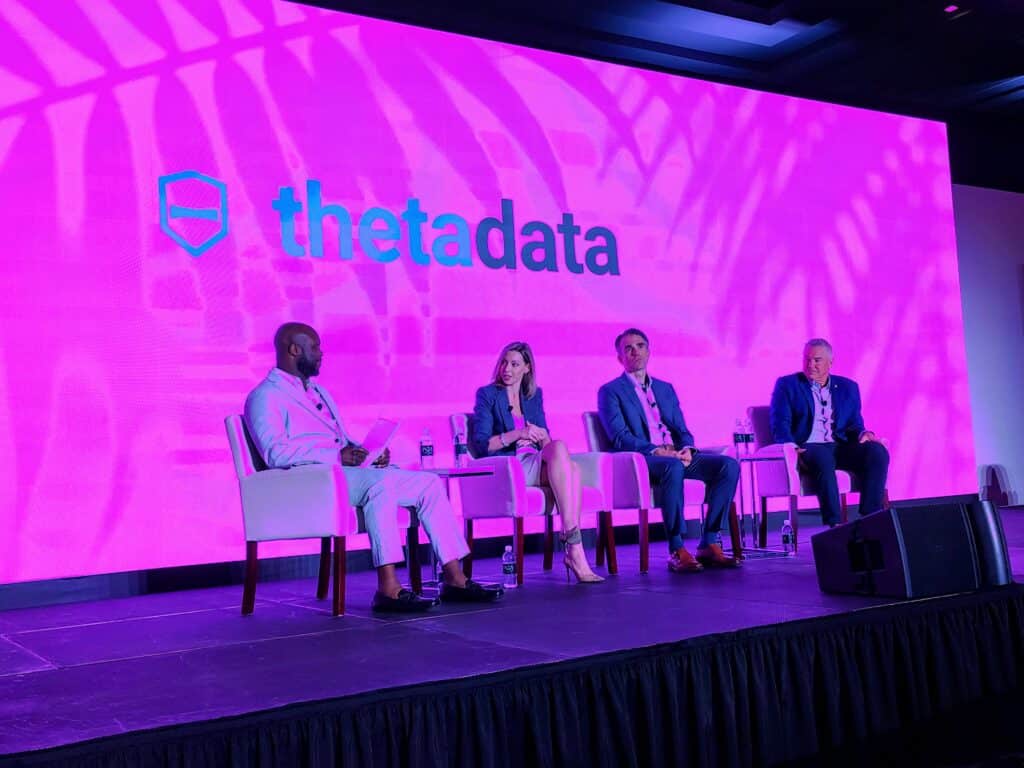
Retail investors are in the market to stay, and they have more access, tools and information than ever before – but the industry still needs to provide the expertise and oversight to assure a good user experience.
That was a broad takeaway from the ‘Retail 3.0: Rise of the Self-Directed Quant’ OIC panel.
The panel noted that retail 3.0 is primarily a technology story, as advanced functionality and real-time market access are available at one’s fingertips. The choices, markets and asset classes can be overwhelming for retail traders — it’s on the industry to present it in an easily digestible format, and also make sure that tools and resources are a place that users can easily find.
Also, tools can be very powerful up to even taking over one’s trading, however retail traders want to retain some measure of control so tools can only go so far.
There is concern that some retail traders are looking for advanced options education without fully understanding market mechanics and risk mitigation, and mastering basic tools and principles. “Everyone wants to be their own quant, but we have a responsibility to guide them through so they stick around.”
One discussion point was about how retail traders can gain an edge if everyone has access to the same information and tools. There’s no clear answer to that question, but possible sources of edge include harnessing data and curating expertise.
The panel discussed retail’s increased influence on the overall market. For example, retail brokerages used to need to fight to get 1% of an IPO allocation but now in some instances, they’re being offered 20%. Retail has market power, and institutions who historically ignored retail now want to know what they’re doing.
What will ‘retail 4.0’ look like? That’s TBD of course, but automation, 24-hour trading, and more tradable asset classes are likely influences.
Moderator: Jermal Chandler, tastylive
Panelists: Jessica Inskip, Stockbroker.com; Brent Kochuba, SpotGamma; Steve Quirk, Robinhood
Volatility
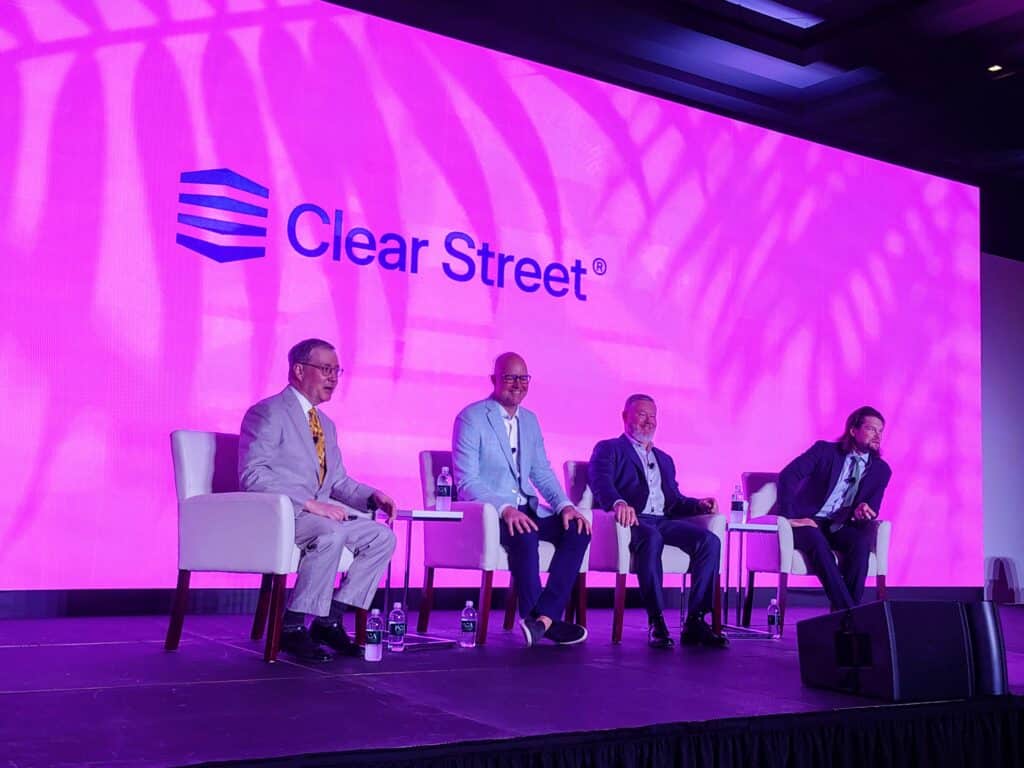
The ‘Volatility as an Asset Class’ panel at OIC drilled down into how vol has moved beyond a pricing input to become a tradable, investable asset class.
The panel emphasized a practical approach from an industry/user point of view — there was no academic representation.
It was noted that the Cboe Volatility Index (VIX) is the OG for trading volatility, but in recent years the VIX has lost ground to short-dated options, ETFs, structured products, and other more targeted instruments and tools that enable more customized strategies. But, a significant broad-market decline may reinvigorate the VIX, so it may be able to recapture its crown as a vol proxy.
Dispersion and correlation’s effect on volatility were discussed, as was how AI is changing how traders view market opportunities, and how longstanding correlations are breaking down or at least shifting.
Lastly the concept of “socially acceptable volatility” was discussed, in the sense that vol is not sentiment-neutral and market declines can be viewed negatively. But, while volatility trading gets a bad rap at times, it is overall good for the market ecosystem, and market infrastructure firms need to continue to meet the demands of market participants in this area.
Moderator: Steve Sosnick, Interactive Brokers
Panelists: Benjamin Londergan, Simplex Trading; J. Kevin McCarthy, Wells Fargo Securities; Nathaniel Pomeroy, Wolverine Trading Technologies
Market Structure
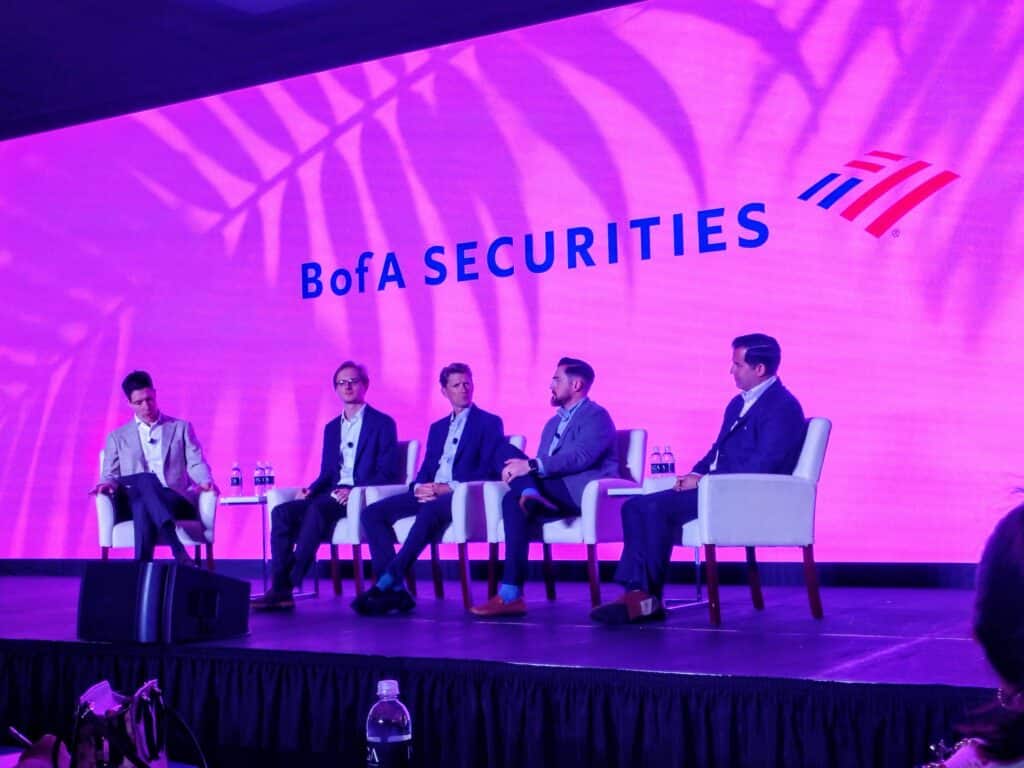
The market structure evolution panel at OIC on Wednesday afternoon covered changes in the marketplace, the current landscape, and the outlook.
It was noted that many retail market participant are now using options to hedge positions overnight — that was seen as a sophisticated institutional trading strategy as recently as the 2000s. The retail sector has matured and is awaiting the next leg of market evolution.
One present risk factor is the velocity of change including new trading venues and expiries – industry needs to manage it all in responsible way that continues to put the retail user experience first.
Trading firms say it takes a lot of work to scale to keep pace with the growth of the market – this is evidenced on high-volume days such as DeepSeek, tariff announcements, and more recently the Iran war. The market has done good job keeping up and most everyone has added capacity over the past five 5 years – but firms need to be prepared for 10x current levels.
Regarding extended-hours trading, the panel noted that the journey should be harmonized across the industry. In general, retail brokers push technology providers and market makers to speed the adoption of new products and protocols, but overnight trading will take time because it needs to be implemented in a way that’s sustainable for the long term – it would be a bad outcome for all if development is rushed and it turns out to be a watered-down offering.
Panelists said one positive about the recent SEC roundtable on options was just that it happened; there were also productive discussions around the proliferation of options exchanges and the need for investor education around event contracts.
Exchange risk controls are a concern; the options industry has a long history of providing risk tools, but the tools must evolve along with the market, and having 18 exchanges is a complicating factor.
Panelist predictions for the next 12 months included agentic AI dramatically increasing retail options trading (!); more products launched to compete with prediction markets; and upcoming mega IPOs spawning new options products.
Moderator: Ivan Brown, IEX
Panelists: John Ruby, Jane Street; Andy Hicks, CFA, BlackRock; Tommy Martin, DASH Financial Technologies; Anthony Denier, Webull
Continuous Trading
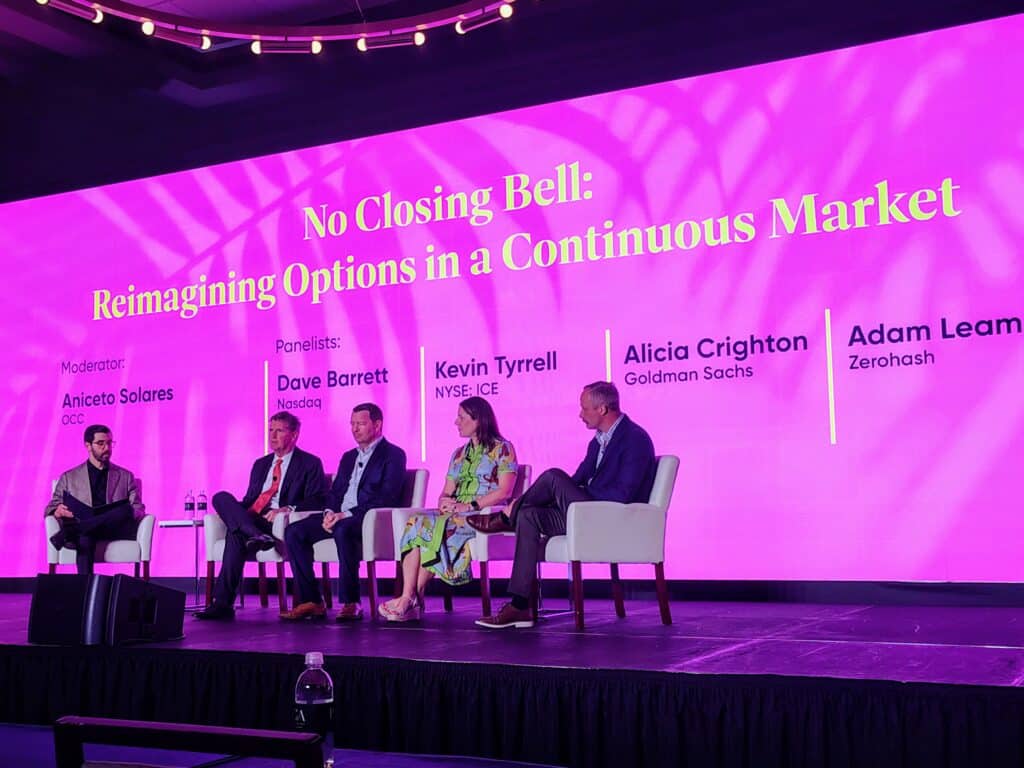
The ‘No Closing Bell: Reimagining Options in a Continuous Market’ panel Wednesday at OIC covered the possibilities, the practicalities, and the pitfalls of overnight trading.
23/5 trading has been in the news of late but panelists noted there is a big difference between winning approval for it and actually launching it. The aim is to deliver 23/5 trading where investors have a liquidity experience that’s similar to the regular trading day – a big challenge indeed.
The panel emphasized that there will still be a 9:30-4:00 trading day with a closing auction and a closing bell – 23/5 should be seen as an expansion of existing after-hours trading.
Beyond the trading itself, there needs to be clearing, risk management, and the collateralization of risk overnight, and it’s far from clear that the market ecosystem is ready for 23/5.
Another non-equivalence is that extended trading hours and extended liquidity are not same thing – liquidity needs to be built and facilitated. Demand for overnight trading is muted at best among institutions, so it’s unclear where liquidity would come from, as historically most after-hours trading is agency to agency or retail to retail, with wider spreads. And uneven liquidity presents risks.
23/5 will require a fundamental shift in operations and staffing. Systems and workflows that have historically run on batch processes, with set start and finish times, will need overhauls.
Lastly the panel touched on the human angle to 23/5, including the need for a distributed team of trusted decision makers globally rather than being managed as just a US night shift.
Moderator: Aniceto Solares, OCC
Panelists: David Barrett, Nasdaq; Kevin Tyrrell, NYSE; Alicia Crighton, Goldman Sachs; Adam Leaman, Zerohash