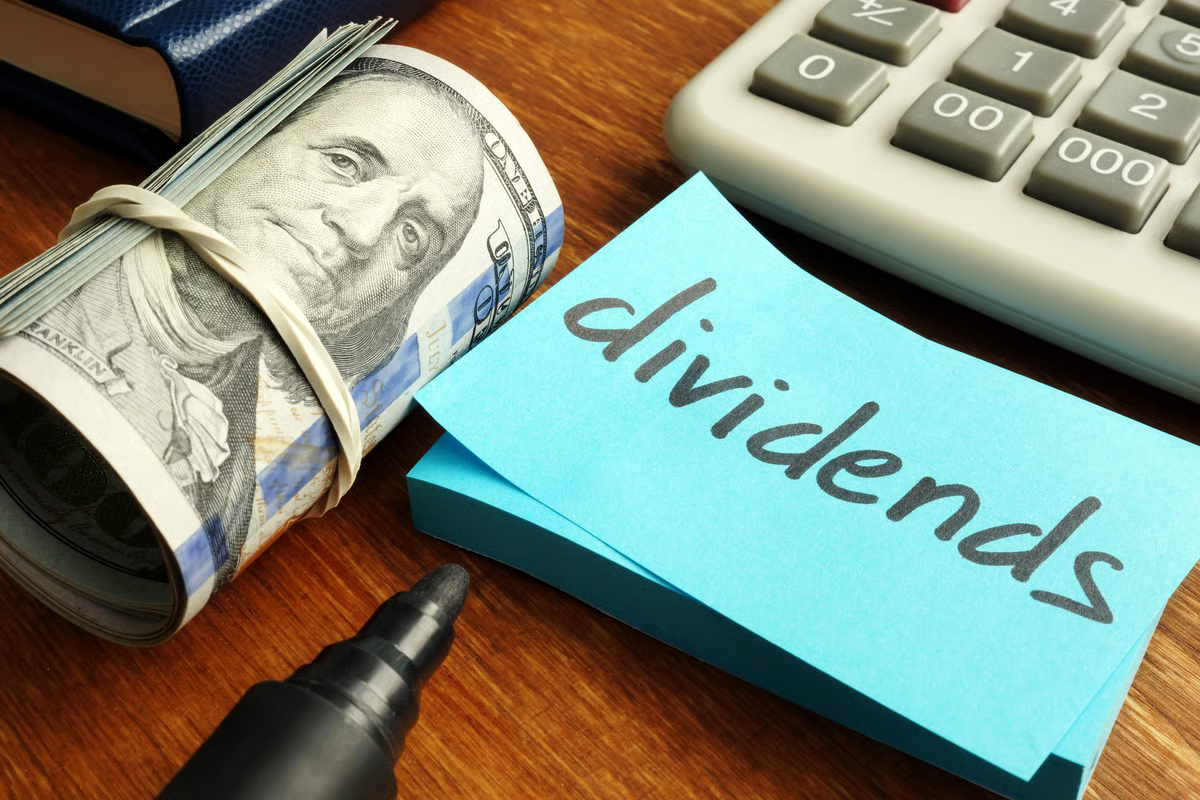
High-yield dividend exchange-traded funds (ETFs) are designed to be attractive to investors who want decent market returns, low volatility, and high cash flow. While these funds typically don’t outperform the S&P 500 during bullish market phases, they offer more insulation from trouble during market corrections. For retail investors who have $2,000 to put to work now and are seeking passive income opportunities, buying these dividend ETFs would be a strong set-it-and-forget-it strategy.
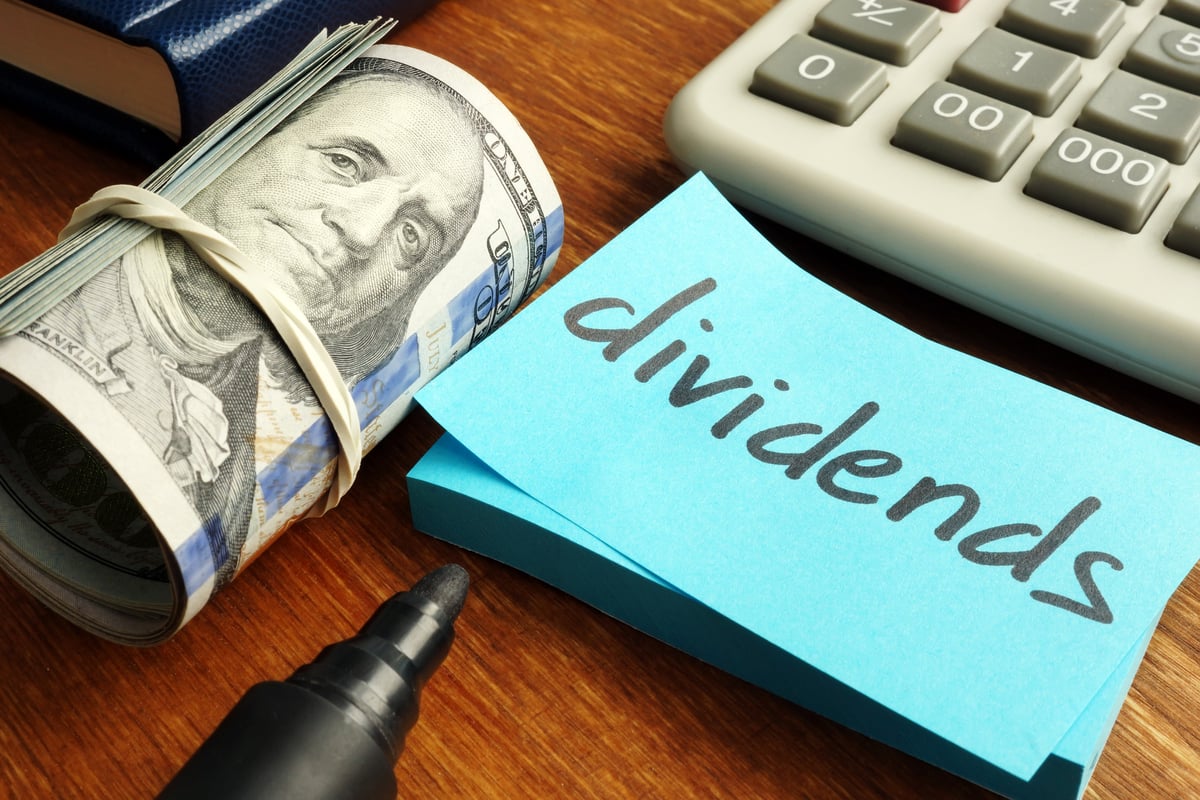
Image source: Getty Images.
Schwab U.S. Dividend Equity ETF
The Schwab U.S. Dividend Equity ETF (SCHD +0.93%) uses the Dow Jones U.S. Dividend 100 index as its benchmark and only has a 0.06% expense ratio. It has produced an annualized return of 8.9% over the past five years.

Schwab U.S. Dividend Equity ETF
Today’s Change
(0.93%) $0.30
Current Price
$32.54
Key Data Points
AUM
$98B
Dividend Yield
3.22%
Expense Ratio
0.06%
Top Holdings
HD
4.47%
UNH
4.42%
MRK
4.41%
Healthcare and consumer staples make up more than 40% of the fund’s total assets. Energy, tech, and financial services are also well represented, and its portfolio has a strong emphasis on large-cap value stocks.
The Schwab U.S. Dividend Equity ETF has more than 100 holdings, with Home Depot, Merck, and UnitedHealth Group as the top three positions. In terms of portfolio allocation, each of the top 10 positions is separated by no more than a single percentage point. It’s not like one or two stocks heavily influence this fund’s performance.
It all comes with an SEC yield of about 3.3%, which is higher than most dividend yields. You don’t have to carefully construct a portfolio of high-yield dividend stocks when this fund does it for you.
Vanguard High Dividend Yield Index Fund ETF
The Vanguard High Dividend Yield Index Fund ETF (VYM +0.35%) follows a similar premise to the Schwab ETF, but it only has a 0.04% expense ratio and a 2.3% SEC yield. Furthermore, the Vanguard ETF has more than 600 holdings, only two of which have portfolio allocations of more than 3%.

Vanguard High Dividend Yield ETF
Today’s Change
(0.35%) $0.56
Current Price
$160.70
Key Data Points
AUM
$96B
Dividend Yield
2.26%
Expense Ratio
0.04%
Top Holdings
AVGO
8.52%
JPM
3.15%
XOM
2.53%
Broadcom is the top position and makes up more than 8% of Vanguard’s portfolio. That strong focus on the AI chipmaker partially explains the fund’s 11.8% annualized return over the past five years. JPMorgan is the next-largest holding, at a little more than 3%.
If you invest $2,000 into this fund and get a 2.3% yield, you will end up earning $46 per year in dividends. This amount will grow each year as you reinvest and continue to build your position. While the Schwab fund has a higher yield, this fund has produced higher annualized returns in recent years.
JPMorgan Equity Premium Income ETF
The JPMorgan Equity Premium Income ETF (JEPI +0.19%) is completely different from the two dividend funds previously discussed. Its 8.2% SEC yield immediately stands out for people who are used to seeing ETFs with yields ranging from 2% to 4%. That yield would translate into $164 per year if you put $2,000 into the fund, but there are some catches.
The ETF has a 0.35% expense ratio, which isn’t necessarily a dealbreaker, but is meaningfully higher than the other two ETFs. However, the biggest difference is that the JPMorgan Equity Premium Income ETF uses covered calls to generate high yields. The cash distributions that investors receive from covered calls are treated as ordinary income for tax purposes, which results in a higher tax rate than the capital gains tax rate.
High earners already in the top marginal tax bracket will see their JEPI distributions taxed at ludicrous rates compared to the tax rates they would have to pay on the distributions from the Schwab and Vanguard funds.
The JPMorgan Equity Premium Income ETF prioritizes S&P 500 index call options, resulting in a well-diversified portfolio in which holdings often shift in and out of the top 10 positions. Its 172% portfolio turnover highlights how quickly asset allocations change in this fund, but the end result is a high yield and a 0.45 beta. The S&P 500 has a beta of 1; anything with a beta lower than that has less volatility than the broader market.