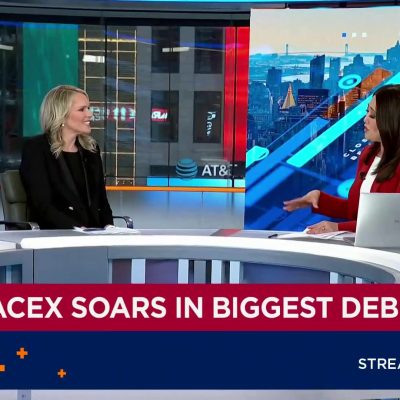


With concerns rising over concentration risk as valuations for many large cap stocks appear too high and companies like SpaceX file for record-setting IPOs, advisors are focused on diversifying their clients’ portfolios.
For clients who invest primarily through ETFs and mutual funds, advisors often turn to a combination of direct indexing, long-short strategies and structured notes to provide downside protection while still seeking to deliver some alpha.
While the S&P 500 has been reaching new highs this summer, the re-escalation of the war in Iran and disappointing earnings reports from some big tech companies serve as reminders that the U.S. market is operating amid extreme volatility. What’s more, after a years-long upwards run and signs of a bubble in the AI sector, many financial services professionals seem convinced the market is due for a real downturn, one that won’t resolve itself overnight.
What advisors also recognize is that concentration risk in a portfolio isn’t limited to investors holding individual stocks. Many ETFs and mutual funds tracking the S&P 500 index have holdings heavily concentrated in the so-called Magnificent 7 and companies expected to benefit from artificial intelligence and other popular investment themes, according to Erin Kolo, senior vice president and manager of PWM equity and fixed income research at wealth and asset management firm Baird.
“The thing we see a lot is a statement will come over where a client has 10 to 20 ETFs, and you look at their holdings, and they actually own a lot of the same names,” said Matthew Smart, director of financial planning and portfolio analysis at WWM Investments, a Chicago-based financial planner.
This is the time to consider more active management and look for diversification across sectors, factors and styles, noted Kolo. Making sure a portfolio blends funds manage by active managers focused on value, along with those geared toward core and growth strategies, would be a good place to start. Adding or expanding international equities exposure, particularly in European markets, which are driven by financial and industrial companies rather than AI, could also provide some risk protection for U.S. investors with large holdings in U.S. large caps, Kolo added.
Clients may be reluctant to implement some of these changes, and timing the trim on AI-themed stocks might be nearly impossible to get perfectly, but it has to be done, she said. “Giving the run they’ve had, it can make sense from a diversification standpoint to take some of the gains and put them into the names that are uncorrelated with the market right now,” such as international stocks and companies in the energy sector.
Erik Kratz, CIO at Chicago-based Arena Private Wealth, favors using direct indexing and long-short equities strategies to help minimize clients’ capital gains taxes while also allowing the advisor to fine-tune stock holdings to adjust for concentration risk with clients who invest mostly through ETFs and mutual funds. The firm currently favors sectors including cybersecurity, infrastructure, millennial spending trends and industrial transformation, among others.
WWM Investments also prefers investing in individual stocks and using direct indexing over having clients rely on a collection of mutual funds and ETFs. While those vehicles have their place in a portfolio, picking stocks directly allows for far greater customization based on a client’s specific risk tolerance, Smart said.
“Diversification isn’t about how many stocks you own. It’s about how many independent sources of return you own,” he noted.
For Kratz, a big part of managing concentration risk is focusing on the long-term prospects of the stocks clients hold in their portfolios and increasing exposure to companies that will benefit from growth themes over the next 5 to 10 years, at a minimum. To zero in on specific names, Arena Wealth looks at technical indicators, as well as factors like earnings growth and revenue that consistently beat both top and bottom estimates, since it views the latter as evidence of both a strong management team that stays conservative in its guidance and strong secular tailwinds. What Kratz wants to avoid is leaving clients with a collection of stocks that are “hyper-diversified in the names that are low growth and maybe more bond-like in return structure.”
As an example of how he might handle concentration risk, Kratz cited a client who held multiple legacy American Funds (now Capital Group) mutual funds. The funds trailed the market in both performance and fees, which ranged from 40 basis points to 60 basis points, he noted. “I was able to take those positions in a taxable account, get out of the mutual funds slowly over time and move the [money] into more of an S&P 500 exposure, with the long-short [strategy] adding some alpha to it as well,” Kratz said.
Arena Wealth, which has its own private markets fund that invests in private equity, infrastructure, real estate and venture capital, also seeks to give clients exposure to private market assets. With many promising companies now undergoing IPOs well past their small- and mid-cap stages, it’s gotten harder to find alpha in public equities, Kratz noted. On the private side, they can benefit from investment in companies with potential for 10x to 20x returns.
Both Kratz and WWM Investments’ Smart also mentioned using structured notes, which are hybrid securities combining both debt and equity holdings that can be customized to pursue growth, income or risk management goals, to protect clients in the event of a market downturn. The notes can provide a defined level of downside protection and enhanced income for clients even if the S&P 500 tumbles, according to Smart. They can also deliver equities-like returns without making the client “beholden to the market,” said Kratz.