India’s mutual fund industry has grown rapidly over the past decade. SIP participation has increased, asset managers have gone deeper into smaller cities, and more investors are coming into the market.
But as the industry has scaled up, another problem has emerged: what happens after the investment? Of course, getting an investor into a mutual fund is just the first step. Those are much harder problems, keeping that investor invested through a market correction, helping distributors explain risk, and making investment products understandable outside India’s largest financial centres.
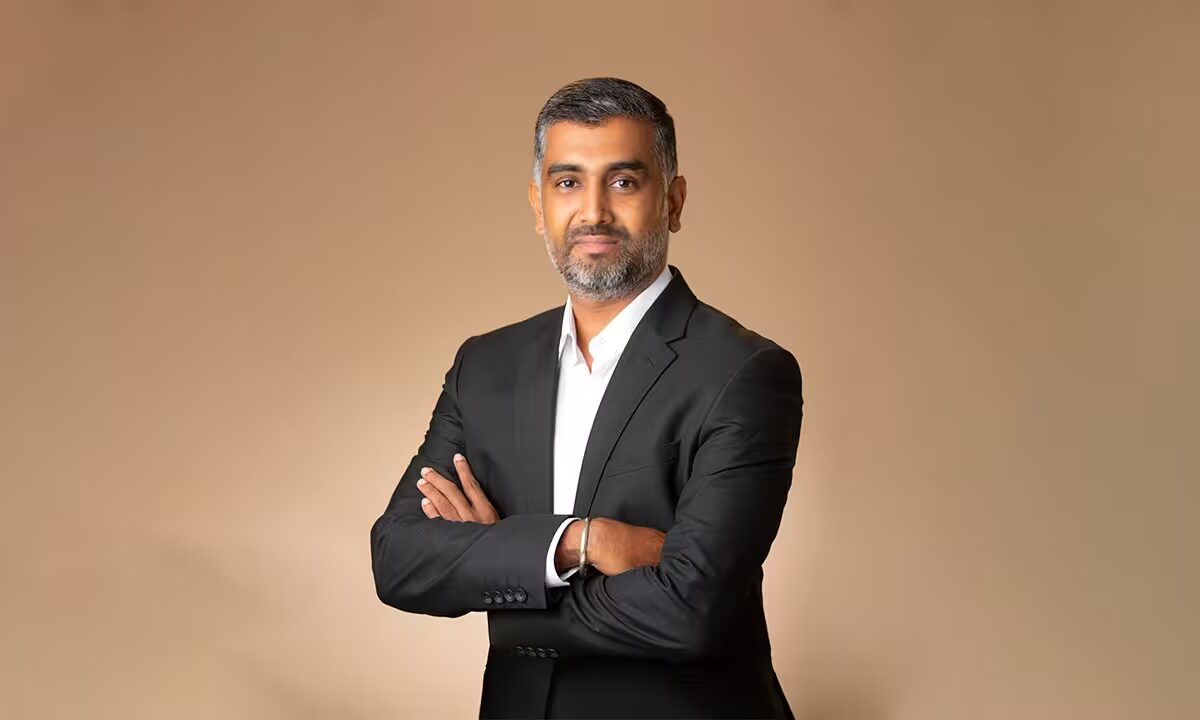
It is a field that Yaseen Sahar, an investment-management professional with more than two decades of industry experience, has spent a large part of his career in. Sahar currently serves as an assistant vice president at one of India’s leading asset management companies. With more than two decades of experience, he has progressed through increasingly senior roles across distribution, investor engagement, and business development, working across different segments of India’s evolving investment-management landscape.
His career has coincided with a period in which India’s asset-management industry has moved from a largely relationship-driven distribution model towards a much broader ecosystem involving SIPs, digital access, thematic products, and investors from smaller cities.
For Sahar, that evolution has raised a recurring question: how can the industry move beyond getting investors into products and help them make better decisions once they are invested?
The problem after the sale
Traditional mutual fund distribution has largely depended on relationships between asset managers, distributors, and investors. Business performance is often measured through assets mobilised and flows generated. But those numbers do not necessarily tell the full story.
An investor may enter a fund at the right time and still have a poor experience if the investment is abandoned during the next market correction. A distributor may successfully introduce a product but struggle to explain why it should remain part of a portfolio when market conditions change.
Sahar’s work has attempted to bring more structure to this part of the investment journey. His approach has combined distributor segmentation, goal-based advisory, behavioural-finance concepts, market-cycle communication, and structured follow-up mechanisms. The objective is to make the investment conversation less about selling a product and more about helping an investor understand why an investment belongs in a portfolio and how it may behave under different market conditions.
The challenge becomes particularly relevant with thematic funds; a theme can attract substantial investor interest when the underlying economic story is popular. But when valuations change or the theme temporarily underperforms, investor conviction can disappear just as quickly.
Sahar’s work in this area has focused on connecting macroeconomic and sector-level themes with longer-term portfolio construction and investor communication. His approach also places attention on post-launch monitoring and maintaining distributor and investor engagement through different market conditions.
It is a practical problem; a fund can be successfully launched and still fail to create good investor outcomes if investors exit at precisely the wrong point in the cycle. The question, therefore, is not simply whether a fund can attract money. It is whether investors understand what they own well enough to remain rational when the market becomes uncomfortable.
Taking mutual funds beyond the metros
The same question appears in a different form in India’s B30 markets located outside the country’s largest 30 cities. The challenge in these markets is not necessarily a lack of investment products. Financial awareness, access to professional advice, and, in many cases, the need to establish trust before an investor is willing to commit money can be equally important.
Sahar’s approach to these markets has therefore placed emphasis on vernacular investor education, distributor capability building, and more localised market analysis rather than simply replicating a metropolitan sales model. One of the approaches associated with his work combines distributor segmentation with locally relevant investor communication, behavioural-finance principles, and structured engagement.
Elements of this approach have subsequently been adopted beyond his immediate organisation, including by other asset-management and bank-affiliated distribution platforms. Its use outside the organisation where it was developed suggests that some of these practices have broader application across the distribution ecosystem. The distinction is particularly relevant in an industry where distribution practices are constantly evolving.
As mutual funds reach deeper into Tier-2 and Tier-3 markets, the ability to communicate investment concepts in a way that reflects local investors’ circumstances can be as important as the availability of the product itself.
The NRI problem is different again
For Indians living overseas, investing in India introduces another layer of complexity.
Currency movements, taxation, portfolio diversification, and the interaction between Indian investments and an investor’s global assets can make what appears to be a straightforward mutual-fund decision considerably more complicated.
Sahar developed an approach specifically addressing these issues, combining currency-aware investment planning, dynamic asset allocation, India-focused sectoral and thematic strategies, and NRI-specific investor education.
The approach has also found application outside his immediate organisation; a senior executive at a UAE-based wealth-management firm says its advisory team has applied Sahar’s sectoral-allocation and macro-cycle frameworks across more than 300 NRI portfolios representing approximately US$200 million.
The example reflects a broader development in financial services, investment ideas and practices are increasingly being adapted across markets rather than remaining confined to the organisation or geography in which they originated. For an Indian investment professional working with an increasingly global investor base, understanding that cross-border dimension has become an important part of the job.
Explaining markets, not just participating in them
Sahar’s work has also extended beyond his day-to-day responsibilities into financial research, analysis and investor education. He has written on subjects including artificial intelligence in investment management, generational investing, sectoral growth, equity-market corrections, gold and long-term portfolio strategy.
The articles typically combine market data, historical trends, regulatory information, and economic indicators rather than relying solely on personal opinion. His analysis has drawn on information from institutions such as the Reserve Bank of India, the Securities and Exchange Board of India, and the Association of Mutual Funds in India, alongside historical market data and financial research.
That approach is particularly visible in his writing about market corrections. Rather than looking at a correction only as a short-term market event, Sahar has examined previous periods of market stress, including the 2008 global financial crisis, the European debt crisis, demonetisation, and the COVID-19 disruption, to consider how investors responded during periods of sharp volatility and what those experiences can teach investors about subsequent market behaviour.
His analysis of India’s services sectors similarly looked beyond headline economic growth to examine sectoral developments and their implications for investors. A significant part of his writing has also been in Tamil, bringing investment concepts that are often discussed in technical financial language to a wider regional audience. Several of his analytical articles have received prominent editorial placement, including cover-story treatment.
That combination of professional analysis and regional financial communication reflects another aspect of Sahar’s work. The audience for investment information is not only limited to fund managers and financial advisers. As market participation broadens, investors increasingly need explanations that help them understand economic developments, market cycles, and portfolio decisions without reducing everything to a simple buy-or-sell recommendation.
For Sahar, writing appears to serve much the same purpose as his work with investors and distributors, taking information that can be difficult to interpret and putting it into a form that can support better investment decisions.
A broader role for investment professionals
The traditional role of an asset-management executive has centered on distribution, business growth, and relationships with intermediaries.
That role is changing, as India’s mutual-fund industry reaches investors across smaller cities and increasingly diverse segments, investment professionals are dealing with questions that extend beyond product selection, how investors understand risk, how distributors communicate through different market cycles, and how financial concepts can be made more accessible.
Sahar’s work across fund mobilisation, thematic investing, B30 expansion, distributor development, NRI investing, and financial education reflects that broader shift. It also reflects the changing nature of the investment-management profession itself.
The industry increasingly needs professionals who can move between strategy and execution, understand both products and investor behaviour, work with distribution networks, and communicate financial ideas clearly to different audiences. Sahar’s career has developed across those different dimensions.
From working with distributors and investors to developing structured approaches around thematic investing and market expansion, and from addressing the requirements of NRI investors to writing about financial markets, his work has increasingly occupied the space between investment products and the people who ultimately use them. The underlying question is no longer simply how to sell an investment product.
(This article is meant for informational purposes only, and should not be construed as any investment advice. Zee Media readers are advised to consult financial advisors or portfolio manager before making any money related decision.)
Stay informed on all the latest news, real-time breaking news updates, and follow all the important headlines in india news and world news on Zee News.