

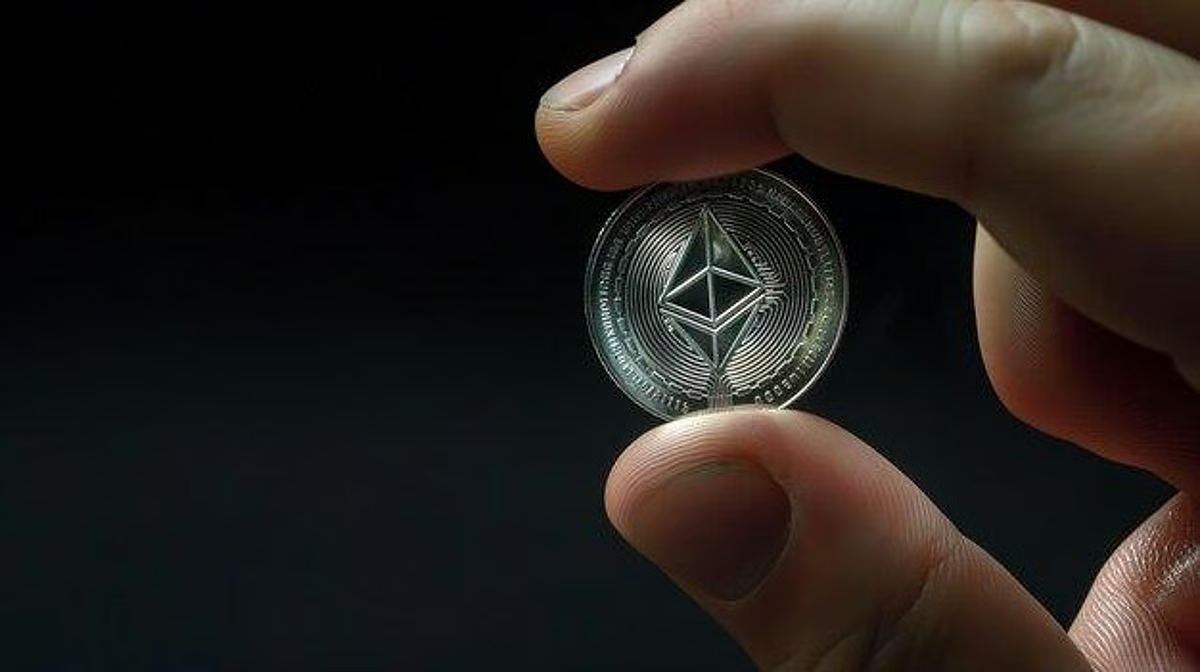
Due to these differences, some networks have started moving away from PoW. For example, Ethereum transitioned from Proof of Work to Proof of Stake in a major upgrade known as “The Merge,” significantly reducing its energy consumption and changing how transactions are validated.
Why PoW Still Matters Today
Despite its challenges, Proof of Work remains highly relevant.
-
It is battle-tested and has proven to be extremely secure
-
It protects networks from attacks like double-spending
-
It continues to support major cryptocurrencies
Many experts still consider PoW to be one of the most reliable consensus mechanisms ever created.
Today, Proof of Work remains the backbone of networks like Bitcoin, which continue to rely on mining for security and decentralization.
Real-World Impact of Proof of Work
Proof of Work has done more than just power cryptocurrencies—it has introduced a new way of thinking about trust and security in digital systems.
Some of its broader impacts include:
-
Enabling peer-to-peer transactions without intermediaries
-
Creating transparent financial systems
-
Inspiring innovation in decentralized technologies
Even industries outside finance are exploring blockchain concepts that originated from PoW.
The Future of Proof of Work
The future of PoW is a topic of ongoing debate.
On one hand, critics argue that it is not sustainable due to its energy consumption. On the other hand, supporters believe improvements in renewable energy and mining efficiency can solve these issues.
We may see:
Regardless of what happens, PoW has already left a lasting mark on the digital world.
FAQs About Proof of Work
1. What is Proof of Work in simple terms?
Proof of Work is a system where computers solve complex problems to verify transactions and secure a blockchain network.
2. Why is PoW considered secure?
Because altering the blockchain would require massive computational power, making attacks extremely difficult and expensive.
3. What is mining in PoW?
Mining is the process of solving mathematical puzzles to add new blocks to the blockchain and earn rewards.
4. Is Proof of Work environmentally harmful?
It can consume a lot of energy, which raises environmental concerns. However, efforts are being made to use renewable energy for mining.
5. Why are some blockchains moving away from PoW?
Mainly due to its high energy consumption and slower transaction speeds compared to newer systems like Proof of Stake.
6. Is PoW still used today?
Yes, many major cryptocurrencies still rely on Proof of Work for security and transaction validation.
Conclusion
Proof of Work is the foundation that helped blockchain technology gain trust and global recognition. While it has its limitations, its contribution to creating secure and decentralized systems cannot be ignored.
Understanding PoW is essential for anyone looking to explore the world of cryptocurrencies and blockchain. It’s not just a technical concept—it’s a revolutionary idea that changed how we think about trust in the digital age.