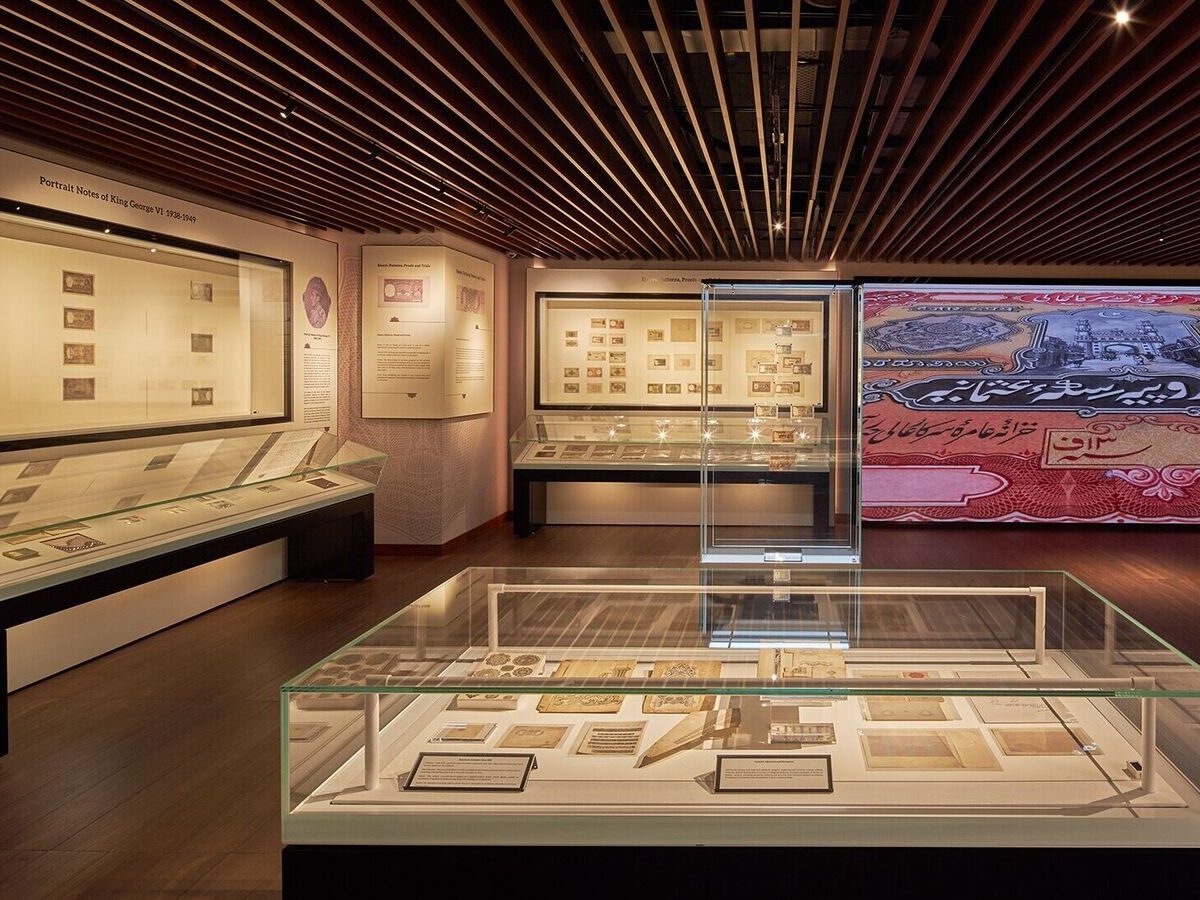
WWI had a far-reaching effect on the global economy. Even the erstwhile princely states of India were not left untouched. The shortage of silver and gold resulted in the issuing of a lesser number of coins. In such a scenario, the royal states were unable to meet their monetary demands. 36 of these in the northwestern part of the subcontinent were given permission by the British Government to issue papertokensin 1917 instead of metallic coins. The only other princely state in the south-central part of India to have been allowed to do so was Hyderabad. Known as the ‘Rupya Sicca Osmania’, the currency, with denominations of ₹1 to 1000, was printed at Waterlow & Sons Ltd, London, and then shipped to Hyderabad. This continued till 1936. The vignettes and motifs on the notes tell their own story about the princely state. For instance, the ₹1000 Osmania note of Hyderabad from 1922 features a hand-made watercolour essay by Thomas de la Rue & Company, London, on the obverse. It also has a vignette of the Jama Masjid in Gulbarga, Karnataka, alluding to the vast expanse of the state.