
By Huw Jones and Andy Bruce
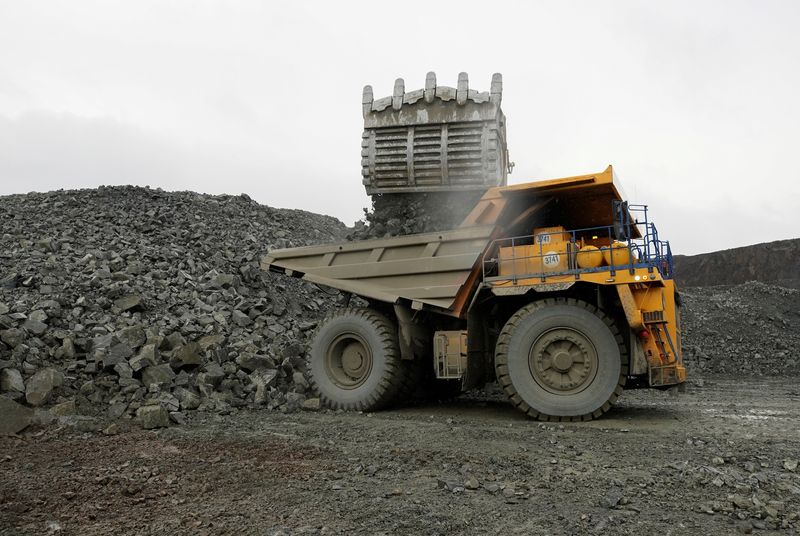
LONDON (Reuters) -The Bank of England said on Tuesday it will conduct an in-depth analysis to enhance surveillance of “opaque” commodity markets after Russia’s invasion of Ukraine left the central bank without a full picture of risks and vulnerabilities.
Just as the global financial crisis threw a spotlight on unregulated so-called shadow banks, commodity price spikes this year have rung alarm bells among regulators on the need to plug data gaps in the sector as households struggle with rocketing energy bills, stoking inflation.
“Heightened uncertainty following the Russian invasion means there is significant risk of further disruption to commodity markets,” the BoE’s Financial Policy Committee said in its half-yearly report on risks to Britain’s financial system.
Big UK banks have up to 140 billion pounds ($168.39 billion) or 50% of their total core capital of gross exposure to commodity producers, suppliers, and traders, and to commodity derivatives.
Around 110 billion pounds of UK bank exposures are on their lending books.
Banks have enough capital to continue supplying credit to commodity market participants, it said.
“If disruption is prolonged and uncertainty increases, banks may become even less willing to extend credit to commodity market participants,” the BoE said.
Regulators have sight of energy and metals markets traded in Britain, but commodities such as grains are traded elsewhere in the United States and France.
In addition, a large part of commodity market activity is traded over-the-counter or privately, off an exchange. Physical production and inventory, which are largely unregulated and poorly reported, also make it hard to build up a full view.
Nickel prices on the London Metal Exchange hit a record high of more than $100,000 a tonne after Russia, a major producer, invaded Ukraine, with trading suspended for a week in March and the LME’s clearing house forced to nearly double its default fund.
The BoE and Financial Conduct Authority opened reviews into the LME and its clearing arm.
Separately on Tuesday, the European Union’s securities watchdog ESMA said a stress test of clearing houses in the bloc showed there were resilient to major shocks, but that ‘gaps’ in safety buffers were uncovered in commodity derivatives.
OPACITY AND FRAGMENTATION
Britain’s economic outlook has deteriorated materially in part because of higher commodity prices and the BoE is making it a priority to get a better grip of underlying activity which is interlinked to the wider economy and financial system