Last Updated:
This Akshay Tritiya, gold buying is shifting beyond investment to personal style. Experts reveal how men and women are redefining jewellery trends in 2026.




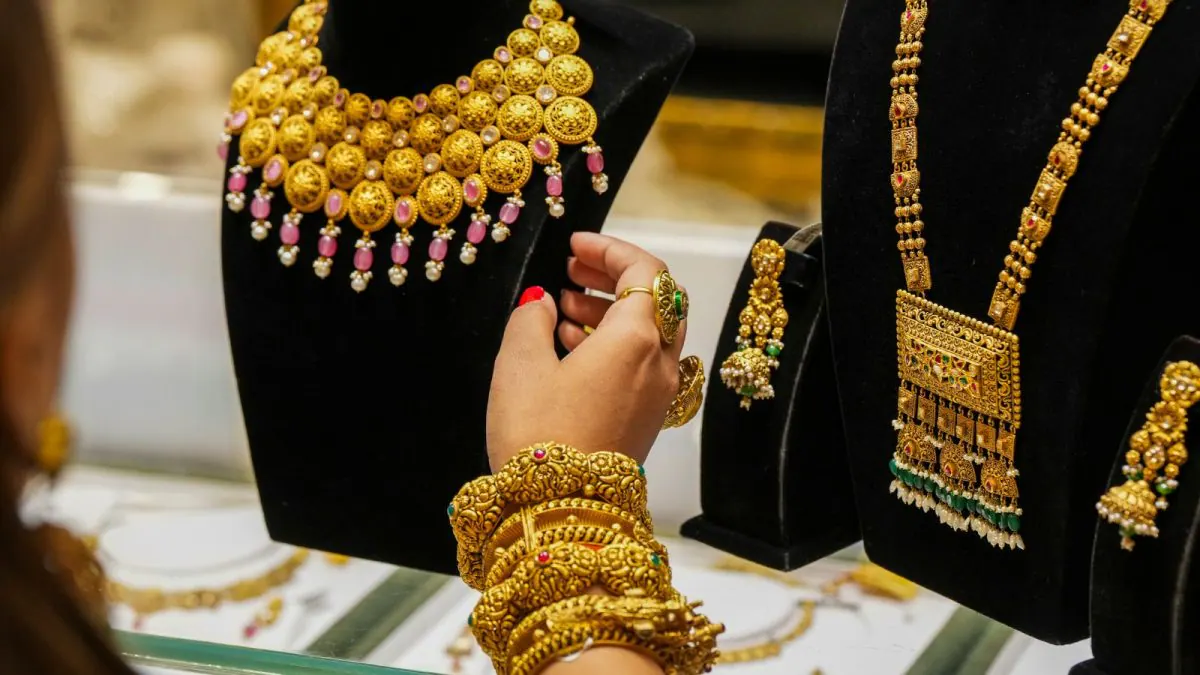
Gold jewellery takes centre stage this Akshay Tritiya, blending timeless investment value with modern, wearable style for a new generation of buyers.
For generations, buying gold on Akshay Tritiya has been rooted in the idea of prosperity and long-term security. It was a ritual as much as it was a financial decision, gold purchased, stored, and preserved as a symbol of stability.
But in 2026, that narrative is clearly evolving.
Across brands and consumer segments, a new pattern is emerging, one where gold is no longer confined to lockers and occasions, but is actively worn, styled, and integrated into everyday life. The shift is not about abandoning tradition, but about expanding it.
“At Candere, we see gold through the lens of the modern consumer, where meaning, individuality, and smart value come together,” says Ramesh Kalyanaraman, Executive Director, Candere by Kalyan Jewellers. “While the belief in gold as a secure, long-term investment remains strong, consumers are increasingly choosing pieces that also reflect their personal style.”
This duality, investment and expression is shaping buying behaviour in a way that feels distinctly contemporary. Jewellery is becoming more intentional, with consumers gravitating toward pieces that can transition seamlessly from occasion wear to everyday styling.
“From everyday stackables to personalised designs, jewellery is becoming more wearable,” adds Kalyanaraman. “We are also seeing more men confidently embrace jewellery as an extension of their style.”
That last point marks one of the most significant cultural shifts in recent years. Traditionally, gold consumption in India has been heavily skewed toward women. Today, however, men are entering the conversation, not just as buyers, but as wearers.
This broader change in mindset is echoed across the industry.
“Akshay Tritiya has traditionally been associated with gold buying as a symbol of prosperity and long-term security,” says Neil Sonawala, Managing Director, Zen Diamond India. “However, what we are seeing today is a clear evolution. Both men and women are viewing gold not just as an investment, but also as an expression of personal style.”
The rise of design-conscious consumers, particularly younger buyers is accelerating this shift. There is a growing demand for jewellery that delivers both emotional and financial value.
“Consumers today want pieces that are versatile, contemporary, and wearable beyond occasions,” explains Sonawala. “They are blending tradition with modern aesthetics, making gold a part of their lifestyle rather than a one-time purchase.”
This is also reflected in how collections are being conceptualised. At Zen Diamond India, for instance, the introduction of collections like Aria signals a move toward gold-forward designs enhanced with natural gemstones, emeralds, rubies, and sapphires bringing colour and character into what was once a largely uniform category.
A similar sentiment is visible at Malabar Gold and Diamonds, where the emphasis is on adaptability across generations. “Both men and women are increasingly viewing gold not only as a traditional investment but also as an extension of their personal style,” says M.P. Ahammad, Chairman, Malabar Gold and Diamonds.
“Younger consumers, in particular, are gravitating towards lightweight pieces, versatile styles, and modern interpretations of traditional motifs. This allows gold to move beyond occasional wear and become a part of everyday fashion.”
This idea of everyday gold, lighter, more fluid, and more expressive is perhaps the defining trend of this moment. It reflects a deeper shift in how value itself is being interpreted. Gold is no longer just about weight or purity; it is also about wearability, design, and personal resonance.
At Tanishq, this evolution is being approached through innovation in materials and aesthetics. “Consumers today are seeking pieces that go beyond traditional formats, introducing colour, character, and a sense of uniqueness,” says Pelki Tshering, Chief Marketing Officer, Tanishq, Titan Company Limited.
“Our ‘Hues’ collection brings together the timeless appeal of gold with the vibrancy of natural gemstones, allowing consumers to invest in enduring value while making a distinctive style statement.”
What emerges from these perspectives is a clear redefinition of gold’s role. It is no longer a binary choice between investment and adornment. Instead, it is both, simultaneously.
The modern consumer does not want to choose between financial prudence and personal expression. They expect their purchases to do both.
And perhaps that is what makes this shift so significant. It does not reject tradition, it reinterprets it.
On an occasion like Akshay Tritiya, which has long symbolised auspicious beginnings, gold continues to hold its place. But today, it tells a broader story, one of identity, individuality, and evolving aspirations.
In 2026, gold is not just something you invest in. It is something you live in.
April 12, 2026, 10:15 IST