Global telco body GSMA has called for lower taxes on entry-level phones, financing schemes and greater use of second-hand devices to drive smartphone adoption, as rising memory prices derail industry’s ambition to make devices more affordable.
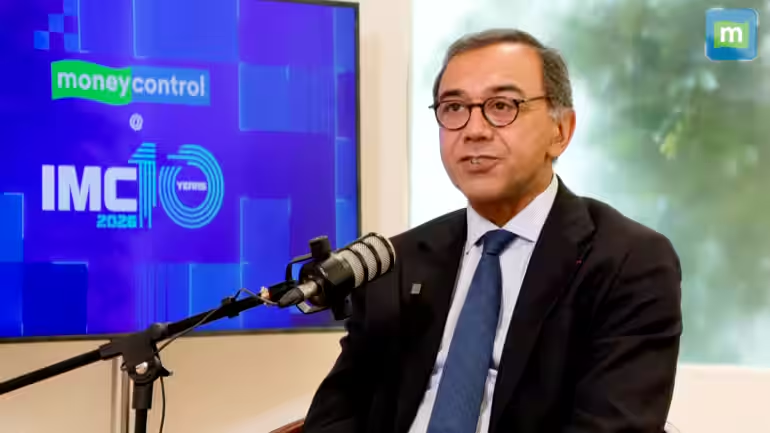
The industry needed alternatives to make smartphones more accessible, particularly in developing economies where device costs remain a major barrier to mobile internet adoption, GSMA director general Vivek Badrinath said.
“Today, that objective is out of the window,” Badrinath said, referring to the GSMA’s affordability target. “When memory cost is $50, you cannot make a phone for $50,” he said in an interview to Moneycontrol.
Demand from artificial intelligence (AI) infrastructure and data centres is driving up memory prices, which is weighing on India’s smartphone market, with brands continuously revising prices.
According to IDC’s Worldwide Quarterly Mobile Phone Tracker, India’s smartphone market is projected to contract by 12 percent to 15 percent this year, marking its sharpest annual decline since 2019.
Consumers are either delaying upgrades or opting for cheaper and second-hand devices due to higher prices.
Badrinath said the surge in memory demand from AI applications and data centres had created a supply-demand imbalance, with components increasingly allocated to applications offering higher commercial returns.
The affordability challenge extends beyond India. Around 3.1 billion people globally remain unconnected to mobile internet despite living within network coverage, largely because smartphones are unaffordable relative to their incomes, he said.
Citing Africa, Badrinath said a smartphone could cost people in the bottom 20 percent of the population more than three weeks of wages.
In India, 99 percent of the population lives within reach of a mobile network, making affordable devices critical to translating coverage into internet adoption.
Financing, tax cuts
The GSMA is exploring financing schemes, tax reductions, local manufacturing and second-hand devices to improve affordability.
Financing would allow consumers to spread handset costs over time, while mechanisms to underwrite loans could help lenders extend credit to more people.
Badrinath urged governments to reduce taxes on entry-level smartphones, citing initiatives in Africa and Argentina.
“When you’re trying to get your population online and when phones are the biggest barrier, that’s not the time to tax entry-level smartphones,” he said.
Local manufacturing could help in some markets, depending on whether it translated into lower consumer prices, he said.
Second-hand phones gain importance
Badrinath said the reuse of second-hand smartphones could provide a more affordable route to internet access while delivering environmental benefits by extending devices’ useful lives.
“Subsidy, CSR funding, supporting programmes typically programmes that support making accessible, for instance, second-hand phones or financing supporting it,” Badrinath said.
He added that financing schemes could help more consumers afford smartphones by spreading the cost over time, while mechanisms to underwrite loans could encourage lenders to extend credit to a wider pool of buyers.