JOHANNESBURG (miningweekly.com) – South Africa’s platinum group metals (PGMs) mining and marketing company Valterra Platinum this week affirmed sustainability as being at the heart of the future of mining when it hosted its inaugural Sustainability Day to highlight the role responsible mining plays in driving competitiveness and long-term value creation.
The event followed the publication of Valterra Platinum’s first sustainability report in March and reinforces sustainability as a strategic imperative embedded across the business.
Sustainability is the practice of using resources responsibly so that human needs are met without compromising the ability of future generations to meet their own needs, ensuring long-term viability for the planet and society.
Valterra Platinum supplies PGMs that underpin cleaner technologies. These cleaner technologies, it stated, specifically include:
- hydrogen energy systems; and
- emission reduction solutions.
Collectively, hydrogen energy systems and emission-reduction solutions make this Johannesburg Stock Exchange- and London Stock Exchange-listed PGMs company a central driver of the transition to a lower-carbon global economy.
As demand grows for cleaner mobility, industrial decarbonisation, energy security, and emerging technologies such as AI, sustainability is increasingly shaping operational performance, market access, customer relationships, and future growth.
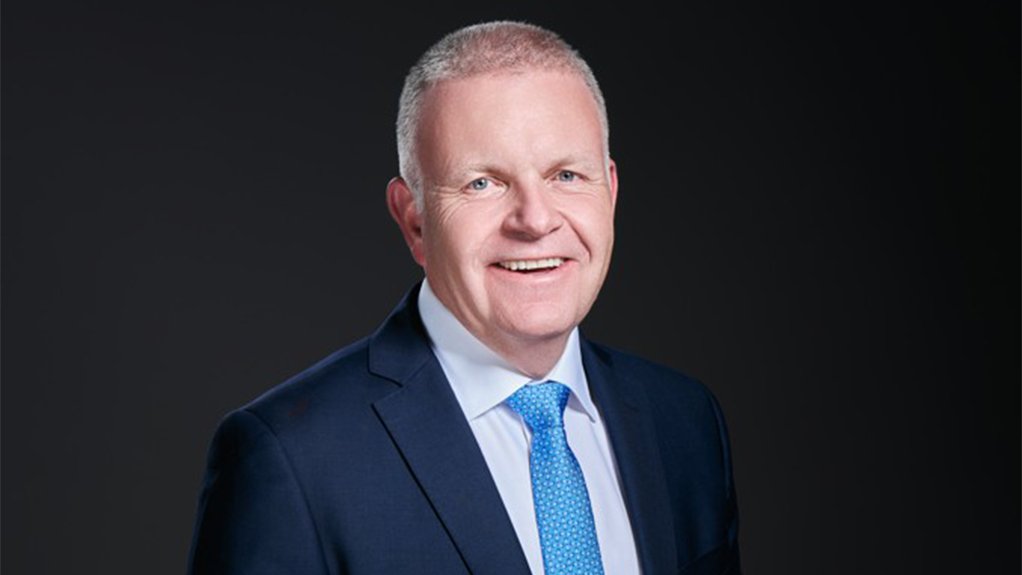
“The cleaner, more electrified and more connected future the world is building, depends on the metals that we mine, and we need to produce these metals in ways that are responsible, resilient and trusted,” Valterra CEO Craig Miller stated in a media release to Mining Weekly.
“The scale and pace of today’s challenges call for integrated thinking, stronger partnerships, real innovation, and a willingness to lead. Sustainability should be more than a compliance exercise. It has to be a driver of operational excellence, an enabler of innovation and a source of resilience – and that’s why sustainability is integrated into everything we do,” Miller added.
Valterra’s sustainability strategy is guided by two mutually reinforcing principles: protecting and creating value. Value protection focuses on securing the company’s licence to operate, managing regulatory and social risks, and ensuring reliable delivery to host communities and stakeholders. Value creation focuses on strengthening operational resilience, enabling cost efficiencies and energy security, supporting long-term growth, and building enduring customer relationships.
The sustainability strategy is also anchored in three interconnected priorities.
The first of these is climate and environment, which involves advancing decarbonisation, resource stewardship and climate resilience.
This year, Valterra and Envusa Energy announced the commercial operation of the 240 MW Mooi Plaats solar PV project in South Africa’s Northern Cape.
The Koruson 2 project, when completed later in 2026, will reach up to 520 MW of renewable energy, of which 79% will be allocated to operations.
This will meet about a third of Valterra’s electricity needs, strengthening the pathway to a 30% reduction in greenhouse-gas emissions by 2030.
It will also ensure operational energy security, deliver cost savings of about R300-million a year and is expected to abate about 2.2-million tonnes of CO2 equivalent a year.
Furthermore, Valterra’s smelting operations comply with the Minimum Emissions Standard regulations and with SO₂ abatement systems that convert emissions into sulphuric acid.
While this investment delivers no additional PGM ounces, it reflects the company’s commitment to doing the right thing for the environment in which it operates.
Water stewardship remains a priority, with programmes to improve water efficiency through recycling and reuse, therefore reducing freshwater dependence.
In 2025, 68.7% of the water used at Valterra’s operations was recycled and reused in support of ongoing water efficiency optimisation.
Technological innovation also plays a key role. The deployment of Jameson Cell flotation technology enhances processing efficiency by improving mineral recovery while reducing energy consumption and reagent use.
Its compact design enables lower water usage per ton processed and reduces the overall environmental footprint of concentrator operations, supporting both cost efficiency and more sustainable resource use.
The second interconnected priority in which the Valterra sustainability strategy is anchored is resilient local communities.
This involves enabling inclusive development, economic participation and enduring social stability.
Valterra’s approach focuses on enabling sustainable livelihoods, strengthening local economies and investing in infrastructure.
Through investment in health and wellbeing, education, basic infrastructure, enterprise development and local procurement, the company supports long-term development outcomes aligned with community priorities.
During 2025, Valterra contributed R83-billion to society through taxes and broader economic participation. This included R859-million in social investment programmes and R7-billion on procurement in host communities.
The third interconnected priority in which the Valterra sustainability strategy is anchored is ethical value chains.
This involves promoting responsible mining and sourcing, transparency and strong governance.
Valterra described ethical value chains as being central to maintaining trust and market access.
All Valterra-owned mining operations have now been independently assessed against the Initiative for Responsible Mining Assurance (IRMA) standard.
The IRMA standard serves as the basis of a voluntary assurance system offering independent third-party assessment and verification of environmental and social performance measures at industrial mine sites around the world.
The company also maintained strong environmental, social and governance credentials, including an MSCI AA rating and continued inclusion in the FTSE/JSE responsible investment index.
“We embed responsible sourcing, human rights due diligence and compliance across our operations and supplier relationships,” the company stated.
Its compliance framework addresses key risks including anti-corruption, fair competition and data privacy, while inclusive procurement programmes strengthen local participation in the mining value chain.
“Together, these priorities position sustainability as a core driver of operational excellence, innovation, lasting competitiveness, market access and long-term growth.
“We remain committed to strengthening its sustainability performance, guided by our integrated strategy and focus on transparency, innovation and stakeholder value.
“As demand for responsibly produced PGMs grows, we are well positioned to deliver sustainable value while supporting a lower-carbon, more inclusive economy.
“As expectations of the mining industry continue to evolve, future success depends on whether companies are effective enough in creating and protecting value through responsible operations, innovation and resilience,” Valterra emphasised.
The company mines, smelts and refines PGMs and associated co-products from its operations in South Africa and Zimbabwe.
With its integrated value chain, supported by marketing hubs in London, Singapore and Shanghai, the company delivers tailored solutions for its customers.
Valterra is committed to zero harm, capital allocation discipline and delivering on value-accretive strategic priorities as a standalone, leading integrated PGM producer, “guided by our purpose of unearthing value to better our world”.
HYDROGEN COUNCIL
“Now’s time to shift gears and deploy hydrogen’s full potential to build cleaner, more secure and resilient energy systems,” Hydrogen Council CEO Ivana Jemelkova insists.
Launched is ‘Hydrogen for a Resilient World’, a CEO-led Call-to-Action urging governments to accelerate #hydrogen deployment as a strategic pillar of resilient energy systems.
As governments around the world rethink their energy strategies amid compounding crises, hydrogen – as electrification’s indispensable partner – will be key to enabling a historic reshaping of the global energy system and ensuring long-term resilience, the council points out.
Hydrogen can help countries diversify energy supply, strengthen industrial competitiveness, unlock the value of domestic resources and build cleaner, more secure and resilient energy systems.
Investment in the green hydrogen PGMs help to provide, has grown tenfold in the last five years, with over $110-billion committed across 510-plus projects worldwide.
Across the value chain, technologies have moved from concept to industrial-scale construction as well as proven and ready to scale.
“Now’s the time to shift gears,” Jemelkova recommends.
Just two months of the energy crisis triggered by conflict in the Middle East cost importing countries in Europe and Asia more than $100-billion. Investing instead in technology diversification and pairing electrification with hydrogen would mark a decisive step towards a more resilient world, better equipped to weather such shocks, or prevent them altogether, the Hydrogen Council spells out.
What is needed now is bold policy action of the kind being displayed in South Korea, where there has been a hydrogen train range breakthrough that potentially surpasses 1 200 km on a single tank of hydrogen fuel owing to a combination of advanced tank design, integrated fuel management and fast vaporisation.
On the hydrogen fuel cell electric vehicle (FCEV) front, South Korea has 46 834 vehicles, 481 refuelling stations and 1 453 MW of fuel cell power.
Fuel Cells Works reports that South Korea’s South Gyeongsang is leading on FCEVs and Gyeonggi dominating refuelling station numbers.
Renewables Now reports that French utility Engie, which is linked to the Valterra/Envusa Energy renewables project, and Denmark’s European Energy have teamed up to advance the development project to produce green hydrogen in Denmark and supply industrial and mobility demand in Germany. The green hydrogen facility is set to connect to the future Danish-German hydrogen pipeline, which is expected to be commissioned around 2030. Its output will be used to decarbonise hard-to-abate industries, with Engie reserving the right to market more than 20,000 tonnes of green hydrogen annually from the site.
Hydrogen Insight reports that German steel company Salzgitter has signed a green hydrogen offtake deal with an external supplier EWE to buy around 10 000 tonnes of clean hydrogen a year from a plant that is under construction in Emden.
Japan has reportedly launched a green hydrogen ship that produces Its own fuel from seawater using onboard solar panels and requiring no port refuelling for voyages of up to 90 days.
In June, On Thursday, South Africa’s Freeport Saldanha hosted a delegation from the Netherlands Embassy in Pretoria for a site visit focused on exploring practical collaboration opportunities within the green hydrogen sector at the Western Cape port from which iron-ore is exported.
Discussions centred on the role of Freeport Saldanha’s development programmes unit plays in future partnerships that support the growth of the Saldanha Bay green hydrogen ecosystem.