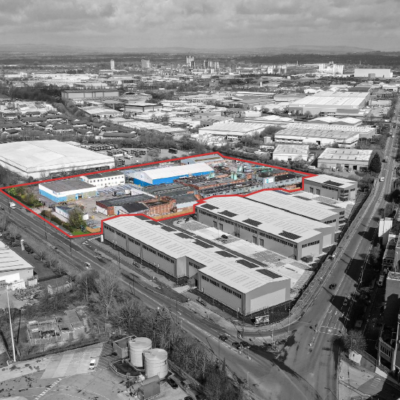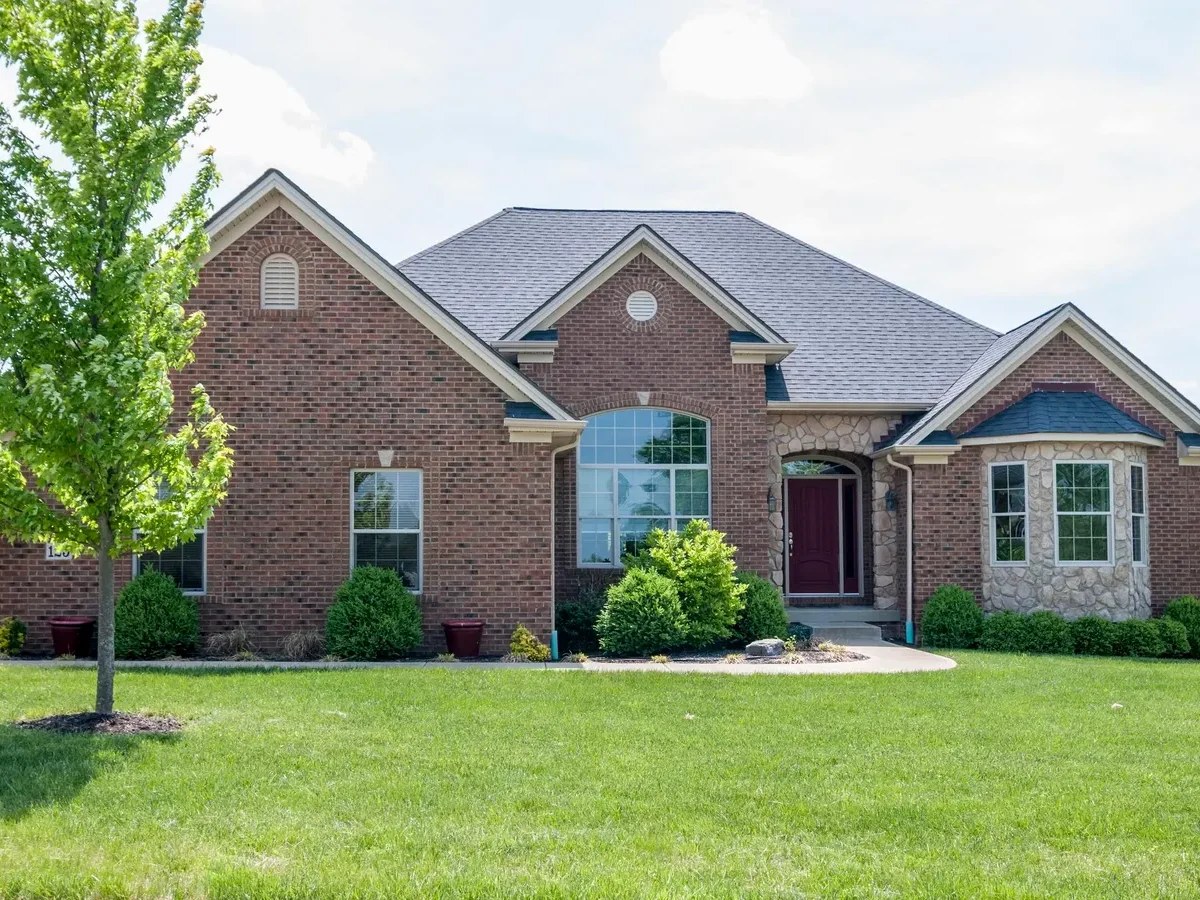

A middle class single family home in the United States
Universal Images Group via Getty Images
Most residential real estate deals get screened in the first ten minutes on two numbers. The capitalization rate tells a buyer what yield a property throws off at the asking price. The cash-on-cash return tells a buyer what the invested equity earns in cash after the loan is paid each year.
Both are fast, both are intuitive, and both do real work narrowing a stack of opportunities down to the few that deserve serious attention. The trouble is not that these metrics are wrong. The trouble is that each one describes a single frozen moment, and too many investors treat that moment as if it describes the entire life of the asset.
A capitalization rate is the ratio of a property’s net operating income in the first year of ownership to its purchase price. That definition carries its own warning label. As industry educators at firms like Origin Investments and PropertyMetrics describe it, the cap rate is a one-year snapshot of stabilized income that says nothing about how revenue and expenses will move across a hold period, nothing about the capital the building will eventually demand, and nothing about the risk sitting underneath the cash flow. A property quoted at a 6% cap rate looks identical to another quoted at 6%, even when one is two years from a full roof replacement and the other was renovated last spring. The metric flattens that difference into a number that appears precise and is actually only a starting point.
The Expense Line Ages Faster Than The Spreadsheet
The income side of the equation tends to be the side buyers scrutinize. The expense side is where a clean cap rate ages fastest, because several of the largest line items in a residential operating budget have been moving in one direction and moving hard.
Insurance is the clearest example. A September 2025 Federal Reserve FEDS Note by economists Samuel Hughes and Raven Molloy found that the average monthly property insurance cost for apartment buildings rose from roughly $39 per unit in 2019 to about $68 per unit in 2024 in inflation-adjusted terms, an increase of roughly 75%.
The National Multifamily Housing Council’s 2024 State of Multifamily Risk Report tells the same story from the operator’s chair, with respondents reporting average annual premium increases of 14% from 2021 to 2022, 22% the following year and a striking 45% from 2023 to 2024. By 2024, premiums were on average roughly double their 2021 level, far outpacing general inflation over the same window. A cap rate built on last year’s insurance figure can be obsolete before the ink dries on the purchase agreement.
Property taxes carry a similar trap, and it is one that punishes the buyer specifically. In California, Proposition 13 freezes a property’s assessed value until ownership changes, at which point the county reassesses to current market value as of the sale date, according to the California State Board of Equalization. A building that has appreciated for years under a low assessed base can see its tax bill jump sharply the moment a new owner takes title, sometimes adding tens or hundreds of thousands of dollars in annual liability. That increase lands directly on net operating income, yet a seller’s trailing financials show the old, lower number. An investor who underwrites to the seller’s tax line rather than the post-sale reassessment is buying a cap rate that will never actually exist for them.
The Capital The Cap Rate Cannot See
The deeper structural blind spot is capital expenditure. Net operating income is struck before the large, irregular outlays that keep a building standing, so the cap rate reflects none of them. A careful residential pro forma does carry an annual replacement reserve as a line item, but that smoothed reserve is an estimate of average future need rather than a match for the lumpy reality of a roof or a boiler that comes due in year two.
Those costs are neither small nor optional. Industry reserve guidance places roof replacement in the range of $5,000 to $10,000 or more per unit on a 15- to 25-year cycle, with HVAC systems running $3,000 to $8,000 per unit over a similar life, according to multifamily underwriting references such as REI Prime and Wall Street Prep.
Prudent operators budget somewhere between $200 and $500 per unit per year in replacement reserves depending on the age and condition of the asset, and that figure is invisible in a cap rate comparison. Two buildings can post the same NOI and the same headline yield while one quietly owes a half-million-dollar capital bill that the other settled before listing.
What Cash-On-Cash Leaves On The Table
Cash-on-cash return earns its popularity because it answers the question every equity investor actually asks, which is how hard the cash they put in is working in a given year. It is also, by construction, a narrow lens. As resources from PropertyMetrics and Origin Investments lay out plainly, cash-on-cash return ignores property appreciation, ignores the principal paydown that steadily builds equity as a loan amortizes and ignores tax effects such as depreciation because it is a pretax figure. It also reflects a single year of operating cash flow rather than the full arc of a hold.
The practical danger runs in both directions. A buyer can reject a property with a modest first-year cash-on-cash return that would have delivered excellent total returns once amortization and appreciation are counted. A buyer can also fall in love with a high first-year cash-on-cash figure that is propped up by deferred maintenance, an unsustainable expense load or financing terms that reset against them in year three. The number is honest about the present and silent about the trajectory.
The Operational Reality The Metrics Assume Away
A capitalization rate and a cash-on-cash figure are the compressed output of a pro forma, not a replacement for one. A disciplined pro forma already prices in the operating realities that the two headline numbers bury, which is precisely why the headline numbers cannot be trusted on their own. The work is making sure the assumptions underneath them are honest rather than inherited from an optimistic seller.
Resident turnover is the steady leak a credible pro forma has to model. The National Apartment Association’s operating surveys place annual apartment turnover near 46% to 50%, and industry benchmarking reported by Multifamily Dive pegs the all-in cost of a single move-out, counting lost rent, marketing, screening, cleaning and repairs, at close to $3,976.
Vacant units took roughly 46 days to lease in the first quarter of 2024 by that same reporting, up from 43 days a year earlier. A stabilized cap rate shows none of this, which is how two assets at the same headline yield can rest on very different turnover assumptions underneath. Bad debt behaves the same way. Property managers reported residential rent delinquency around 5.2% in 2023, which is why sound underwriting applies a vacancy and credit loss allowance to gross potential rent rather than booking every scheduled dollar as collected.
The failure mode is not that a good pro forma ignores these items. It is that a seller’s pro forma, or a cap rate taken at face value, often assumes them away, and the buyer is the one who inherits the gap.
Underwriting For The Hold, Not The Headline
The point is not to retire the cap rate or the cash-on-cash return. They remain the right tools for the first cut, and any operator who throws them out is making the screening process slower without making it smarter. The point is to treat them as the opening question rather than the closing answer.
The deals that hold up are the ones underwritten forward rather than backward. That means resetting the tax line to the post-sale assessment, pricing insurance to the current market rather than the trailing premium, funding realistic replacement reserves before declaring a yield and stress-testing the revenue assumption against the turnover and bad debt the property will actually produce. It means looking at the full hold through total return, where amortization and appreciation and tax treatment finally enter the conversation, instead of stopping at a single year of pre-tax cash flow.
Two properties can wear the same cap rate and the same cash-on-cash return into the meeting and walk out as completely different investments once the operating reality is priced in. Knowing which is which is the difference between a metric and an edge.