Jack Mullen is the Founder and Managing Director of Summer Street Advisors.

Artificial intelligence, often framed as a digital revolution, is proving to be as much about space as it is about tech.
AI is not just software. It is infrastructure. And it is emerging as one of the most consequential drivers of real estate demand across office, industrial, land and data assets in the U.S.
Here’s a closer look at how I see that shift unfolding across the country.
San Francisco: From Distress To AI-Led Recovery
Nowhere is AI’s real estate impact more pronounced than in San Francisco, where the office market is showing signs of recovery.
After years of record-high vacancy, leasing activity is rebounding, driven largely by AI companies. These firms now account for a significant share of major office demand nationally, with an even higher concentration in San Francisco. In early 2026, more than half (subscription required) of major leases were signed by AI companies, according to the San Francisco Chronicle. The same source reports that top leases are exceeding $300 per square foot.
Just as important is how demand is evolving. AI companies are not behaving like their predecessors. As they scale, they are taking larger footprints (often in the 15,000 to 20,000 square foot range) and prioritizing high-quality, collaborative environments. Class A assets are capturing disproportionate demand.
The ripple effects extend beyond office. A resurgence in AI hiring is pushing residential rents higher, in some cases approaching pre-pandemic peaks.
The AI Office Rebound: Seattle, New York And Beyond
San Francisco is the leading edge of a broader trend. In Seattle, office demand tied to tech and AI has surged year over year. In New York City (subscription required), AI is playing a different but equally important role—less a visible leasing driver and more an embedded force stabilizing demand across finance, media and professional services, where AI teams are being built inside existing firms rather than as stand-alone tenants.
These cities are seeing a shift in how a new generation of companies uses space.
AI firms tend to be more office-centric, placing a premium on in-person collaboration. They cluster geographically to access dense talent networks. And they are willing to pay for high-performance environments that support rapid iteration and growth.
Northern Virginia, Texas And Data Centers
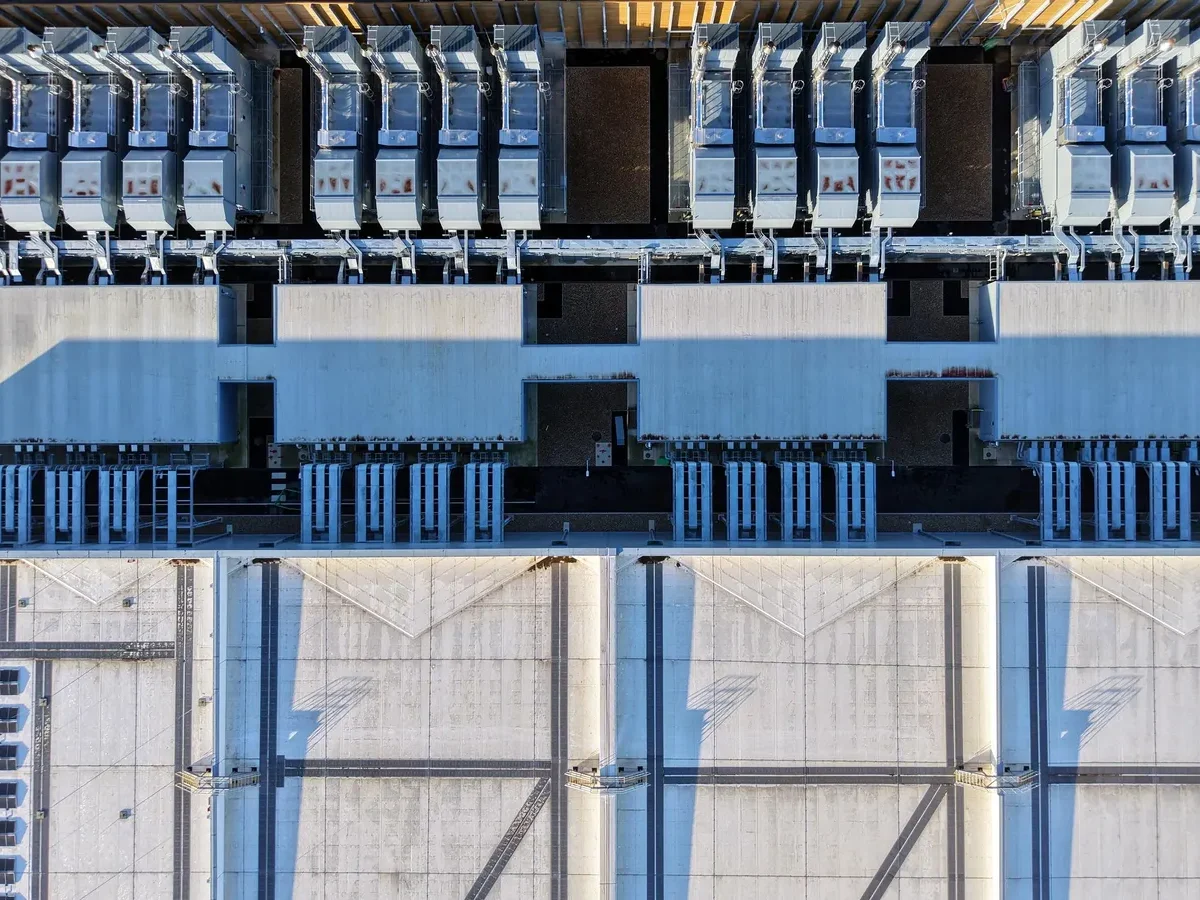
AI is not just reshaping office demand. It is also transforming data infrastructure altogether.
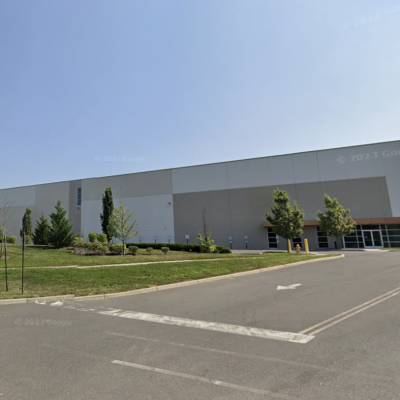
Demand for data centers is outpacing supply at an unprecedented rate. Vacancy is at historic lows, while pricing continues to rise amid power and land constraints.
The epicenter remains Northern Virginia, the largest data center market in the world, which processes 70% of global internet traffic.
But growth is spreading across Texas and other power-rich regions. Multibillion-dollar, long-term leases are becoming more common, and Big Tech is expected to deploy hundreds of billions of dollars into AI-related infrastructure in the near term.
A new asset class is emerging in the process: “powered land.” Sites with access to grid capacity are commanding significant premiums and are now the defining variable.
New AI Corridors
While legacy tech hubs remain central, AI-driven growth is expanding into a broader set of markets.
I’m seeing regions such as Dallas-Fort Worth, Atlanta and Chicago gaining traction due to a combination of data center development and workforce growth. Meanwhile, Phoenix and Austin are emerging as hubs for both compute capacity and talent pipelines.
In parts of the Midwest, industrial markets are being reimagined altogether, with legacy manufacturing sites repurposed to support AI infrastructure, leveraging existing grid access and lower costs.
These emerging corridors share a common set of advantages: available land, scalable power and a growing base of technical talent.
Constraints
It’s important to note that AI’s impact on real estate is not without constraints. Data centers are resource-intensive, placing strain on local energy grids and water systems. And while AI is capital-intensive, it is not particularly labor-intensive.
AI is not lifting all boats; it is just redistributing demand. I predict that office recovery will likely remain uneven, with Class A assets continuing to outperform, and data centers poised to be the highest-growth segment of the commercial real estate market.
In that sense, AI is not fueling a broad-based real estate rebound. It is selectively reshaping demand, concentrating growth in a narrow set of markets while leaving much of the U.S. still searching for its next chapter.
The information provided here is not investment, tax or financial advice. You should consult with a licensed professional for advice concerning your specific situation.
Forbes Finance Council is an invitation-only organization for executives in successful accounting, financial planning and wealth management firms. Do I qualify?