The popular events hosting high-profile celebrities spark dispute, from ticket scalping to “excessive” budget allocation
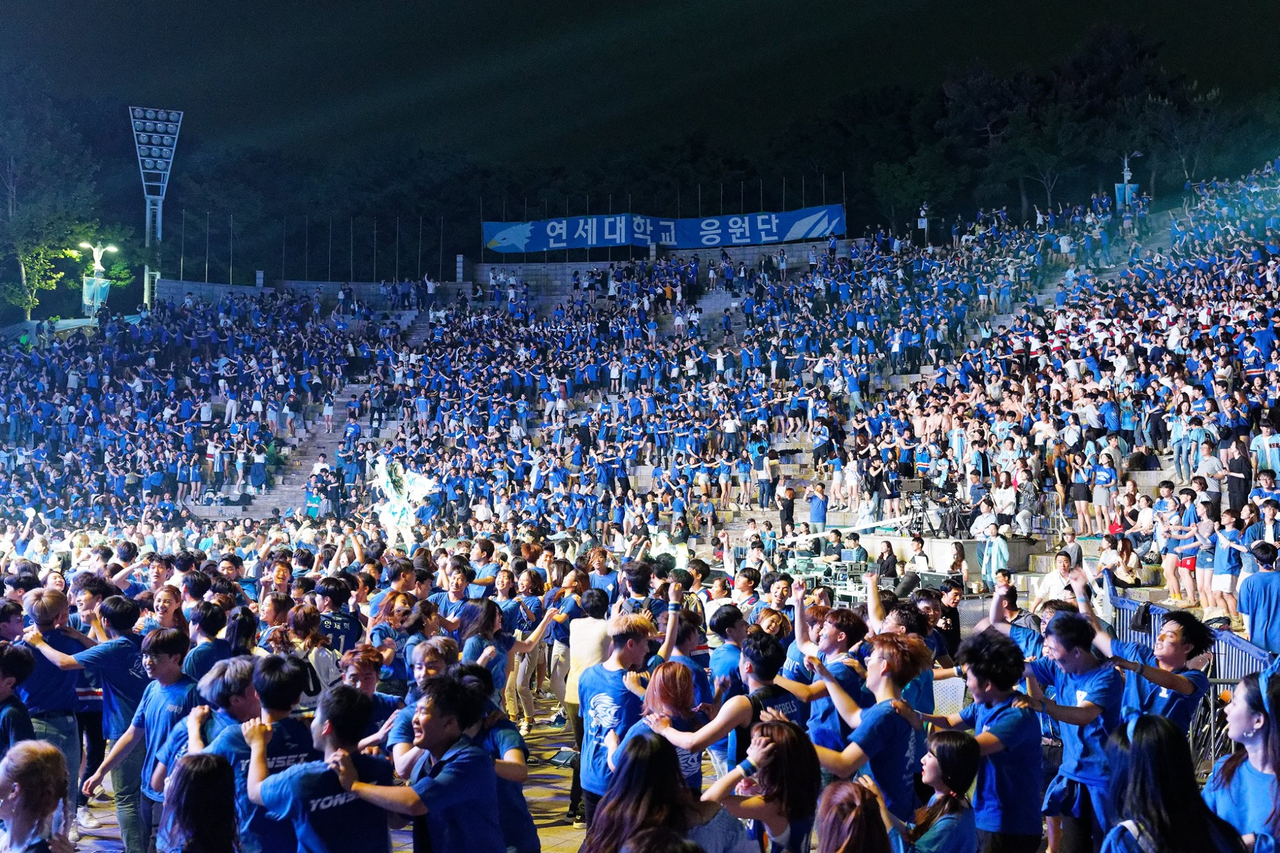
May is the peak festival season at South Korean universities, when campuses bring in major K-pop acts and draw large crowds of students and visitors.
But concerns are growing over the resale of festival tickets at inflated prices, as scalpers seek to profit from events that are often meant to be free or low-cost for students.
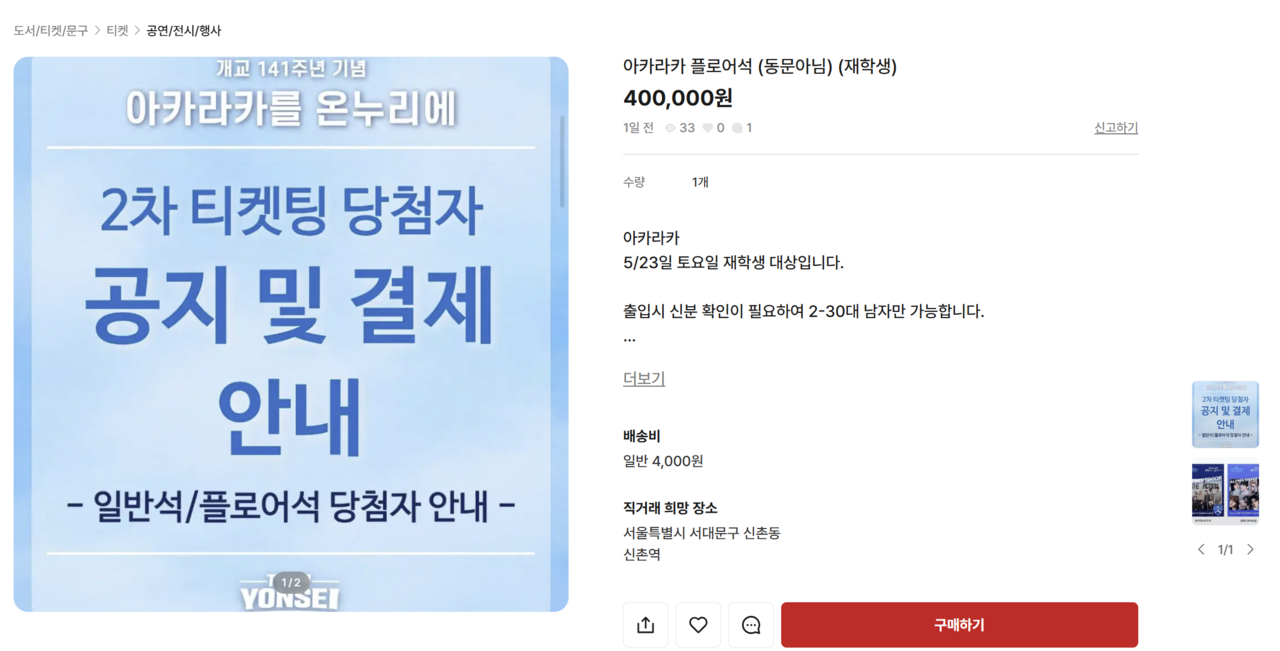
As of Thursday, secondhand resale platforms such as Bungaejangter and social media platform X were filled with posts selling university festival tickets or offering to lend student ID cards needed for entry. Prices ranged from 100,000 won to 500,000 won ($670-$335).
Universities spend hundreds of millions of won each year to book celebrities for their festivals, viewing the events as a way to boost campus spirit, as well as boost public relations.
Kyungpook National University, for instance, has allocated 350 million won to invite singers, including Psy and Kwon Eun-bi, to its festival from May 20-22, according to data from the Public Procurement Service. Pusan National University has set aside 379 million won for its festival.
The substantial amount of money spent on festivals and appearance fees for A-list celebrities has been a topic of controversy itself.
Kyungpook’s budget for the three-day event was up by 59.1 percent from last year’s 220 million won. As conventional payment for top-tier stars at university festivals is reported to be 50 million won, a significant portion of the total budget is thought to be spent on celebrity appearances.
Yonsei seeks to curb resellers
With university festivals being perceived as highly coveted cultural events, many universities are moving to clamp down on ticket scalping.
This year, Yonsei tightened its entry procedures to prevent ticket scalping for Akaraka Festival for Alumni, an exclusive event scheduled for May 17 for Yonsei alumni, graduate students, faculty members and their families.
Tickets could only be reserved by those who completed identity verification through a shopping mall exclusively for alumni, and the university replaced physical tickets with mobile tickets sent via KakaoTalk to the phone number registered under the purchaser’s name.
However, resellers appeared to be looking for ways around the measures, according to a report by local Korean-language daily Hankook Ilbo.
Some suggested logging into the seller’s KakaoTalk account on the buyer’s device to receive the mobile ticket, while others offered to have the seller visit the venue on the day of the event, complete the in-person identity verification and then hand over the paper wristband issued for entry.
Other methods being shared online included wearing the wristband loosely so it could be slipped off, or removing and reattaching it without leaving visible marks. In return, sellers demanded around 200,000 won on top of the original ticket price of 39,000 won.
Reselling access to free events
Ticket scalping remains prevalent at other universities, even when festivals are free and open to the public.
Such schools usually operate a separate student-only zone closer to the stage. Some students lend their student ID cards for a fee, allowing outsiders to enter the student zone.
Other tactics have also emerged to pass identity checks, including borrowing proof of student council fee payment, department jackets, mobile student ID cards and even accounts for Everytime, an anonymous online community for university students.
Some universities have responded with tougher warnings.
Ahead of Seoul National University’s closing festival on Thursday, which features performances by acts including NCT Wish, the university’s student council festival planning committee warned that students caught misusing or transferring student IDs could face disciplinary action ranging from probation and suspension to expulsion, depending on the severity of the case.
The committee also said police officers would be stationed at the venue, warning that such actions could lead to criminal liability.
Between ticket resales and increasing emphasis on celebrity performances, some students wonder whether university festivals are losing their original purpose.
“It feels like university festivals are becoming events for fandoms rather than occasions for members of the school community to enjoy together,” said Kim, a 27-year-old student at a university in Seoul.
seungku99@heraldcorp.com