The CEO of The Metals Company has downplayed the environmental risks of deep sea mining, describing the extraction of polymetallic nodules from the ocean floor as simply “picking up rocks” – a characterisation that has drawn immediate criticism from ocean campaigners and climate advocates.
Speaking at the New York Times Climate Forward event, Gerard Barron went further, dismissing calls for a moratorium on the industry – backed by scientists, corporations and environmental groups alike – as “virtue signalling” and “a vote against science.”
The Metals Company is currently seeking US authorisation to mine the Clarion-Clipperton Zone of the Pacific Ocean, a move widely regarded as inconsistent with international law. The company’s application remains under review by the National Oceanic and Atmospheric Administration, and no commercial recovery permit has yet been issued. The International Seabed Authority, which administers mineral activities in the international seabed under the United Nations Convention on the Law of the Sea, has not approved commercial mining, and 46 countries have now called for a ban, moratorium, or precautionary pause on the industry.
Barron’s comments arrive just as new evidence has emerged suggesting the seabed may be far slower to heal than his “picking up rocks” framing implies. A study published last year in Nature found that marine life at a deep-sea mining test site in the very same Clarion-Clipperton Zone is still showing little sign of recovery – four decades after the initial disturbance.
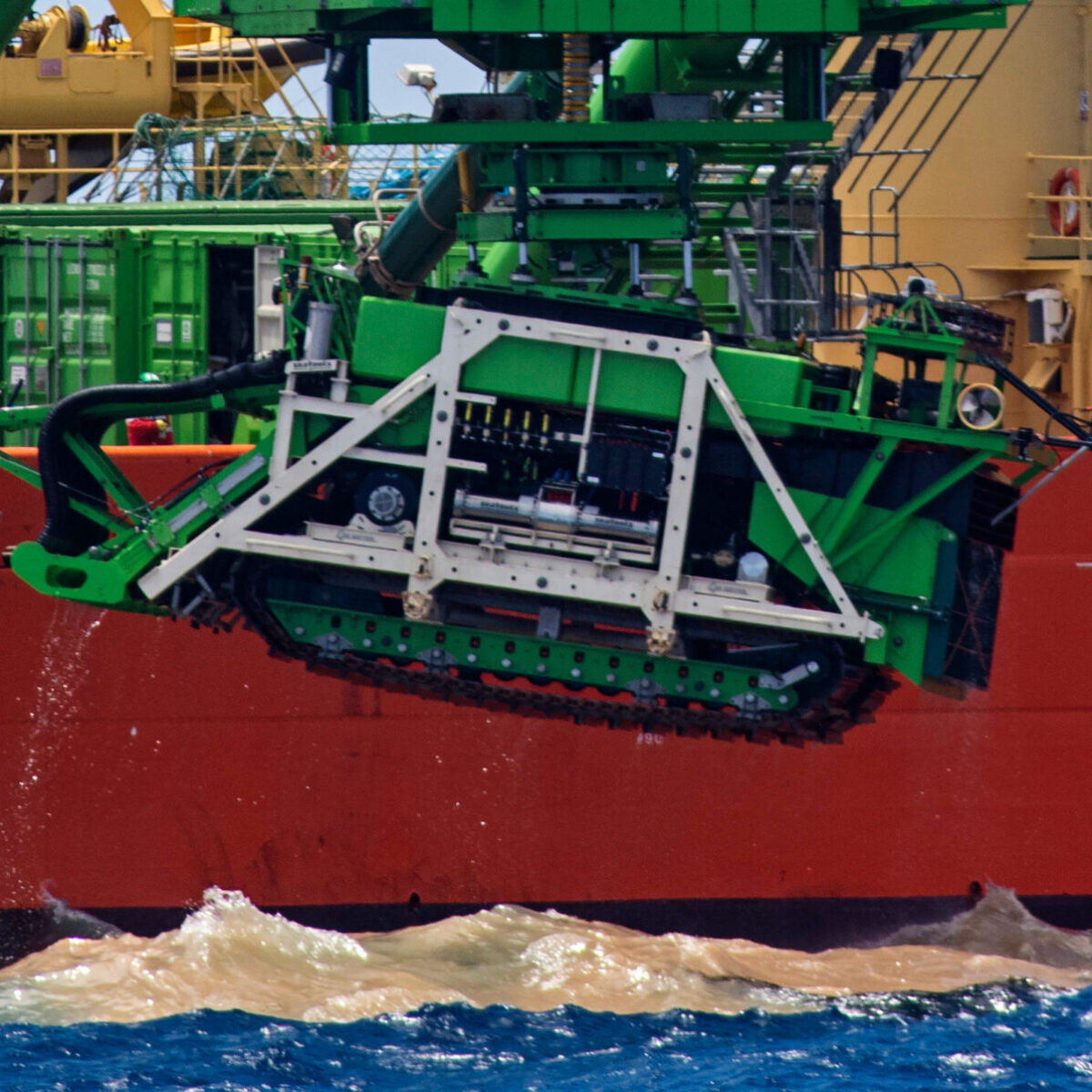
The research revisited an experiment carried out in 1979, in which a 100-ton machine was sent to the seabed to simulate commercial mining. Led by Professor Daniel Jones at the National Oceanography Centre and co-led by the Natural History Museum, the team found that the machine’s tracks remain clearly visible 44 years on, with ongoing impacts on wildlife in the area.
“To tackle the crucial question of recovery from deep-sea mining, we need first to look to the past and use old mining tests to help understand long-term impacts,” Professor Jones said.
“Forty-four years later, the mining tracks themselves look very similar to when they were first made, with an eight-metre-wide strip of seabed cleared of nodules and two large furrows in the seafloor where the machine passed. The numbers of many animals were reduced within the tracks but we did see some of the first signs of biological recovery.”