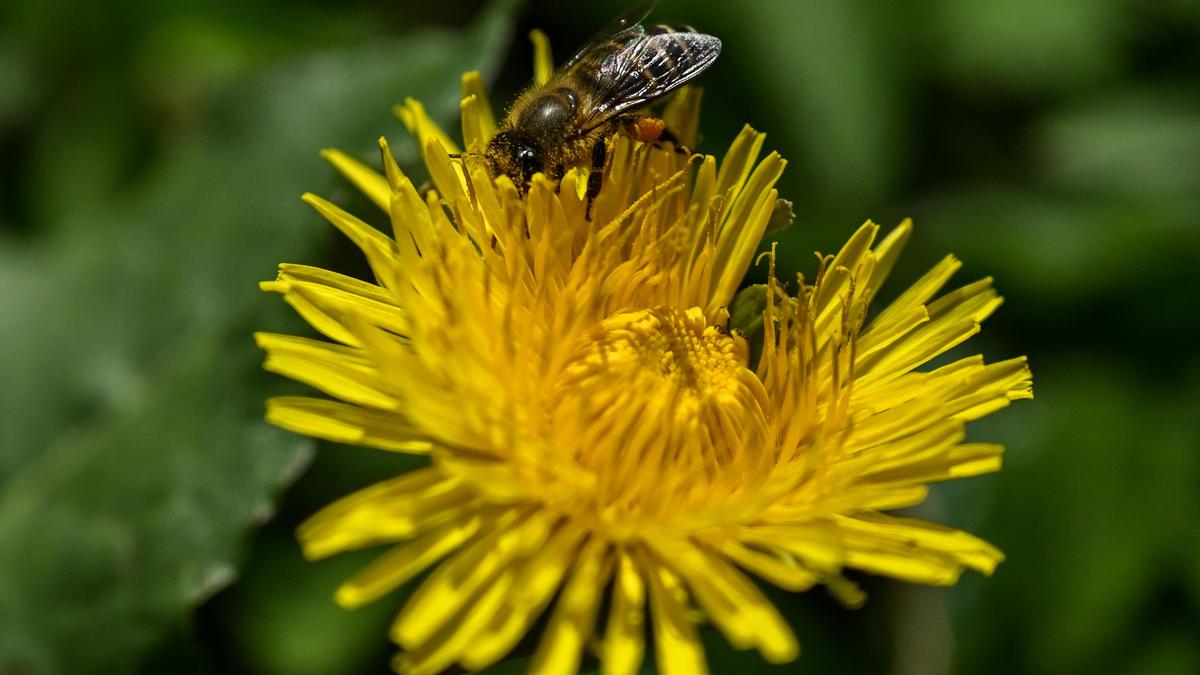

On May 20, the world marks World Bee Day. Beyond symbolic observance, it is a moment to recognise the ecological role of bees as pollinators and to ask a deeper agricultural question: can farming remain productive if the ecosystems sustaining it are progressively degraded?
As climate variability becomes the new normal, agriculture can no longer be understood only through the conventional lens of seed, fertilizer, irrigation, and markets — in other words, inputs and outputs. Farming is fundamentally an ecosystem in which soil biology, insects, trees, water cycles, and pollinators together shape productivity and resilience.
Among them, bees remain one of the least recognised contributors to agricultural output. The global economic value of pollination services, according to IPBES (2016), is estimated at $235–577 billion annually.
Many crops central to India’s food systems and rural economy — including mustard, sunflower, fruits such as mango and litchi, vegetables, seed spices, and coffee — rely significantly on insect pollination. Even self-pollinated crops often record measurable gains in yield and quality in the presence of active pollinators.
Yet pollination rarely figures in mainstream agricultural policy discourse. In India, beekeeping is still often treated as a rural enterprise activity rather than as part of the ecological infrastructure underpinning agriculture itself.
Ecological impact
This neglect carries ecological and economic consequences. Across India and much of the world, pollinator populations are under growing stress from habitat loss, monocropping, indiscriminate pesticide use, and climate variability.
Agricultural intensification has progressively homogenised farm landscapes, reducing the hedgerows, flowering vegetation, mixed cropping systems, and shade trees that once sustained pollinators. The result: weakening pollinator populations, stressed bee colonies, and declining ecosystem resilience across agricultural landscapes.
Coffee offers an instructive example. In the biodiversity-rich coffee landscapes of the Western Ghats, pollination is not merely an ecological concern but a measurable contributor to farm productivity. Managed bee pollination trials undertaken by Humble Bee across coffee estates in Coorg have demonstrated yield improvements of at least 5.3 per cent without additional expenditure on fertilizers, irrigation, or other farm inputs. Research shows that yield improvements in mustard and sunflower range between 15-45 per cent when pollinator presence increases. Such gains reflect productivity derived through ecological enhancement.
Untapped reservoir
India, therefore, sits on a largely untapped reservoir of ecological productivity — one that does not require expensive technologies or major new infrastructure, but the restoration of pollinator systems embedded within nature and long understood, instinctively, by farming communities.
This acquires particular relevance in the context of the National Mission on Natural Farming (NMNF), approved with an outlay of ₹2,400 crore. The Mission reflects an important policy recognition that Indian agriculture must gradually reduce chemical dependence and move towards more natural and climate-resilient practices. Yet every agricultural transition carries economic anxieties for farmers, particularly around temporary yield uncertainty during the transition phase.
Managed bee pollination can help bridge that gap. As farms rebuild soil biology and reduce chemical intensity, pollinators help restore the ecological processes that sustain productivity and resilience.
The policy implications are straightforward. First, managed pollination services should be integrated into agricultural support frameworks, FPO initiatives, and natural farming programmes, with financing support for pollination-as-a-service models.
Second, bee health and pollinator presence can become measurable ecological indicators alongside soil carbon and soil biology restoration under NMNF. Third, India needs to re-examine its approach to beekeeping and frame a contemporary policy architecture around pollination services.
Export edge
Pollinator-friendly cultivation can also strengthen India’s positioning in coffee, spices, horticulture, and other export markets where sustainability standards are tightening. Unlike groundwater depletion or severe soil degradation, pollination deficits are relatively recoverable. Bee populations can revive when habitats improve and harmful practices reduce.
As India transitions towards more sustainable and climate-resilient agriculture, it may be time to recognise that bees are not peripheral to farming systems; they are part of the invisible ecological infrastructure sustaining agricultural productivity and resilience.
Monika is CEO & Co-founder of Humble Bee. Suryakumar is former Deputy Managing Director, Nabard. Views are personal
Published on May 19, 2026