Energy experts, academics, and industry leaders have called on the Federal Government to strengthen its collaboration with the private sector and universities to expedite Nigeria’s energy transition.
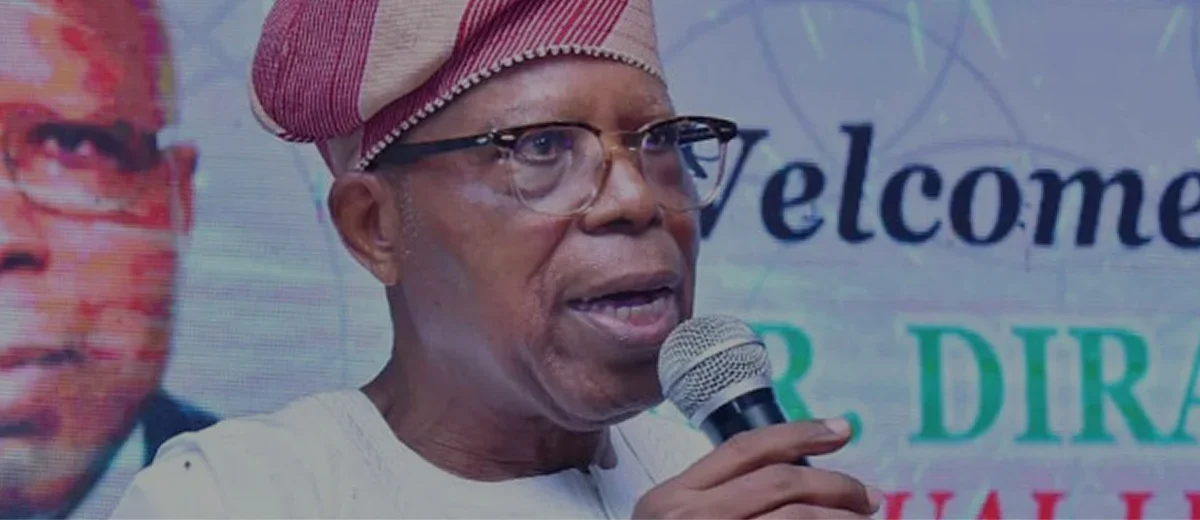
The stakeholders, while speaking at the fourth Dr Diran Fawibe Annual Lecture organised by the International Energy Services Limited, in conjunction with the Centre for Petroleum, Energy Economics and Law and the University of Ibadan, recently, cautioned that weak implementation, rather than a lack of policies, was the main barrier to transforming the country’s energy sector.
They argued that although Nigeria has developed several energy policies over the years, poor execution, regulatory uncertainty, and insufficient investment continue to undermine efforts to ensure a reliable electricity supply, expand gas infrastructure, and promote renewable energy.
Speaking on the theme, “Public-Private Energy Shift: Innovation, Investment, Implementation”, stakeholders maintained that Nigeria’s aspiration to build a resilient, competitive and sustainable energy industry would only be achieved through coordinated action among government, industry and academia.
The Group Chairman of IESL and Chairman of the Board of Trustees of CPEEL, Dr Diran Fawibe, emphasised that energy security is essential for industrialisation, economic growth, healthcare, education, job creation, and national competitiveness.
He urged policymakers, industry leaders, universities and young professionals to move beyond policy conversations to practical implementation, adding that innovation without investment remains an idea, while investment without implementation is merely a promise.
“The future of our energy sector will increasingly be determined not by the volume of resources beneath our soil alone, but by our ability to transform those resources into reliable, affordable, sustainable and accessible energy,” Fawibe stated.
He advocated stable regulatory frameworks, increased investment in research and innovation, curriculum reforms in universities, expanded professional training and stronger public-private partnerships to unlock investment in electricity, gas infrastructure and renewable energy.
Delivering the keynote address, a professor at the Nigerian Institute of Advanced Legal Studies, Prof. Yinka Omorogbe (SAN), said the ongoing public-private shift in Nigeria’s energy sector should not be interpreted as abdicating its responsibilities.
She explained that the transition represented a new model of governance in which the government provides effective regulation and policy direction, while the private sector drives investment, innovation, and operational efficiency.
“The shift is not simply privatisation. Its deeper meaning lies in the changing structure of energy governance and delivery. It is about moving from government promises to services that citizens actually receive,” she noted.
According to Omorogbe, investment and implementation are the twin pillars of Nigeria’s energy transition, noting that investors are attracted more by policy certainty than by a country’s energy needs.”
Capital follows credibility, not need alone,” she added, describing Nigeria’s vast gas reserves as central to industrialisation, manufacturing, clean cooking, energy justice and poverty reduction.
The Vice Chancellor of the University of Ibadan, Prof. Kayode Adebowale, expressed concern that although Nigeria had developed numerous energy policies, their implementation remained the weakest link.
“For too long, the conversation has stopped at policy pronouncements. We have had abundant plans, but we often falter at the final hurdle, the implementation gap,” he asserted.
Adebowale urged universities to move beyond teaching to produce research-driven and locally developed solutions capable of supporting investment, strengthening legal and regulatory frameworks and improving energy efficiency.
The chairman of the occasion, Dr Layi Fatona, also stressed that no institution could transform Nigeria’s energy sector in isolation, saying sustainable development requires collaboration, innovation, sound policies and credible institutions.
He said countries leading the global energy transition were not defined solely by their natural resources, but by their capacity to attract investment, develop skilled labour, and consistently implement reforms.
The Managing Director and Chief Executive Officer of IESL, Bayo Ige, stated that the annual lecture series was conceived to stimulate practical solutions rather than become another academic conference.
He disclosed that the partnership between IESL and CPEEL had produced annual research grants, student merit awards and prototype technologies, including AI-powered solar irrigation systems, AI-enabled smart meters, hybrid biodigesters, solar generators and agricultural robotics.
Ige also revealed that construction of the proposed Dr Diran Fawibe CPEEL Research Centre had reached an advanced stage and appealed to corporate organisations to support the facility with research equipment.
“The Nigeria we desire will not happen by relying on the government alone. It will happen when industry, academia and individuals all play their respective roles,” he said.
The Director of CPEEL, Prof Olugbenga Falode, emphasised the need for stronger partnerships between universities and industry to ensure that research findings lead to commercial innovations that effectively address real-life energy challenges instead of remaining limited to academic publications.
The lecture also included a panel discussion moderated by Dr Ibilola Amao. The panel featured contributions from Mr Oladayo Orolu, Prof Olufemi S. Shuaib, Prof Samuel Titiloye, and Dr Temilade Sesan. They explored practical strategies for enhancing public-private collaboration and innovation throughout Nigeria’s energy value chain.