

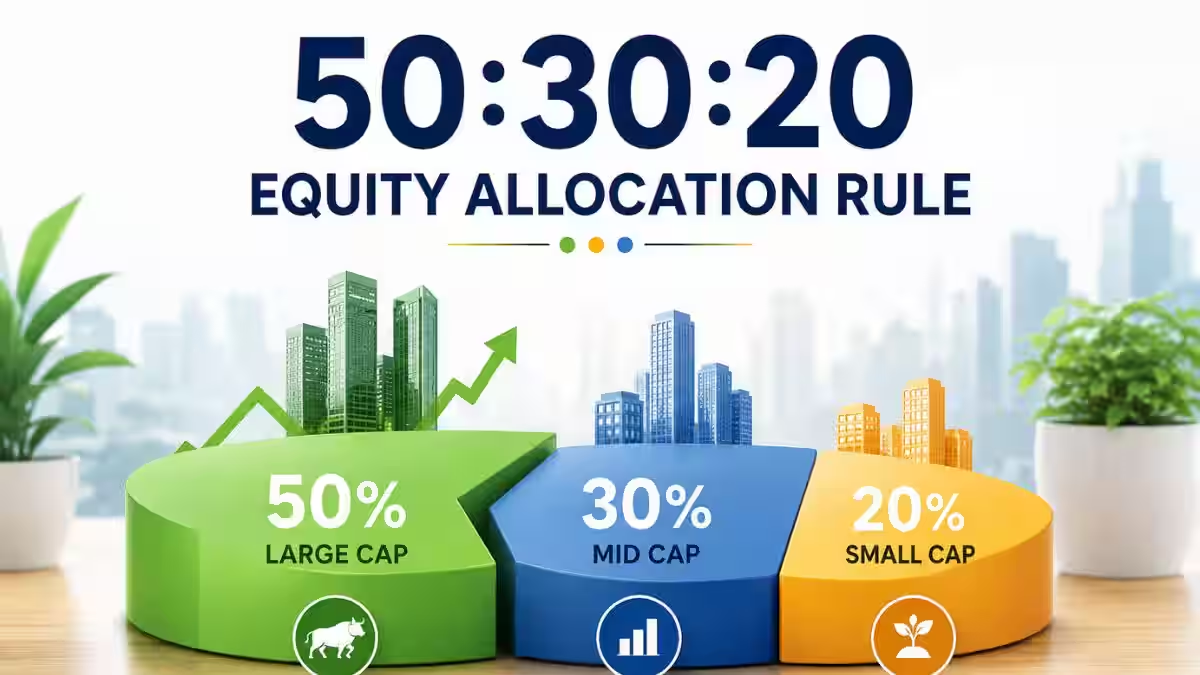
50:30:20 Rule: Mid-cap and small-cap mutual funds have continued to attract investors, with June 2026 AMFI data showing strong inflows into these categories. However, experts believe investors should not chase recent returns and must follow a balanced equity allocation strategy. The 50:30:20 equity allocation rule—50 per cent large cap, 30 per cent mid cap and 20 per cent small cap—can help investors balance growth opportunities with risk management.
Mid-cap and small-cap funds have emerged as preferred investment choices among investors looking for higher long-term returns. However, wealth management experts suggest that investors should carefully assess their goals, risk appetite and investment horizon before increasing exposure to these categories.
Speaking on Zee Business on the ideal equity portfolio structure, Hrishikesh Palve, Director at Anand Rathi Wealth, said investors should follow a process-driven approach instead of changing allocations based on market trends.
“Your market capitalisation allocation should not change because of recency bias. Maintain the allocation that you have decided. Around 50–55 per cent should remain in large caps, 20–25 per cent in mid caps, and the remaining allocation can go towards small caps,” Palve said.
What is the 50:30:20 equity allocation rule?
The 50:30:20 equity allocation strategy suggests dividing equity investments across different market capitalisation segments:
- 50 per cent in large-cap funds: Provides stability and helps reduce portfolio volatility
- 30 per cent in mid-cap funds: Offers higher growth potential compared to large caps
- 20 per cent in small-cap funds: Helps investors participate in growth opportunities but comes with higher risk
According to experts, this mix allows investors to participate in the growth potential of mid and small caps while maintaining stability through large-cap exposure.
Kshitiz Mahajan, CEO of Complete Circle Wealth, said asset allocation should depend on an investor’s age, risk profile and financial goals.
“Asset allocation changes with age. If you are young and your goals are far away, you can take higher equity exposure. But as you approach your goals, your portfolio should gradually become more defensive,” Mahajan said.
Why are investors increasing allocation towards mid-cap and small-cap funds?
June 2026 AMFI data showed strong investor interest in mid-cap and small-cap mutual funds.
Palve said mid-cap funds received around Rs 6,100 crore inflows during the month, registering nearly 60 per cent year-on-year (YoY) growth. Small-cap funds saw inflows of around Rs 5,500 crore, with growth of nearly 40 per cent YoY.
“Overall, this year has been quite positive for both mid-cap and small-cap categories. Around Rs 30,500 crore has come into these two categories,” he said.
He added that around 33 per cent of equity allocation has moved towards mid-cap and small-cap funds, compared with around 20 per cent last year.
According to Palve, strong earnings growth expectations are one of the key reasons behind rising investor interest.
“Mid-cap earnings are showing around 18–20 per cent growth potential, and similar numbers are visible in small caps for FY27. When earnings growth remains in this range, positive sentiment develops among investors,” he said.
Why do mid-cap and small-cap funds attract investors?
Mahajan explained that India’s young investor base and long-term investment approach are also supporting flows into these categories.
“India’s average age is around 31 years. Many SIP investors are young and investing for long-term goals. That is why they are taking allocation towards small and mid caps,” he said.
He added that smaller companies have greater growth potential compared to large companies.
“A company with a very large balance sheet may find it difficult to grow 12–15 per cent quickly, but a smaller company can grow much faster because the base is smaller,” Mahajan explained.
Are mid-cap and small-cap valuations attractive now?
Experts believe valuations in these segments have become more comfortable.
Mahajan explained that the current mid-cap level is around 22,680. Based on forward earnings of around 850 and historical PE levels of around 30, the fair value comes to nearly 25,250.
“This means mid-caps are trading at around a 10 per cent discount compared to their fair value,” he said.
For small caps, he said forward earnings are around 750 and the historical PE multiple is around 27. Based on this calculation, the fair value comes to around 20,250, while the current level is around 17,500.
“Small caps are trading at around a 15 per cent discount, which is why investors are looking at this opportunity,” Mahajan said.
Should first-time investors invest in small-cap funds now?
Experts advise new investors to avoid directly jumping into small-cap funds without understanding the risks involved.
Mahajan said two factors are important before investing—risk appetite and investment horizon.
“If the money you are investing is not required for the next 7–8 years, then you can consider small-cap funds,” he said.
However, investors who cannot tolerate sharp market falls should avoid aggressive small-cap exposure.
“Small caps give better rewards, but they also see higher drawdowns compared to large caps, mid caps or flexi-cap funds,” Mahajan added.
For beginners, experts suggest starting with diversified equity options before moving towards aggressive categories.
“If you do not know swimming and directly jump into 10 feet water, it is not the right approach,” Mahajan said, explaining that first-time investors can start with flexi-cap funds and gradually increase exposure to mid and small caps.
Should investors enter mid-cap funds due to FOMO?
Experts believe investors should not invest only because a category is performing well.
Palve said FOMO exists whenever an asset class performs strongly, whether it is gold, Bitcoin or global equities.
“Some FOMO can be positive. Mid-cap is a sustainable growth engine. But investors should not randomly buy funds. There should be a process-driven approach,” he said.
He added that mutual fund investors should focus on generating long-term alpha rather than chasing short-term returns.
According to him, large caps alone may not generate significant alpha as they closely track indices like Nifty 50 and Nifty 100. Mid-cap and small-cap exposure can provide opportunities for additional returns.
What should existing mid-cap and small-cap investors do?
Experts believe existing investors should avoid increasing allocation only because these categories have recently performed well.
Palve said investors should not get influenced by recent performance.
“Do not get swayed because of recency bias. Continue with the allocation you had decided earlier,” he said.
He explained that markets follow cycles and categories go through periods of underperformance and recovery.
“Mean reversion happens in markets. Investors should not suddenly jump and change their allocation because one category is doing well,” Palve added.
How long should investors stay invested in mid-cap and small-cap funds?
Experts suggest a long-term investment horizon for these categories.
- Mid-cap funds: Minimum 7 years
- Small-cap funds: 7–10 years or more
Mahajan said investors should shift money to safer assets when they approach their financial goals.
“When you are close to your goal, move the money into safer assets. The purpose is to protect the wealth you have created,” he said.
Key takeaway for equity investors
The 50:30:20 equity allocation rule can help investors create a balanced portfolio by combining the stability of large caps with the growth potential of mid and small caps.
However, experts emphasise that the right allocation depends on an investor’s age, financial goals, risk appetite and investment horizon. First-time investors should avoid directly chasing small-cap returns and should build exposure gradually through a disciplined approach.