The decision by Rathbones to cut its holding of gilts is the latest sign of unease from bond investors about a Burnham premiership.
In May, Aberdeen Investments, a fund manager, said it had sold part of its £10bn UK government bonds portfolio after Labour’s local election defeats raised the prospect of a leadership challenge.
After Sir Keir Starmer’s resignation as prime minister in June, investors including RBC Bluebay also warned they planned to avoid UK gilts amid heightened volatility.
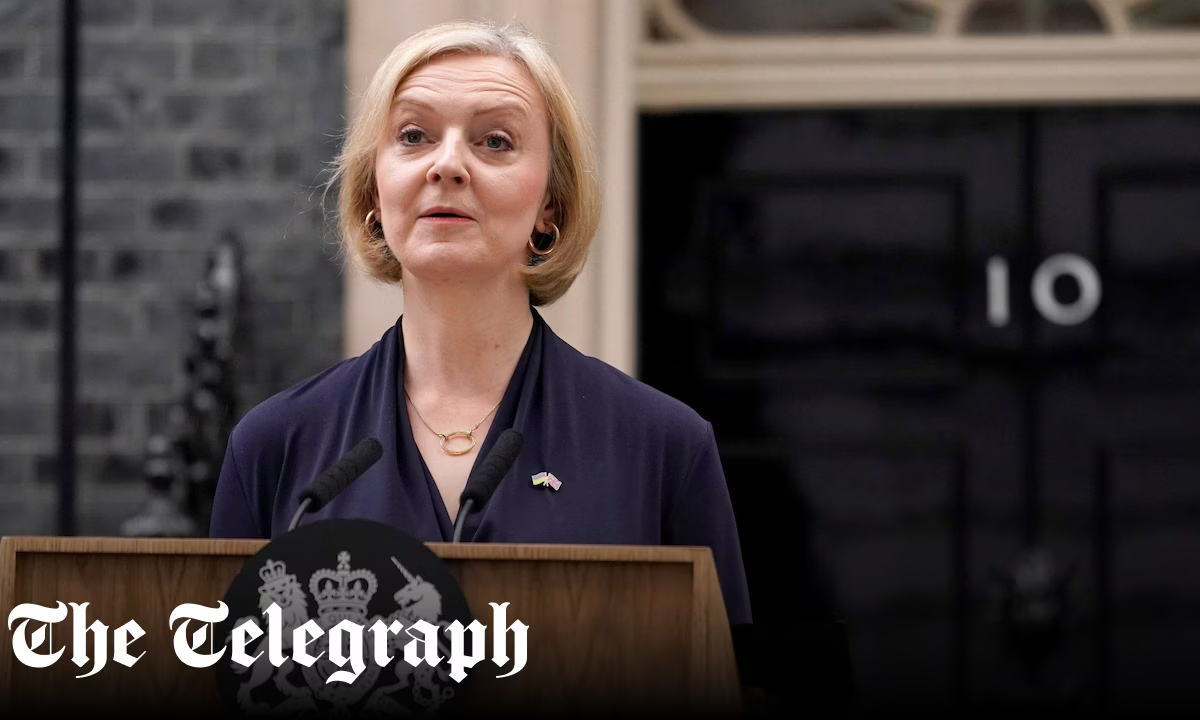
Investors are still scarred by the short-lived premiership of Liz Truss, who used her mini-Budget to unveil £45bn of unfunded tax cuts, prompting a jump in gilt yields.
Mr Burnham has insisted he is committed to Rachel Reeves’s fiscal rules, which require day-to-day government spending to be matched by tax revenues.
However, critics warn that his people-pleasing instincts could quickly sink this commitment, with Mr Burnham pledging tax cuts for low earners and briefly suggesting he would compensate the Waspi women at a cost of billions of pounds.
Reform UK claimed Mr Burnham would launch a £38bn tax raid on the wealthy to fund a spending spree, tallying up Mr Burnham’s pledges.
The former Greater Manchester mayor will become leader of the Labour Party on Friday and is expected to replace Sir Keir as prime minister on Monday.
It remains unclear who will become chancellor under Mr Burnham, though Ed Miliband is believed to be a leading contender.
The Energy Secretary is perceived to be more open to loosening the purse strings.
He has however sought to establish himself as a pragmatist by signalling he would approve drilling in the North Sea if elevated to No 11.
Mr Coombs said Rathbones Asset Management is still investing in shorter-dated government bonds, which are less vulnerable to political risk.
He said: “We retain a significant exposure in shorter and medium-dated bonds as the high nominal yields provide some inflation protection.”
He added: “We have diversified our sovereign exposure to New Zealand, Australia, Norway and more recently the US to reflect the higher credit risk that the UK has right now.”
UK government bond holdings in its Multi-Asset Strategic Growth portfolio dropped from 9.2pc in December to 6pc in May, according to its latest filings.