Rocket Lab (NASDAQ: RKLB) has cemented itself as one of the defining companies of the modern space race, with a record backlog, major acquisitions, and a new rocket nearing its first flight.
Shares currently trade at $74.31, well below the 52-week high of $151, but analysts at 24/7 Wall St. have set a 12-month price target of $119.32, implying upside of approximately 68.87%.
The stock has already shown momentum, rallying 16.66% over the past week and 40.45% over the past year, signaling growing investor confidence in the company’s strategic direction.
In Q2 2026, Rocket Lab posted $234 million in revenue, a 62% year-over-year increase that beat the consensus estimate of $230.94 million, demonstrating the company’s ability to scale aggressively.
GAAP EPS came in at -$0.08, missing expectations by 4.30%, largely due to $8.58 million in acquisition transaction costs that weighed on the headline figure.
The company’s backlog surged to $2.36 billion, underpinned by a $397 million Flatellite award, an $816 million SDA Tracking Layer Tranche 3 contract, and a Golden Dome selection alongside Raytheon.
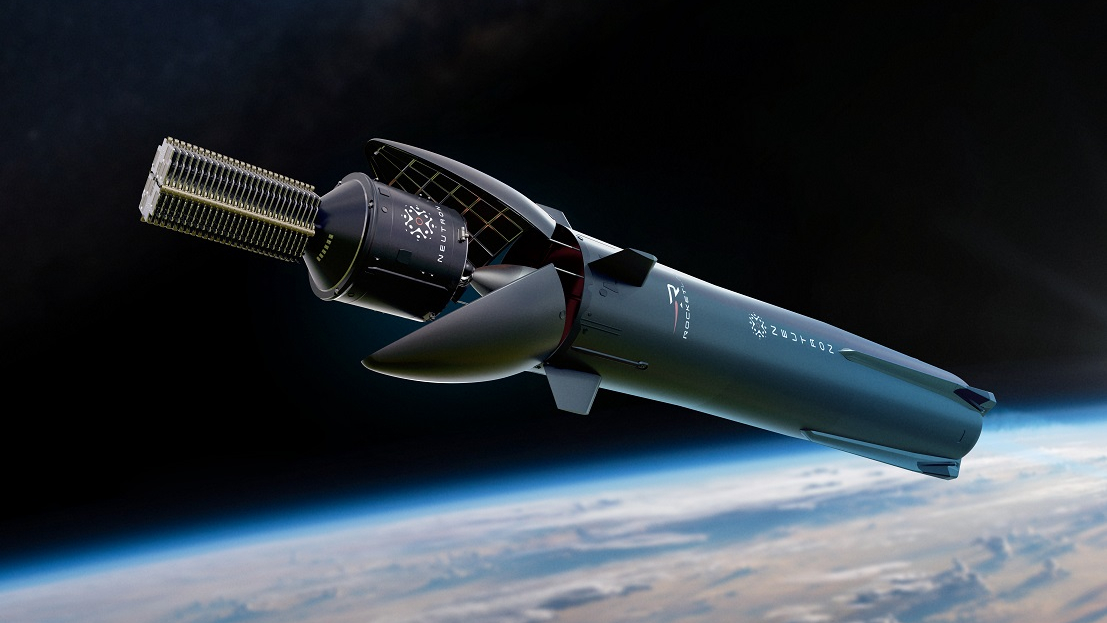
The bull case centers on Neutron, Rocket Lab’s medium-lift reusable rocket, which is targeting a Q4 2026 inaugural launch at an average selling price of $50 to $55 million, with customers already booking full-price slots ahead of its first flight.
The pending Iridium acquisition, together with the closed Mynaric and Motiv deals, reflects CEO Peter Beck’s vision of a “self-launching, tier-1 space power,” a phrase that encapsulates the company’s vertical integration ambitions.
Bears point to meaningful cash burn, with management guiding to a Q3 adjusted EBITDA loss of $17 million to $23 million, alongside $1.53 billion in ATM equity proceeds raised in H1 2026 that have diluted shareholders.
Bulls counter that the dilution has built a balance sheet carrying roughly $2.4 billion in cash and securities, providing Rocket Lab with substantial firepower to fund Neutron development and the Iridium integration.
Compared to peers, Rocket Lab’s positioning looks competitive: AST SpaceMobile (NASDAQ: ASTS) carries an $18.63 billion market cap on just $31.52 million in Q2 2026 revenue, making Rocket Lab’s $2.36 billion backlog appear far more grounded.
Intuitive Machines (NASDAQ: LUNR), guiding to $900 million to $1 billion in 2026 revenue at a $2.53 billion market cap, trades at a cheaper revenue multiple, though Rocket Lab’s launch vertical and cleaner balance sheet support its premium valuation.
Planet Labs (NYSE: PL), with a $5.94 billion market cap and Q2 FY2027 revenue of $116.05 million growing 58%, already prints positive non-GAAP EPS, providing a useful benchmark for where satellite-services companies can mature.
The 24/7 Wall St. bull scenario places RKLB at $155.70 within 12 months if Neutron launches cleanly and the Iridium acquisition closes on schedule, while the bear scenario pins shares near $93.67 if execution stumbles.
Longer-term price targets from 24/7 Wall St. project RKLB reaching $126.41 in 2027, $174.38 in 2028, $227.22 in 2029, and $259.06 by 2030, all contingent on Neutron cadence and successful Iridium integration.
With a beta of 2.612, Rocket Lab remains a high-volatility proposition, rewarding investors with risk tolerance while presenting real downside if Neutron slips into 2027 or further equity issuance dilutes the share count.