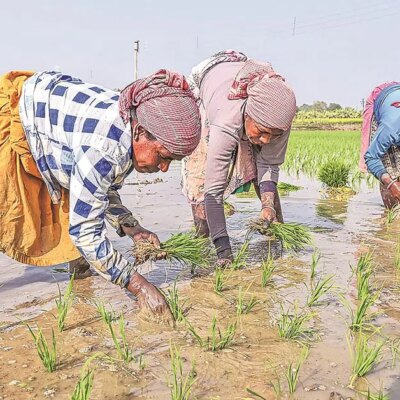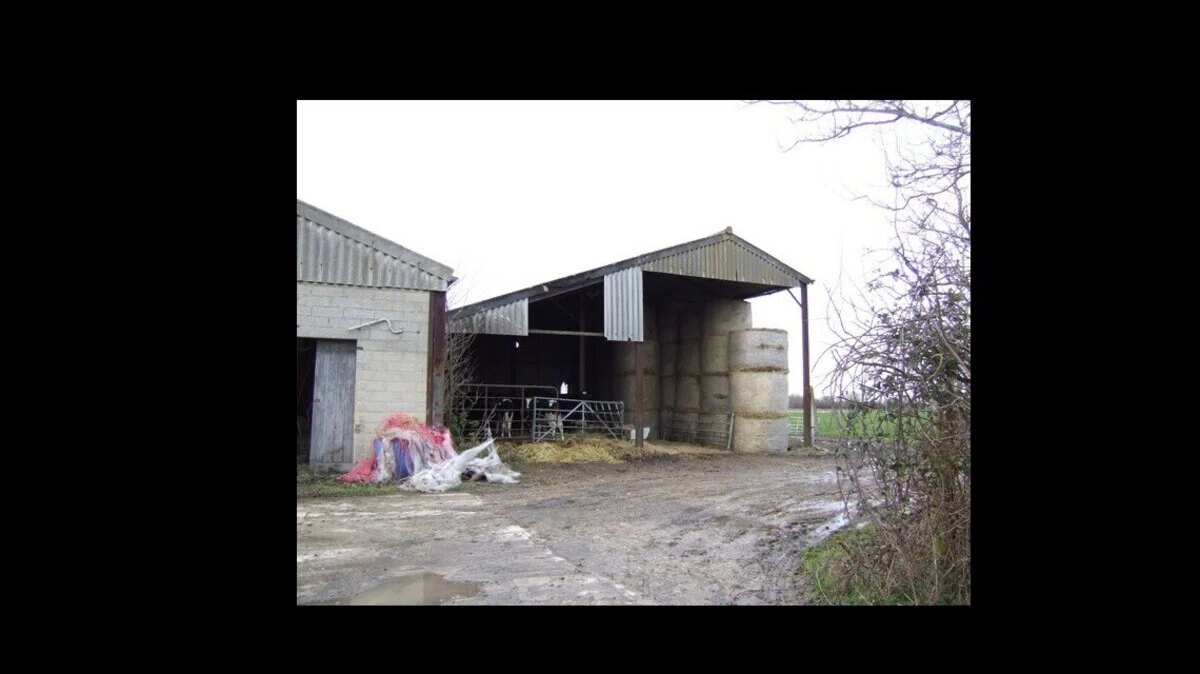
With Local LLMs and Local Food, Individuals Can Get By—The Core of This Issue as Shown by Smart Agriculture in Dairy and Beef Cattle
With local LLMs and local food, individuals can get by. In the era of AI agents, I will unravel the mechanisms for producing food locally, one by one. The thesis of this series is that individuals achieving food self-sufficiency alongside AI is the compulsory education of the AI era. This article takes this thesis as its starting point.
One of the keys to supporting this thesis is the smart agriculture that has now begun to move in the livestock sector. Two facts have been confirmed. First, Gunma Prefecture has started smart agriculture initiatives targeting dairy and beef cattle. Second, Omihachiman City is supporting the introduction of smart agriculture technology. It is important that both are driven by the administration. Prefectures are entering a new stage in the livestock field of dairy and beef cattle, and cities are backing farmers’ adoption of technology. These two movements can be interpreted as showing that smart agriculture is not just a matter for a few advanced farmers, but is being developed as a regional system.
Here, I will rephrase the core of this series. A local LLM is an AI that can be run in a local or regional environment without relying on huge services beyond the network. Local food is the practice of producing food in the local area and consuming it nearby. When these two are in place, individuals can reduce their total dependence on large-scale external systems, both in terms of information and food. By supplementing knowledge and judgment with AI, you can secure some of your own food. That is the meaning of the assertion that ‘individuals can get by’.
The livestock sector, where administrative efforts are advancing, is a good example for observing this way of thinking concretely. While I will not make definitive statements about the details of the mechanisms or the numerical effects in this article, the very fact that support is moving at both the prefectural and municipal levels provides material for individuals to learn from. I will delve into specific examples and actions that individuals can take starting today in the following sections.
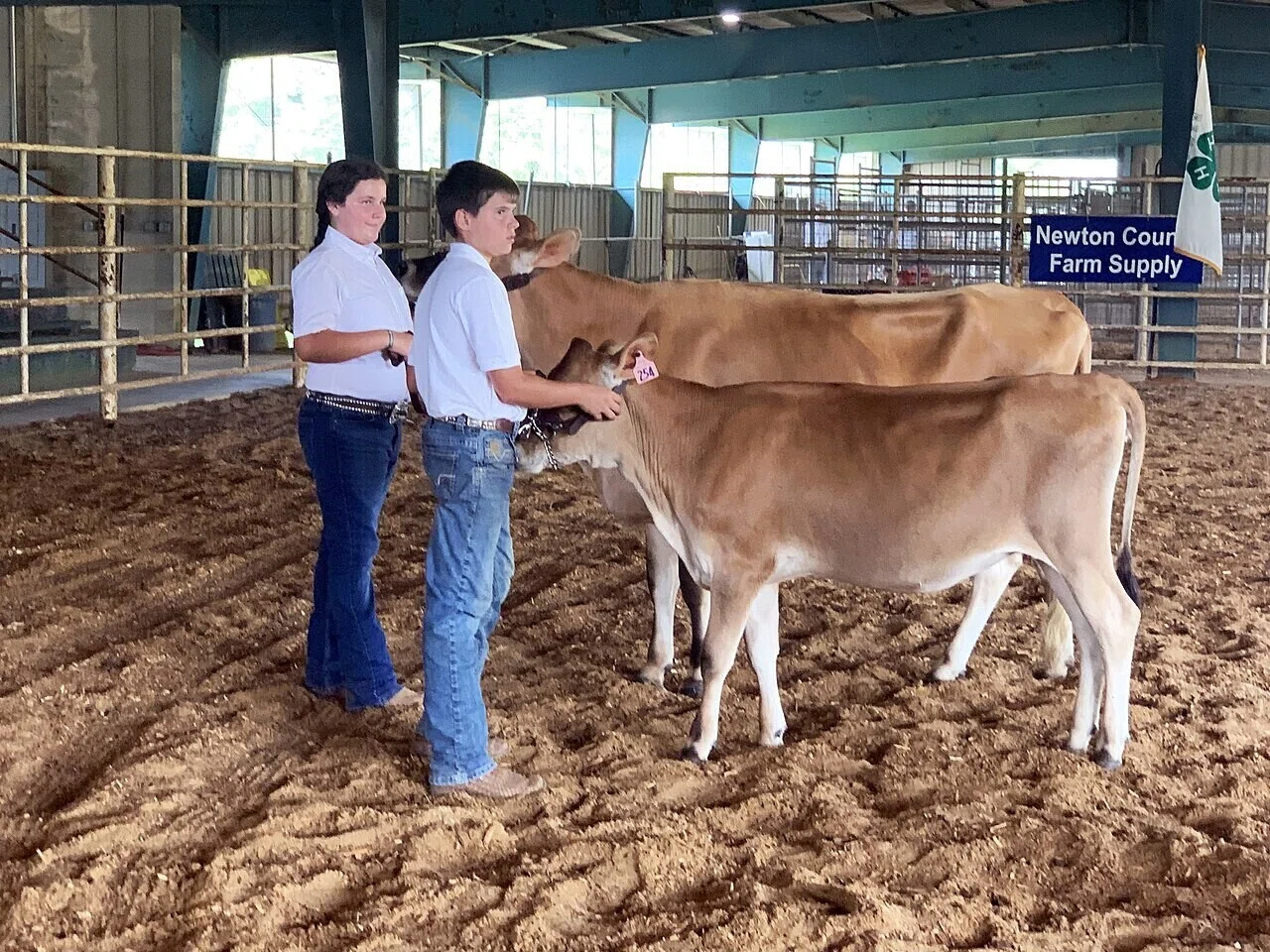
An exhibition showing young people in white clothes leading Jersey dairy cows in a dirt arena. Examples that make the livestock site feel familiar will be fleshed out in the next section.
(Photo: Jersey cattle at Newton State Dairy Show — Timothy Holdiness / CC BY 4.0, Wikimedia Commons)
How Does Smart Agriculture Work in Livestock? Dissecting Gunma Prefecture’s Dairy and Beef Cattle Initiatives and Omihachiman City’s Adoption Support
The thesis of this series is as follows: With local LLMs and local food, individuals can get by. In the era of AI agents, I will unravel the mechanisms for producing food locally, one by one. Individuals achieving food self-sufficiency alongside AI is the compulsory education of the AI era. In this section, we will look at how smart agriculture is beginning to move in the field of local food through the example of livestock.
First, I want to focus on the fact that Gunma Prefecture has started smart agriculture in the field of dairy and beef cattle. Unlike rice farming, livestock involves living creatures, so the burden of observation and care is always present. Since cows cannot speak, humans have no choice but to detect changes in physical condition or signs of estrus, which has been a major constraint on dairy and beef cattle management. Smart agriculture technology works precisely by having machines and data supplement this ‘seeing and knowing’ part. The fact that a wide-area administrative body like a prefecture has started initiatives in dairy and beef cattle shows that livestock was not excluded from the scope of smart agriculture, but that technology has begun to arrive in a way that meets the needs of the field.
Next, as a movement on the side of supporting individual farmers, there is the fact that Omihachiman City is supporting the introduction of smart agriculture technology. Even if the technology itself is good, there are always barriers of cost and learning to its introduction. By the city stepping in to provide support, the structure where individual farmers face these barriers alone changes, making it easier to take the first step toward technology. The prefecture’s wide-area initiatives and the city-level introduction support. Although these two differ in scale and role, they can be said to be beginning to mesh in terms of delivering smart agriculture to the livestock site.
Since I cannot confirm the specific equipment names or numerical values of both from the materials, I have focused on the direction of the mechanism here. Rather than trying to fill in the unknown parts, I believe that first checking for the presence or absence of support from your local municipality is the first step for an individual to engage with technology.
What Individuals Can Do Starting Today: Catching Up with Latest Information Using AI and Checking Local Support
I believe there are two main things individuals can do starting today. One is to catch up with the latest information using AI. The other is to check for local support.
First, regarding information gathering. In the AI era, the way we receive information itself changes significantly. Instead of just following search results with your eyes as in the past, you can leave information gathering to AI and have it organize the main points. For example, you could decide on regions or items of interest and have it regularly investigate related movements. The key here is the local LLM. If you include not only the large-scale AI services you usually use but also AI that runs in your local environment as options, you can continue to learn at your own pace and discretion. As far as can be confirmed from the materials, Gunma Prefecture has started smart agriculture for dairy and beef cattle, and Omihachiman City is supporting the introduction of smart agriculture technology. The difference in whether or not you know about such movements should be bridgeable by an individual’s information gathering mechanism. I think it is realistic to start with small mechanisms, such as having AI summarize news headlines every morning or having it regularly check announcements from local governments.
Next is checking for local support. When people hear ‘smart agriculture,’ they tend to have the impression that it is a cutting-edge initiative that requires large investments, but the fact that there are municipalities like Omihachiman City that support technology introduction shows the possibility that individuals do not have to bear the burden alone. I recommend that you first check with your local government office or official information to see if your city, town, or village provides support for the introduction of agricultural technology. Only after checking will you know whether support is available. Giving up without knowing versus making a judgment after checking—the weight of the same step is completely different.
Having AI investigate and checking for municipal support—these two are actions that can be started today without the need for special equipment or qualifications. I believe that not overthinking it and first trying to move one thing within your immediate reach is the gateway to practice for an individual.
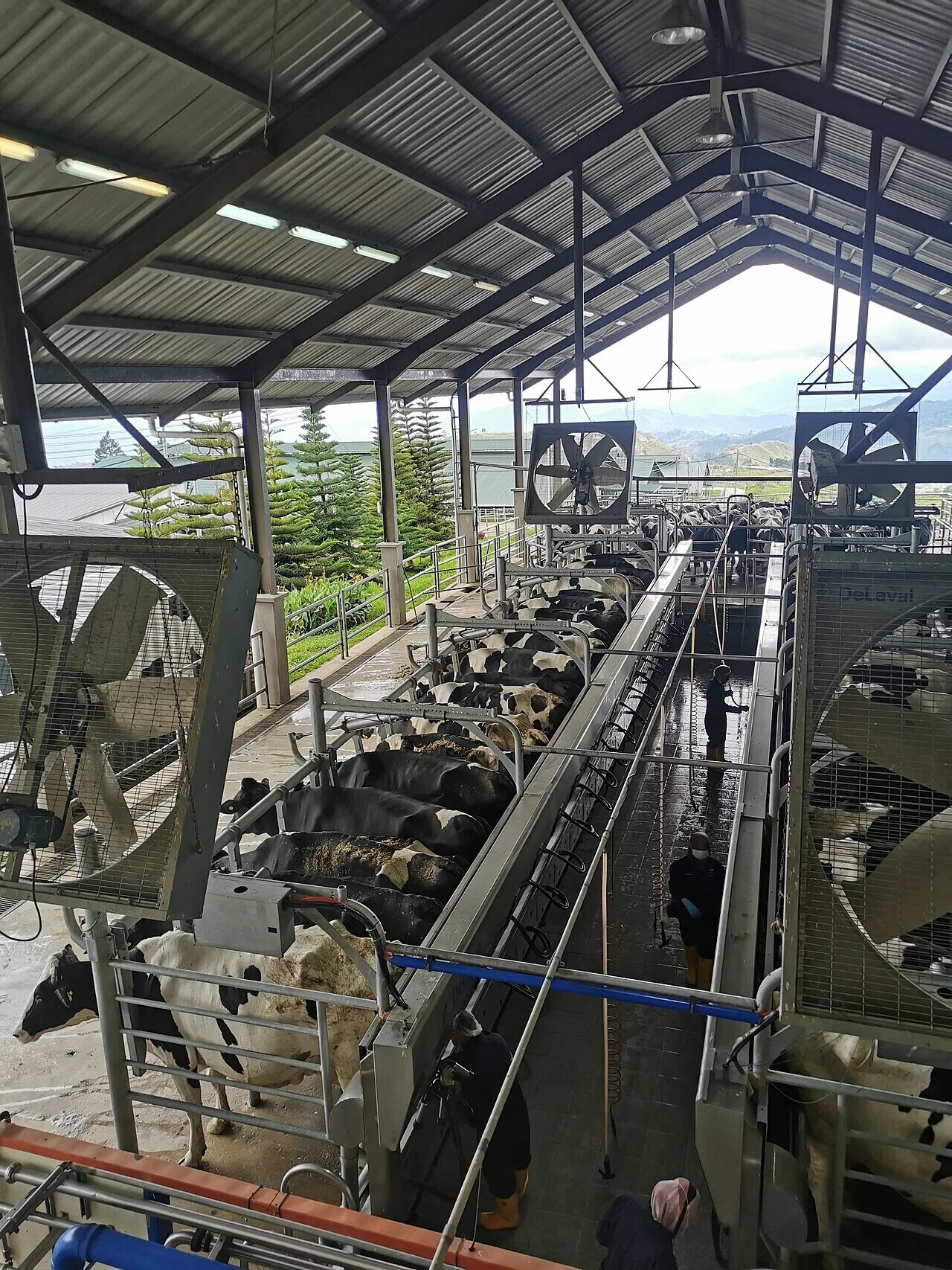
Holstein dairy cows lined up in a milking parlor and a person working. The appearance of mechanization at the dairy farm leads to the next section, which considers the movement of smart agriculture.
(Photo: Desa Cattle Dairy Farm Milking — Bfyhdch / CC BY-SA 4.0, Wikimedia Commons)
Implications for Food Self-Sufficiency in the AI Era: Connecting Municipal Support and Local AI to Make Self-Sufficiency a Part of Compulsory Education
When thinking about food self-sufficiency in the AI era, the combination of administrative support and local AI is noteworthy. As we have seen, Gunma Prefecture has begun smart agriculture in the field of dairy and beef cattle, and Omihachiman City is supporting the introduction of smart agricultural technology. Let us connect these two movements from the perspective of the individual and food self-sufficiency.
The fact that cities and prefectures support technology adoption means that individuals can encounter new technologies within a public framework without having to prepare everything themselves from scratch. In other words, municipal support can serve as an entry point for individuals. If a locally running LLM is added to this, individuals should be able to translate the information they obtain for their own environment and reuse it according to their own scale. The foundation provided by the administration and the AI running at hand—the role of connecting these two can be played by the individuals themselves.
In this series, I have presented the thesis that achieving food self-sufficiency with AI is a form of compulsory education for the AI era. From this perspective, smart agriculture technology is not just for a select group of producers, but can be rephrased as learning material for the future of food. Just as one learns mathematical formulas in school classes, individuals can learn the mechanisms of producing food locally while using AI, one step at a time. As the first step in that learning process, verifying public mechanisms like municipal adoption support becomes an extremely natural starting point.
To state this as a proposal, positioning learning about self-sufficiency as part of compulsory education itself is something that will be required in the society of the future. Municipalities support technology adoption, and individuals transform it into their own personal endeavor using local AI at hand. As this back-and-forth accumulates, food self-sufficiency will likely cease to be a special challenge and become a basic form of learning that everyone acquires. If you have a local LLM and local food, you can make it on your own—this conviction begins to become a reality from the moment the supporting administration and the learning individual join hands.
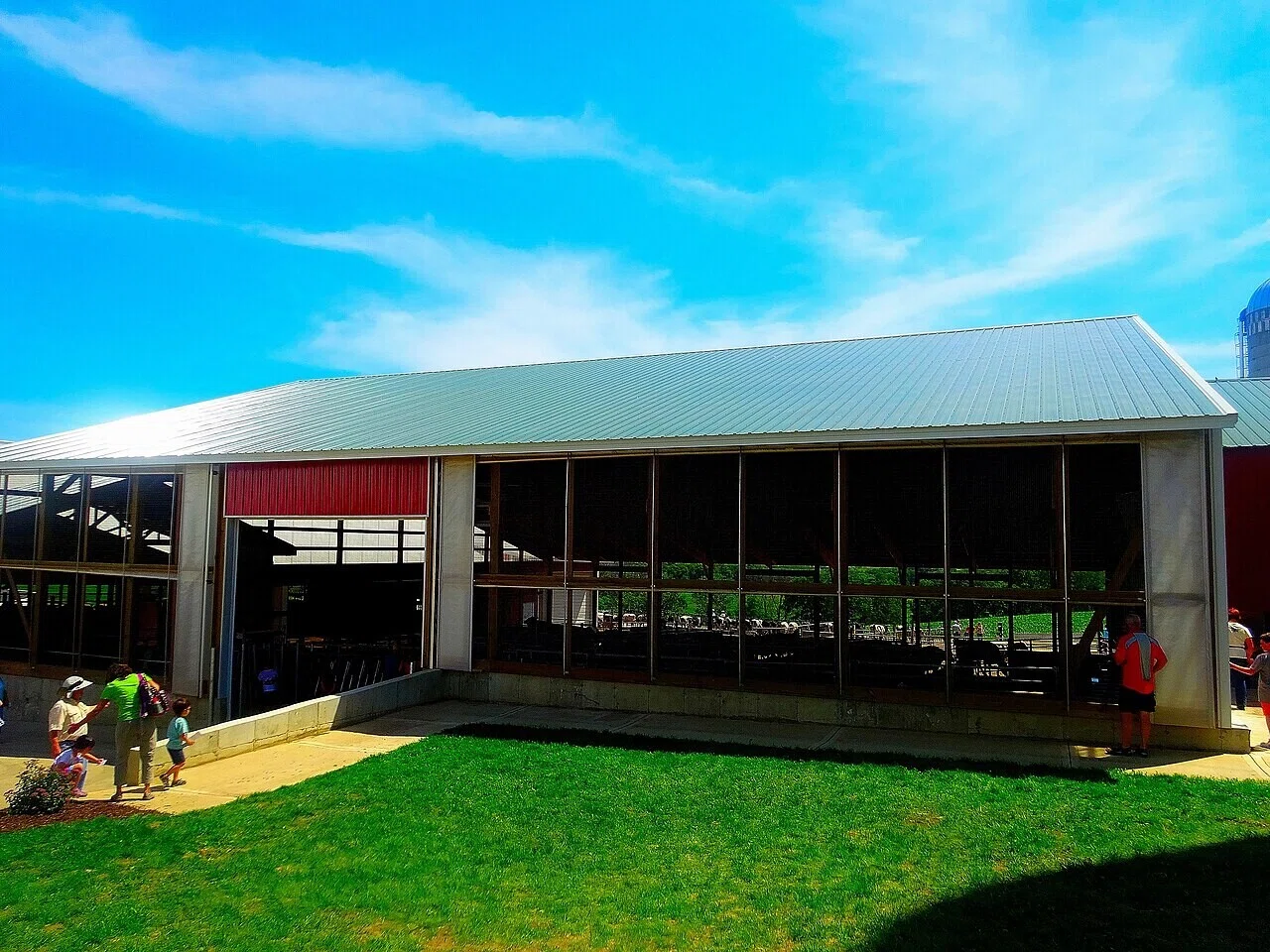
A large open-style barn with a green roof and people walking around it. This image, showing the appearance of a livestock facility, serves as a review before proceeding to the glossary.
(Photo: Zander Dairy Cattle Barn – panoramio — Corey Coyle / CC BY 3.0, Wikimedia Commons)
Glossary
Local LLM: AI that can be run in a local or regional environment without relying on massive services beyond the network.
Local Food: The practice of producing food in the local land and consuming it locally.
Smart Agriculture: Agricultural technology where machines and data supplement ‘seeing and knowing’ tasks, reducing the burden of observation and care.
Dairy and Beef Cattle: A livestock sector covering milk production and beef cattle raising, which Gunma Prefecture has targeted for smart agriculture.
Food Self-Sufficiency: Securing food with one’s own hands alongside AI, rather than relying entirely on external sources (positioned in this article as compulsory education for the AI era).
Source
https://news.google.com/rss/articles/CBMiYkFVX3lxTFBxWV9YYzhQTjRTZFVJNVBnbElxY2t6aVVqbF9CX2xxRDBIWXp3azJlRTFJU05aUXJDblJYWjJ5RnVjZW9fcFVQa2hWNnU5QkpsOXMxaWpFSW82SjBGZlo0azJB?oc=5
https://news.google.com/rss/articles/CBMijAFBVV95cUxQVmljNEI2c1RyR2thSzBKbTg0OVR5T29rMDc2QUdxbmlzdzRjbnRyNmJfaW9zdDNieFg3V1RRMFc0b29uZ0FoSWdEelZyNF96SUFpMDM5M1NyV1NyZ19FSEh2eXJTRU5tTTZEUW96SWlGYl9IS1BOR3ZHVjNFay1vTGJ3Ry1DVlFBVE1UVg?oc=5
*This article is a private study note from the CEO of AGI. Information is current as of the time of research and does not guarantee accuracy.