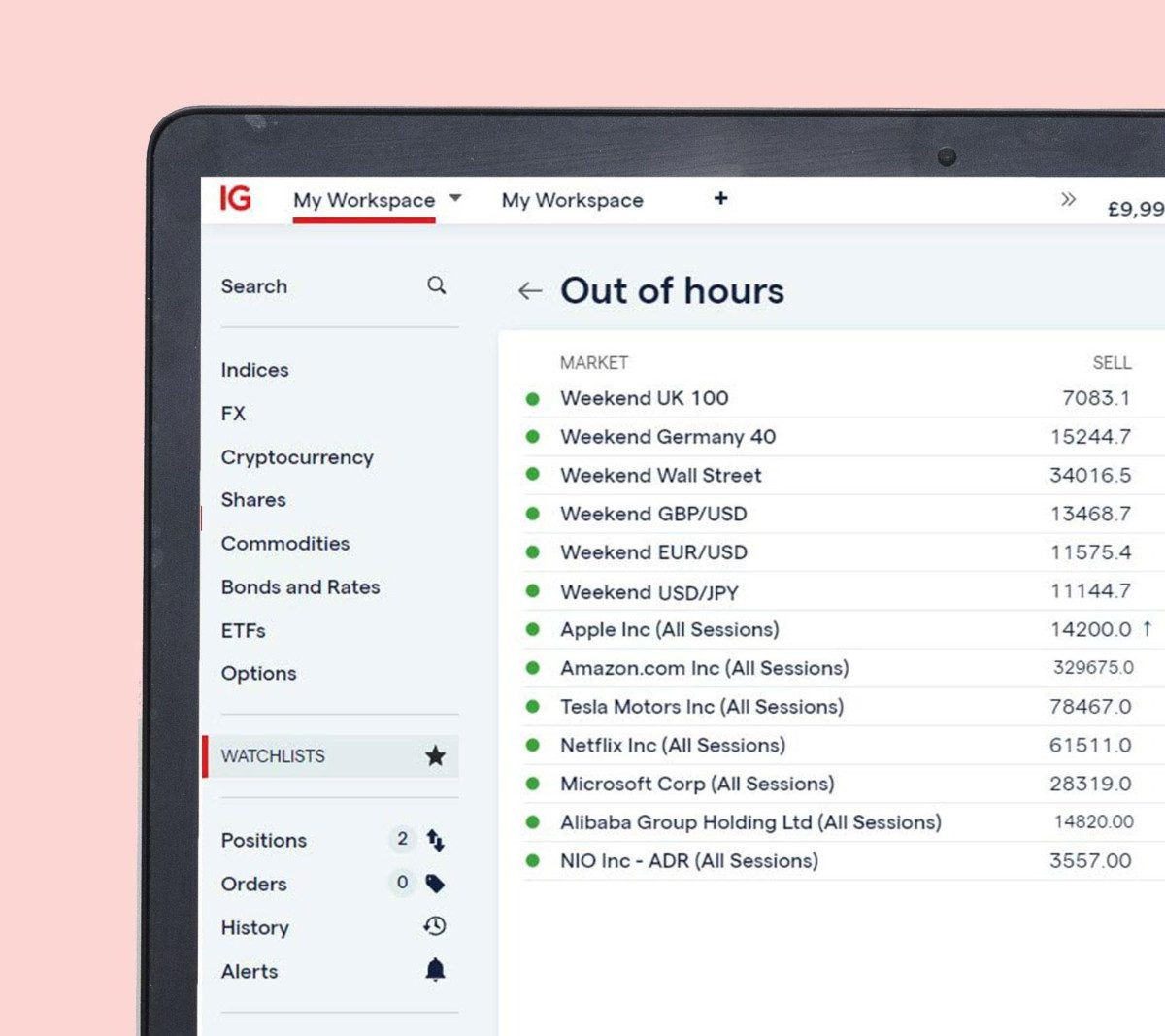
Understand the risks of pre-market, post-market and weekend trading
The risks of pre-market, post-market and weekend trading include:
- Lower liquidity than the main market session. Many market participants prefer to trade during the main session – when prices are generally more stable – meaning there can be fewer active participants to fill the other side of trades out-of-hours
- Higher volatility than the main market session. Lower liquidity can result in more dramatic swings in prices, which can be good or bad – depending on your individual risk appetite
- Wider spreads than the main market session. The spread is the difference between the buy and sell price on offer. Spreads can widen when volatility rises or liquidity falls – both of which occur more frequently out-of-hours
You can manage your risk using stops and limits, which automatically close your trade when the price hits a pre-determined level. Guaranteed stops are the best way to cap risk because these always close your trade at the exact level you specify – even if the market moves quickly or ‘gaps’. A small premium is payable if a guaranteed stop is triggered.