Step 4: Plan your target
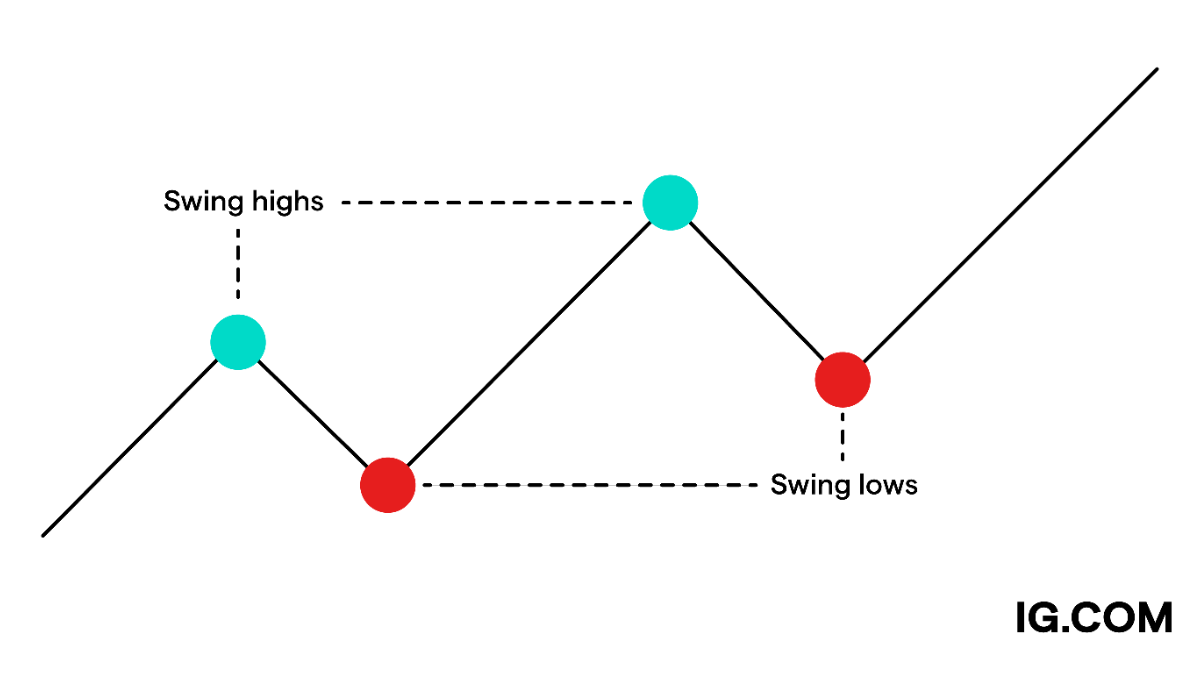
Again, using horizontal levels, set your targets.
- In an uptrend, aim to take profit near the next resistance level
- In a downtrend, aim to take profit near the next support level
You can scale out at multiple targets if preferred (instead of closing your entire trade at one price level, you gradually take profits at different target levels as the trade moves in your favour).
Step 5: Calculate your risk-reward ratio
Before placing any trade, calculate your risk-reward ratio by comparing your potential loss (distance to stop-loss) with your potential gain (distance to profit target).
A risk-reward ratio of 1:2 means you’re risking S$1 to potentially make S$2. For swing trading, aim for a minimum ratio of 1:2, though 1:3 or higher is preferable.
Here’s how to calculate it:
- Risk: Distance from entry price to your planned stop-loss
- Reward: Distance from entry price to your profit target
- Ratio: Reward ÷ Risk
For example, if you’re entering a long CFD trade at S$30, with a stop-loss at S$28 (risking S$2) and a profit target at S$36 (potential gain of S$6), your risk-reward ratio is 6 ÷ 2 = 1:3.
This means even if you’re only right 40% of the time, you can still be profitable long-term. Poor risk-reward ratios (like 1:1 or worse) require much higher win rates to remain profitable, making them unsuitable for most swing trading approaches.
If your calculated risk-reward ratio is less than 1:2, consider:
- Adjusting your profit target to a more distant resistance/support level
- Waiting for a better entry point closer to your planned stop-loss
- Skipping the trade entirely