
High prices hit jewellery volumes
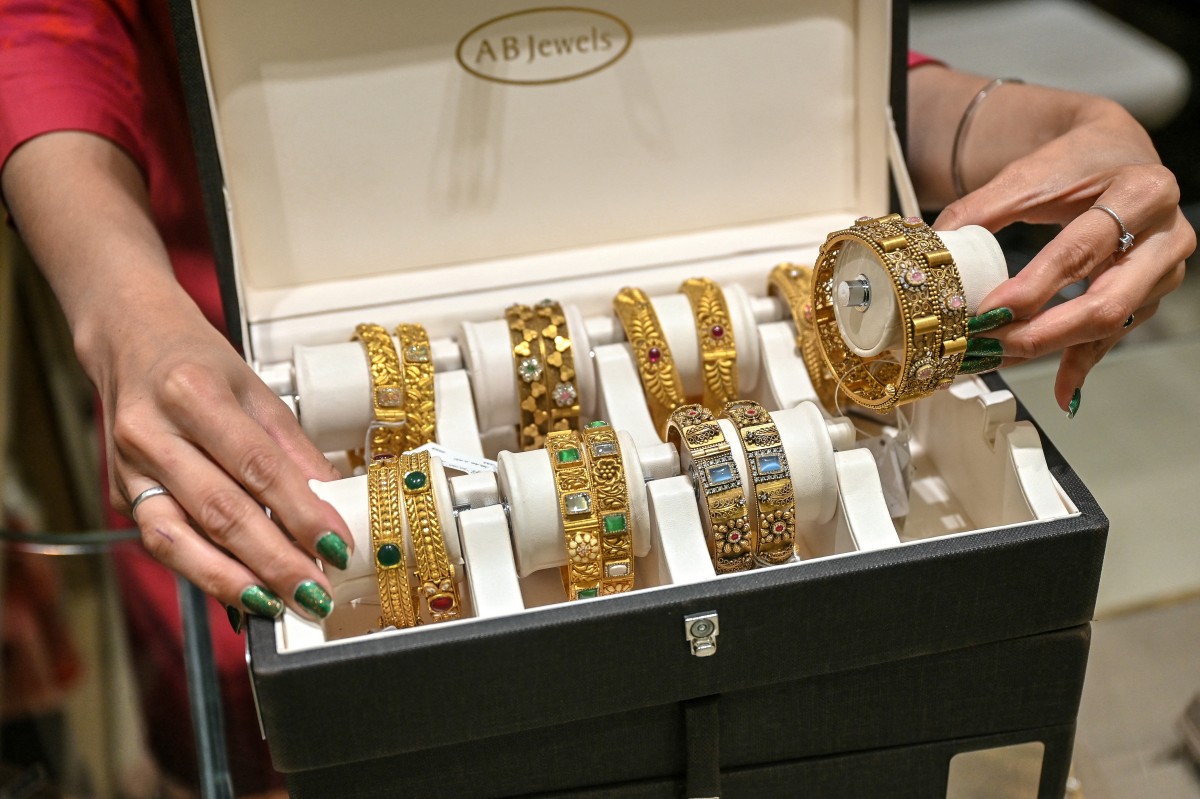
Jewellery demand showed the other side of the gold story. Global jewellery demand fell 23% year on year to about 300 tonnes, the weakest quarter since the early stages of the pandemic in 2020.
Consumers did not walk away from gold completely. They spent more money on less metal. Jewellery demand by value rose 31% year on year to $47 billion, the highest first-quarter spend on record.
That difference matters for retailers. Buyers are still willing to spend on gold, but they are adjusting what they buy. Lighter-weight pieces, lower-carat items and old-gold exchange have become more important in markets where household budgets are being squeezed by higher gold prices and wider inflation pressures.
China’s jewellery demand fell 32% year on year to 85 tonnes, hit by high prices, weaker consumer confidence and changes to VAT treatment. Even there, spending on gold jewellery rose 16% to $13 billion, suggesting buyers remained attached to gold but were changing the form of purchase.
India followed a similar pattern. Jewellery demand fell 19% year on year to 66 tonnes, but demand by value reached $10 billion, a record for a first quarter. Consumers shifted toward lighter pieces, lower-carat jewellery and studded products, while wealthier buyers continued to purchase heavier items.
Middle Eastern markets also recorded double-digit declines in jewellery volumes, although spending rose 30% year on year to a record $5 billion. Ramadan and Eid offered some support, but high prices and the outbreak of war in the region weakened consumer activity in parts of the market.
Central banks keep buying
Central banks remained another important source of demand. Official sector net purchases reached 244 tonnes in the first quarter, up 3% year on year and 17% higher than the previous quarter.
The buying came even though some central banks and sovereign institutions sold gold during the period. Turkey, Russia and the State Oil Fund of Azerbaijan were among the notable sellers, but purchases still outweighed the increase in sales.
Poland was the largest reported buyer, adding 31 tonnes during the quarter and lifting its reserves to 582 tonnes. Uzbekistan added 25 tonnes, while China’s central bank bought 7 tonnes, taking its total gold reserves to 2,313 tonnes.
The UAE Central Bank also added 1 tonne in the quarter, according to the World Gold Council.
Central bank buying has become a major force in the gold market since 2022, and the World Gold Council expects it to remain solid this year. Its full-year expectation remains close to last year’s level, in a range of 700 to 900 tonnes.
That demand reflects a longer-term reserve strategy. Central banks have been diversifying holdings during a period of sanctions risk, currency volatility and geopolitical tension, while gold’s liquidity makes it useful during market stress.
Rates remain the main headwind
Gold’s outlook is still being shaped by interest rates. Higher bond yields increase the cost of holding a non-yielding asset, and that could limit ETF demand, particularly in Western markets.
The World Gold Council said government bond yields are likely to remain elevated until there is a clearer path for policy rates, with central banks still dealing with supply shocks linked to the US-Israel-Iran war.
That creates a mixed backdrop. Geopolitical risk supports gold demand, while high interest rates can limit the scale of inflows. The Council expects investment demand to remain positive in 2026, although probably below the levels seen in 2025.
Supply rises, but only slightly
Total gold supply rose 2% year on year to 1,231 tonnes in the first quarter, matching the level of total demand. Mine production reached a first-quarter record, while recycling rose 5%.
The recycling response was still relatively limited given the price environment. The World Gold Council said higher prices and pressure on consumer wallets have encouraged some selling back, but supply from recycling is expected to rise only modestly this year.
A prolonged US-Iran standoff could bring more old gold back into the market, especially if households face pressure from higher energy prices. Supply from India could also rise if gold-backed loans come under stress.
Mine production is expected to edge higher again this year as high prices support margins. The Council is monitoring the risk of energy shortages in some regions, particularly in parts of Oceania and Asia, which could limit output growth.

Nivetha Dayanand is Assistant Business Editor at Gulf News, where she spends her days unpacking money, markets, aviation, and the big shifts shaping life in the Gulf. Before returning to Gulf News, she launched Finance Middle East, complete with a podcast and video series.
Her reporting has taken her from breaking spot news to long-form features and high-profile interviews. Nivetha has interviewed Prince Khaled bin Alwaleed Al Saud, Indian ministers Hardeep Singh Puri and N. Chandrababu Naidu, IMF’s Jihad Azour, and a long list of CEOs, regulators, and founders who are reshaping the region’s economy.
An Erasmus Mundus journalism alum, Nivetha has shared classrooms and newsrooms with journalists from more than 40 countries, which probably explains her weakness for data, context, and a good follow-up question.
When she is away from her keyboard (AFK), you are most likely to find her at the gym with an Eminem playlist, bingeing One Piece, or exploring games on her PS5.